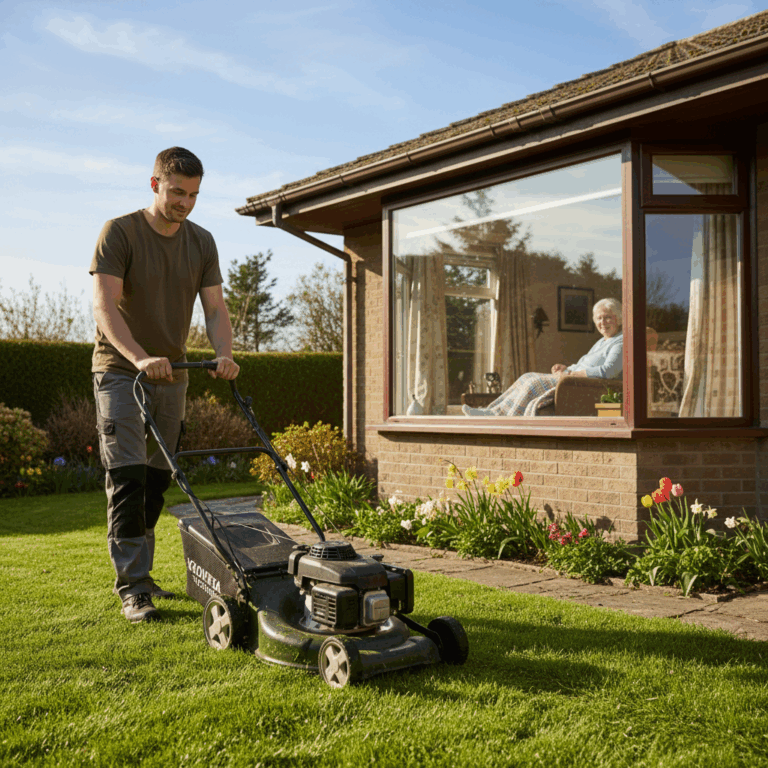
The Recovery Nobody Plans For
A hip replacement surgery. A week in the hospital for pneumonia. A cardiac event followed by weeks of restricted activity. For many older adults and veterans, these medical events are turning points—not just physically, but logistically. The body needs rest. The mind needs peace. And the yard? It doesn’t stop growing.
Most people don’t think about lawn care until they’re home, healing, and staring out at grass that’s already getting long. By then, the physical reality sets in: mowing isn’t just hard work. It’s medically off-limits.
Why Lawn Care Becomes Impossible During Recovery
Operating a lawn mower requires far more than it appears. The physical and cognitive demands of operating a riding mower are much greater than driving a car. Push and pull forces during mowing register at significant levels—movements that directly conflict with post-surgical restrictions.
After hospitalization, the picture gets more complex. Hospitalization can decrease older adults’ ability to manage life at home after discharge, and functional decline often persists for weeks or months. A veteran returning home from surgery or an older adult recovering from acute illness may lack the physical capacity—or medical clearance—to handle yard work, even on a smaller scale.
The stakes extend beyond appearance. An unmaintained yard can invite code violations, create safety hazards, and trigger a slow erosion of independence and dignity. For someone already navigating recovery, that added stress is the last thing needed.
Timeline Expectations by Surgery Type
Hip or Knee Replacement
Initial tissue healing takes up to three months after joint replacement surgery, with physical activity limited to range of motion, stretching, and strengthening exercises as advised by a physiotherapist. Lawn mowing—whether push or ride-on—falls well outside those guidelines during this window.
Recovery timelines vary, but most people need 6 to 12 weeks before returning to light activity, and significantly longer before tackling demanding outdoor work. Rushing this timeline risks serious complications, including hernias or surgical site infections.
Cardiac Events or Sternotomy
Cardiac recovery is highly individual and requires strict adherence to physician guidance. Some patients are cleared for light activity sooner than others, but lawn mowing—with its sustained physical demand and coordination requirements—typically falls into the “restricted” category for months.
Post-Hospitalization Recovery
Even without major surgery, hospitalization takes a toll. Nearly 20% of patients in the United States are readmitted within 30 days of leaving the hospital, which underscores how fragile recovery truly is. A neighbor healing from pneumonia, sepsis, or acute illness needs weeks of restored strength before yard work makes sense—if at all.
What Temporary Lawn Care Relief Actually Means
This is where volunteer lawn care becomes invaluable. Temporary, no-cost help during recovery removes a stressor that could complicate healing or trigger unnecessary anxiety.
The goal isn’t to solve the problem forever. It’s to bridge the gap—the weeks or months when a body is healing and a yard still needs attention. A volunteer’s visit, even once or twice during early recovery, can prevent code violations, preserve safety, and let someone focus entirely on getting better.
For many older adults, veterans, and neighbors in need, knowing the yard is handled means the difference between recovery rest and recovery stress.
What Helps Most
If navigating this situation:
- Reach out early. Don’t wait until the lawn becomes overgrown or a code violation arrives. Contacting a local volunteer lawn care organization during early recovery prevents cascading problems.
- Be specific about timeline. Let helpers know how long recovery is expected to last, so they can plan consistent support.
- Accept temporary help as wise self-care. This isn’t a permanent solution—it’s a medical reality. Healing matters more than independence in the moment.
- Check local resources. Many communities have volunteer networks ready to help. Some are grassroots organizations, others work through faith communities or senior centers.
How Volunteer Lawn Care Changes the Recovery Picture
A single volunteer visit—a neighbor with a mower and a few hours—removes the burden from someone whose body is already working overtime on healing. No guilt. No shortcuts. No risk of overexertion or complications.
This is exactly what I Want To Mow Your Lawn (IWTMYL) exists to provide: free lawn and exterior home care relief for older adults, veterans, and neighbors in need across all 50 states. Over 1,800 volunteers understand that recovery isn’t just medical—it’s logistical, emotional, and deeply connected to dignity.
If someone in recovery needs help, or if there’s a neighbor in that situation, resources exist. No complicated applications. No recurring commitments. Just temporary, genuine relief during the weeks that matter most.
A Practical Next Step
Recovery is hard enough. Lawn care shouldn’t add to that burden. Whether someone is healing from surgery, hospitalization, or simply a season of health challenges, reaching out for temporary yard help isn’t weakness—it’s smart, medically sound care.
Volunteers interested in helping neighbors during recovery can get started here. Those seeking help can find local volunteer networks or contact IWTMYL directly through the same channels.
For a more interactive way to engage, try the MOW app, available on the App Store, which brings the mission closer to home.
Printable Guide