The Healing Power of Yard Work: Why Lawn Care Matters for Veteran Recovery
A veteran returns home after service. The transition is real: the structure is gone, the sense of purpose shifts, and suddenly the civilian world feels quieter than expected. The yard, once a minor concern, now sits neglected. It becomes a visible reminder of overwhelm—and sometimes, a barrier to moving forward.
This isn’t just about curb appeal. The connection between outdoor work and mental health recovery is deeper than most people realize, and it’s increasingly recognized by mental health professionals as a legitimate therapeutic tool.
The Veteran Mental Health Crisis: A Quiet Emergency
The numbers are sobering. Among the 5.8 million veterans served by the VA in fiscal year 2024, approximately 14% of men and 24% of women were diagnosed with PTSD. For veterans of Iraq and Afghanistan conflicts, the situation is even more acute, with current PTSD prevalence at 15% and lifetime prevalence at 29%.
But statistics only tell part of the story. Isolation compounds trauma. Half of U.S. veterans report feeling like they don’t belong in society after separation from military service, and among veterans surveyed, 56.9% reported feeling lonely sometimes or often. This loneliness isn’t merely uncomfortable—it’s dangerous. A VA-funded study found that among forms of social connectedness, loneliness was tied to the highest levels of depression and suicidal ideation in former service members.
What Yard Work Actually Does to the Brain
The science is clear: outdoor work, particularly gardening and lawn care, triggers measurable changes in mental and physical health. Here’s what happens when someone spends time tending to their yard:
Stress reduction at the physiological level. Spending time outdoors lowers cortisol levels—the primary stress hormone. Even 30 minutes of garden work has been shown to reduce salivary cortisol and improve mood. For veterans managing hypervigilance or chronic stress, this isn’t a luxury. It’s a tangible shift in their nervous system.
Depression and anxiety relief. A 2024 umbrella review and meta-analysis confirmed that gardening has a positive impact on depression, anxiety symptoms, stress, mood disturbance, and cognitive functioning. Nature-based interventions were found effective for improving depressive mood, reducing anxiety, and increasing positive affect. Veterans who participated in nature-assisted therapy for PTSD showed reduced rates of PTSD symptoms and depression alongside increases in hope and self-efficacy.
Mindfulness and trauma regulation. The rhythmic, repetitive nature of lawn care—mowing, edging, raking—induces a meditative state. Unlike rumination, which keeps the mind trapped in past trauma, these tasks anchor attention to the present moment. For veterans with PTSD, the ability to interrupt the trauma cycle, even briefly, can be transformative. Additionally, structured outdoor activities create a sense of control and stability, reducing feelings of unpredictability that often accompany post-traumatic stress.
Physical benefits that matter. Yard work qualifies as moderate-intensity exercise. Raking, mowing, and similar tasks require enough physical exertion to meet U.S. physical activity guidelines, improving cardiovascular health, strength, and sleep quality—all essential for trauma recovery.
The Isolation Problem That Yard Work Solves
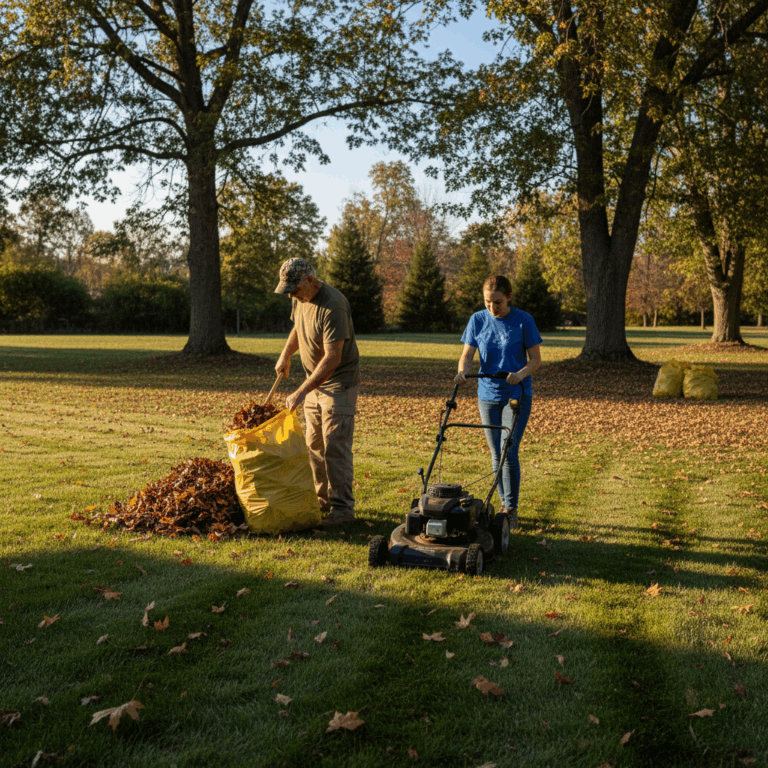
A neglected yard becomes isolating. It’s harder to spend time outside when the space feels unmanageable. It’s easier to withdraw. When a neighbor or volunteer shows up to help—or better, to help alongside—something shifts. The yard becomes a reason to be outside, and the work becomes a reason to connect.
For the estimated 4.4 million veterans living in rural communities, where isolation is particularly acute and professional services are sparse, this kind of practical neighborly support addresses a gap that traditional mental health infrastructure often misses.
When Volunteers Matter Most
I Want To Mow Your Lawn (IWTMYL) connects 1,800+ volunteers across all 50 states with veterans, older adults, and neighbors who need free lawn and exterior home care relief. The organization recognizes that yard work isn’t just about the lawn—it’s about dignity, connection, and creating the conditions where healing can happen.
For a veteran struggling with isolation, depression, or the weight of untended property, a volunteer showing up isn’t just practical help. It’s a message: someone sees you. Your yard matters. You matter.
The work doesn’t have to be complex. It doesn’t require expertise. A volunteer mowing a lawn, clearing debris, or simply being present during yard work creates space for a veteran to re-engage with their own home and community.
Getting Involved or Getting Help
Whether a veteran, older adult, or neighbor is looking for yard care support, or whether someone wants to volunteer their time and skills, IWTMYL provides a direct path. The organization vets volunteers and matches them with people in their communities who need help.
Interested in volunteering? Sign up to volunteer and become part of a grassroots movement that recognizes yard work as more than maintenance—it’s care, connection, and a practical step toward healing.
Want to see how the community works? Play the MOW app to learn more, or download it from the App Store to connect with neighbors in real time.
Deep Dive