When the Thermometer Hits 110: How to Prepare for Safe Summer Yard Work in Extreme Heat
July 14, 2026 · I Want To Mow Your Lawn
When the Thermometer Hits 110: How to Prepare for Safe Summer Yard Work in Extreme Heat
The forecast shows what many Sun Belt residents already know: triple digits are coming, and they’re staying for weeks.
Phoenix is bracing for temperatures that could reach 115 degrees. Austin is tracking toward a summer with more 100-degree days than last year. Parts of Arizona, Nevada, New Mexico, Texas, Arkansas, and Florida are all in the grip of heat that keeps climbing. When these temperatures settle in, a simple task—mowing the lawn, trimming hedges, cleaning gutters—becomes a genuine health risk.
This matters because yard work isn’t optional for everyone. For older adults who live alone, veterans on fixed incomes, or neighbors dealing with health conditions, the lawn doesn’t pause when it’s hot outside. But extreme heat doesn’t pause either. Understanding the real risks—and knowing how to prepare—can mean the difference between a manageable summer and a dangerous one.
Heat stroke—the most serious form of heat illness—can raise body temperature to 106 degrees or higher in just 10 to 15 minutes. By then, it’s a medical emergency.
The Double Risk: Heat + Yard Work
Yard work and extreme heat are a dangerous combination because they amplify each other. Physical exertion raises body temperature. Sun exposure and humidity prevent the body from cooling itself. Mowing a lawn on a 110-degree day isn’t just uncomfortable—it’s a physiological stress that can overwhelm even healthy people.
Older adults face particular risk. The body’s ability to regulate temperature declines with age, and many common medications can impair heat tolerance. Veterans, who sometimes downplay physical symptoms or push through discomfort out of habit, may not recognize warning signs. Anyone with heart disease, diabetes, or respiratory conditions is at higher risk.
What Preparation Actually Looks Like
Know the heat index, not just the temperature. A 105-degree day with high humidity feels far hotter—sometimes 115 degrees or higher. Check forecasts that include the heat index, not just air temperature.
Reschedule when possible. If yard work can wait until evening or early morning, it should. The difference between 6 a.m. and 2 p.m. is often 20-30 degrees. Early mornings are safest.
Break the work into smaller tasks. One hour of work in mild heat is manageable; two hours in extreme heat is risky. Multiple short sessions, spaced across cooler parts of the day, reduce strain on the body.
Hydrate before, during, and after. Waiting until thirst kicks in is too late—thirst is a delayed indicator. Drink water regularly, even if working for just 30 minutes. Avoid alcohol and limit caffeine.
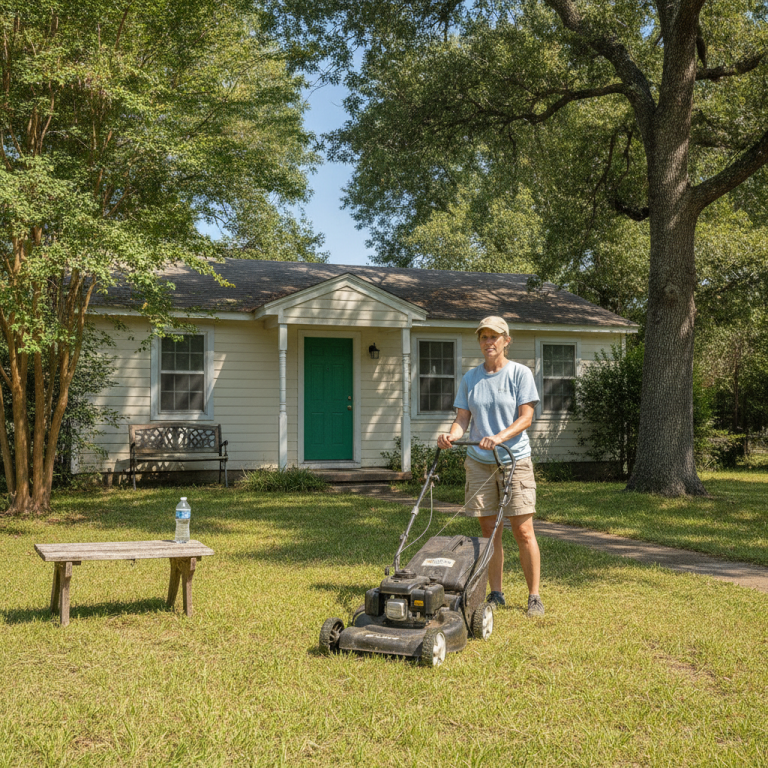
Wear light-colored, loose-fitting clothing and a hat. This reduces direct sun exposure and allows sweat to evaporate—the body’s primary cooling mechanism.
Watch for warning signs. Dizziness, nausea, confusion, or cessation of sweating despite heat are signs of heat illness. Stop work immediately, move to shade or indoors, and cool down with water and air conditioning.
When Help Matters Most
Not everyone can manage yard work safely in extreme heat—and that’s not a failure. For older adults, veterans, or neighbors facing health challenges, outdoor work during heat waves can be genuinely unsafe, regardless of precautions. This is precisely when free yard care support makes a real difference.
I Want To Mow Your Lawn connects volunteers across all 50 states with neighbors who need temporary relief from exterior home care—especially during seasons when safety becomes a concern. Whether it’s one mowing session or help clearing storm debris, the goal is simple: reduce the burden when it matters most.
If someone in the community is managing yard work in dangerous heat, that’s a sign they may need help. If there’s yard work that needs doing and the calendar shows 100-degree days ahead, reaching out for support is the safe choice.
Get Involved
Volunteers across the country are already stepping up to help neighbors stay safe during summer’s harshest weeks. Those with equipment, physical ability, and availability make a tangible difference—one lawn, one afternoon, one neighbor at a time.
Explore volunteer opportunities here, or try the MOW app to connect with requests nearby. For those who want to learn more first, download the app from the App Store to see how the community works.
Heat Safety Checklist: The Specific Details That Keep Volunteers and Neighbors Safe
Beyond general heat safety, there are exact hydration schedules, clothing choices, work-timing strategies, and warning sign checklists that make outdoor work genuinely safer in extreme heat. This guide covers the details that matter.
Hydration: The Numbers That Matter
Generic advice says “drink water,” but specifics work better. Before starting outdoor work, drink 17–20 ounces of water 2–3 hours before activity. Then drink 7–10 ounces every 10–20 minutes during work, even if not thirsty. This isn’t casual sipping—it’s intentional, scheduled hydration that prevents dehydration before symptoms appear.
After work, continue drinking for 4–6 hours. Weigh yourself before and after yard work if possible; for every pound lost, drink 16–24 ounces of water over the next few hours. This replaces fluids lost through sweat.
Avoid alcohol, caffeinated drinks, and high-sugar beverages during and immediately after heat exposure—they increase fluid loss through urination and can worsen dehydration.
Timing: The Safe Work Window
Heat index forecasts change hourly. Check the exact heat index (not just air temperature) for specific times during the day. The safest work window is typically before 10 a.m. or after 6 p.m., when heat index values are lowest. A heat index below 91 degrees is manageable for most people; above 103 degrees, outdoor work becomes risky even with precautions.
For extreme heat days (heat index above 105), limit outdoor work to 15–30 minute sessions with extended breaks in shade or air-conditioning between sessions. This is not laziness—it’s physiology.
Clothing and Sun Protection
Light colors reflect heat; dark colors absorb it. White, light gray, khaki, or pale blue are better choices than navy, black, or dark green. Fabric should be loose-fitting cotton or moisture-wicking synthetic blends that allow air circulation and sweat evaporation. Tight clothing traps heat against the skin.
A wide-brimmed hat (at least 3 inches all around) reduces direct sun exposure to the face and neck by up to 50 percent. Light-colored, breathable fabrics work best. Sunscreen (SPF 30+) should be reapplied every two hours or after sweating heavily.
The Warning Signs Checklist
Heat exhaustion and heat stroke progress quickly. Stop work immediately if any of these appear:
Heavy sweating with weakness or fatigue (early heat exhaustion)
Nausea, headache, or dizziness
Muscle cramps in the legs or abdomen
Cool, pale, clammy skin despite heat exposure
Cessation of sweating despite being hot (this is a medical emergency—call 911)
Confusion, slurred speech, or loss of consciousness (heat stroke—call 911 immediately)
If heat exhaustion symptoms appear, move to shade or indoors immediately, drink cool water, apply cool compresses or ice packs to the neck and armpits, and rest until symptoms fully resolve—which may take 30 minutes or more.
Work-Rate Management
Physical exertion generates heat from inside the body. Reduce work intensity on hot days: mow at a slower pace, take more frequent breaks, and avoid sprinting or rushed movements. One hour of steady, moderate-pace work is safer than 45 minutes of rushed, intense effort.
Pair heavy tasks (mowing, hedge trimming) with lighter tasks (edging, raking) and space them across the day when possible. Sharing the workload with a partner also allows for built-in rest periods.
Connecting Safety Knowledge to Community Care
Volunteers who understand these specifics can work more safely and help neighbors do the same. For older adults or neighbors with health conditions, offering to handle yard work during peak heat weeks isn’t just convenient—it’s genuinely protective. Knowing the warning signs, hydration needs, and safe work windows allows volunteers to assess risk accurately and make informed decisions about when help is most needed.
This knowledge also builds trust. When a neighbor sees a volunteer taking deliberate, safety-conscious steps—drinking water on schedule, working during cooler hours, stopping before exhaustion—it demonstrates respect and care. It’s the difference between helpful and truly helpful.
Support our foundation to unlock this resource
A donation of any amount unlocks all bonus guides, templates, and deep dives for 30 days.
100% goes toward connecting volunteers with neighbors in need.
Choose your donation amount
$
Choose how to donate:
I Want To Mow Your Lawn Inc. is a 501(c)(3) nonprofit and registered charity with PayPal Giving Fund. EIN: 85-3447661. Your donation is tax-deductible.
Have a group?Organize a Community Service Day — we'll match your team with neighbors who need help.
Want to help us reach more neighbors?Our Marketing Toolkit has copy-ready posts, press materials, and flyers you can share in five minutes.