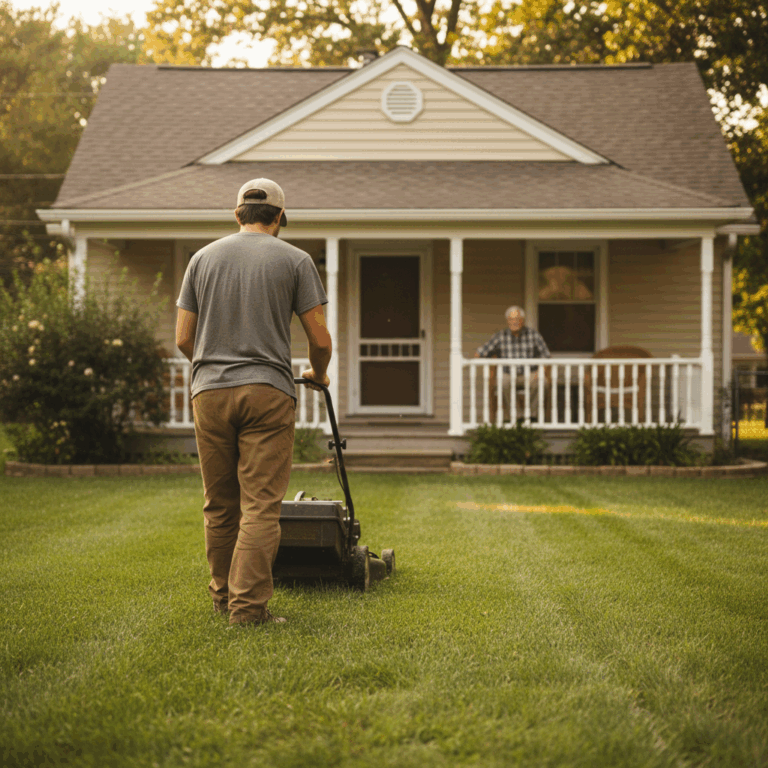
A Practical Path Forward for Veterans and Yard Work
For a veteran managing a service-connected disability, maintaining a yard isn’t just about aesthetics. It’s about dignity, home stability, and avoiding code violations that could lead to fines or worse. Yet the physical demands of lawn care—mowing, edging, cleanup—can be impossible when pain, fatigue, or mobility limitations make outdoor work risky or impossible.
This is where volunteer lawn care fills a critical gap. I Want To Mow Your Lawn (IWTMYL) connects veterans across all 50 states with volunteer neighbors who offer free, temporary yard relief. Understanding who qualifies and how the process works can help veterans and their families access support without bureaucracy or shame.
Who Veterans Are and Why Lawn Care Matters
There are approximately 17.5 million veterans in the United States, representing about 6–7% of the adult population. This population is aging: nearly half of all veterans are over 65, and many carry long-term effects from military service.
The scope of disability among veterans is significant. More than 40 percent of veterans live with a service-connected disability. For some, this means chronic pain. For others, it’s limited mobility, fatigue that makes physical exertion risky, or the cumulative wear of aging with a body shaped by combat or training injuries.
Service-connected disabilities create fatigue and physical limitations that make lawn care not just difficult, but genuinely unsafe. A veteran who was injured in service shouldn’t have to risk further injury or financial instability to keep grass from becoming a code violation.
The Hidden Cost of an Overgrown Yard
Many people don’t realize that cities can impose real penalties for unmaintained lawns. Most U.S. municipalities have property maintenance ordinances that set a maximum grass height, with escalating fines for violations. For veterans on fixed incomes—many of whom rely on VA disability compensation—a $50 or $100 fine per day adds up fast.
In a documented case, a Florida retiree unable to maintain his yard faced fines that accumulated to nearly $30,000, threatening foreclosure on his home. A recent viral story featured an elderly disabled woman facing a $240 fine she couldn’t afford. These aren’t edge cases—they’re real consequences for people already stretched financially.
Beyond fines, yard neglect affects mental health. Being able to maintain one’s home and property provides self-worth and satisfaction that can support overall well-being, particularly for veterans managing service-related trauma or stress.
Who Qualifies for IWTMYL Volunteer Lawn Care
IWTMYL serves older adults, veterans, and neighbors in need across all 50 states. Qualifications are straightforward and dignified—no means testing, no complicated forms:
- Veterans of any era or service branch
- Older adults who can no longer safely manage yard work
- Anyone facing temporary physical limitation due to injury, illness, or recovery
- Neighbors experiencing financial hardship that prevents them from hiring lawn care
The organization doesn’t ask for proof of income or conduct invasive eligibility checks. The focus is on practical need and community connection.
How the Process Works
Getting volunteer lawn care is simple:
- Submit a request through IWTMYL’s website or contact a local volunteer coordinator
- Share basic details—location, yard size, any accessibility needs or physical considerations
- Wait for a volunteer match—IWTMYL’s 1,800+ volunteers are organized by region and can usually respond within weeks
- Receive one-time or occasional mowing—this is temporary relief, not a long-term service contract. One mow can provide immediate relief and give someone breathing room to plan next steps
Volunteers bring their own equipment and expertise. They’re neighbors, not contractors—people who believe that yard work is a real barrier for some and that community care matters.
Why This Matters for Veterans Specifically
Veterans have already served. The transition to civilian life can be disorienting, especially when disability or age makes independence harder. Volunteer lawn care is one less stressor, one less threat of code violation fines, and one more affirmation that the community sees and supports them.
For a veteran managing pain, fatigue, or financial uncertainty, having a neighbor show up and handle yard work isn’t charity—it’s practical solidarity. It lets someone stay in their home, maintain their dignity, and avoid the cascade of problems that start with an overgrown lawn.
Taking the Next Step
If a veteran needs lawn care support, the first step is to reach out. IWTMYL’s network spans all 50 states, and volunteers are actively looking for people to help. There’s no shame in asking—this is what the organization was built for.
Veterans, family members, or caseworkers can request volunteer lawn care through IWTMYL’s website. Those interested in volunteering can also connect there to sign up.
For a playful way to learn more about the movement, IWTMYL offers the MOW app—a free game that teaches lawn care basics while celebrating community. Play the MOW game online or download it from the App Store.
Volunteer lawn care is grassroots and real. It’s neighbors showing up for neighbors—and for veterans who have already given so much, that matters.
Printable Guide