A Different Kind of Honor
Memorial Day falls on Monday, May 25, 2026—a day set aside to remember and mourn the men and women who died while serving in the U.S. military. The holiday carries weight and solemnity. Flags are raised to half-staff until noon. At 3 p.m., a national moment of remembrance takes place. Red poppies appear on graves and lapels, a tradition born from the 1915 poem “In Flanders Fields.”
But there’s something else worth considering on this day: how to honor not just those lost, but those who came home.
Understanding the Veteran Population Today
The veteran population in America is changing. In 2025, there were 17.26 million veterans in the civilian population, but the numbers are shifting. Around one-third of veterans—about 5.6 million—are over the age of 65, many from earlier conflicts like Vietnam and the Cold War. These are men and women in their 80s and 90s, often managing homes and yards that have become harder to maintain.
At the same time, 5.3 million veterans have served since September 2001, facing their own unique challenges. Some carry service-connected disabilities that make physical outdoor work unsafe or impossible. Others are managing the transition from military life to civilian routines—and sometimes struggling financially to make ends meet.
The veteran experience is diverse, but one thread runs through many of their stories: independence matters. Asking for help can feel like stepping backward.
What “Honoring” Really Means
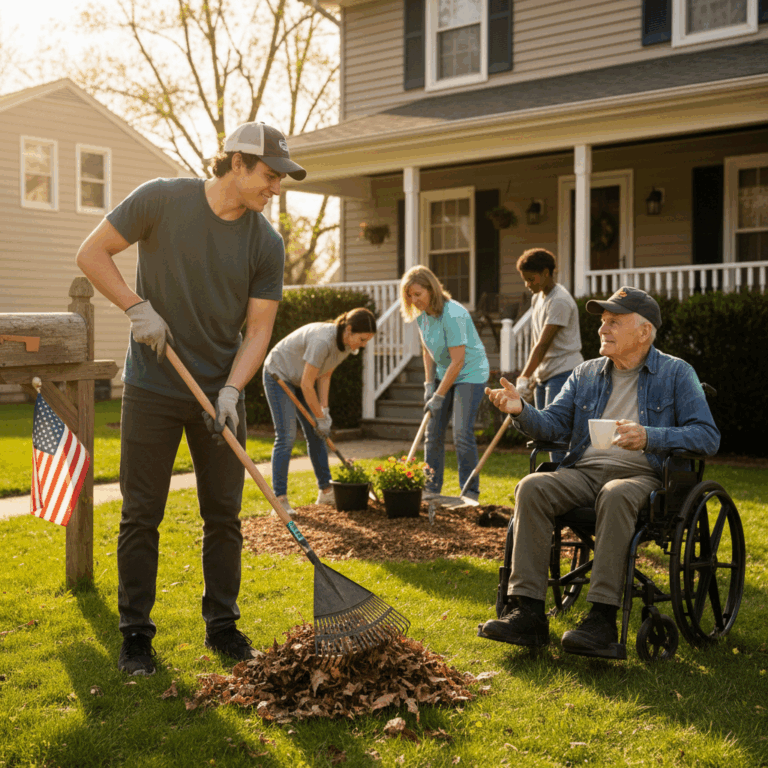
On Memorial Day, honor often looks like parades, ceremonies, and flags. Those rituals matter. But honor also shows up in quieter, everyday moments—when a neighbor notices a veteran’s yard has become overgrown and steps in without being asked. When a volunteer takes a Saturday morning to edge a garden bed or clear debris. When service becomes mutual, and dignity stays intact.
This is where the gap between remembrance and real support becomes clear. A veteran returning home, an older adult who spent decades in uniform, shouldn’t have to choose between paying for yard maintenance and keeping their home safe. Yet many face exactly that trade-off.
The Role of Community Service
Across all 50 states, I Want To Mow Your Lawn connects 1,800+ volunteers with older adults, veterans, and neighbors in need of free lawn and exterior home care relief. The organization started during the pandemic as a grassroots response to a simple truth: people shouldn’t have to manage yards alone, especially when physical limitations, age, or financial hardship make it dangerous or impossible.
Volunteers aren’t contractors. They’re neighbors—people who show up because they recognize that service is a two-way street. When a volunteer helps a veteran with yard work, something deeper happens than just a mowed lawn. There’s recognition. There’s respect. There’s the message: Your home matters. You matter.
Practical Ways to Honor Veterans in Your Community
Memorial Day can be a starting point for sustained action. Here are some concrete ways to support veterans year-round:
- Learn to recognize need without stigma. An overgrown yard doesn’t mean neglect—it often means limited mobility, limited funds, or both. Offer help directly and respectfully, framing it as temporary relief, not a judgment.
- Volunteer your time or skills. You don’t need to own equipment or be a professional landscaper. Basic yard work—raking, clearing, simple edging—makes a measurable difference. Most volunteers give a few hours a month.
- Connect veterans with resources. If a veteran you know is struggling, knowing about free yard care options through IWTMYL can ease their burden and preserve their independence.
- Understand the difference. Memorial Day honors those who died in service. Veterans Day honors all who served. Both matter, and both deserve thoughtful recognition.
Service as a Living Memorial
The most meaningful tributes to those who died in service often take the form of caring for those who survived. When a community shows up to help a veteran maintain their home, when volunteers give their time without expecting payment or recognition, when dignity is protected and independence is preserved—that’s honor in action.
This Memorial Day, take a moment to remember those lost. And then consider: how might you serve those still here?
How to Get Involved
Whether this Memorial Day season inspires a single afternoon of service or a deeper commitment, there are simple ways to help. Veterans and older adults in your community who need yard care support can access IWTMYL’s free services. Volunteers interested in joining the 1,800+ neighbors already making a difference can learn more at iwanttomowyourlawn.com/volunteer.
For those who want to explore how the mission works or test out the volunteer experience, the MOW app offers an interactive way to connect with requests in your area. Download it from the App Store or visit iwanttomowyourlawn.com/play to learn more.
Service doesn’t have to wait for a holiday. It starts when a neighbor decides to show up.
Printable Guide