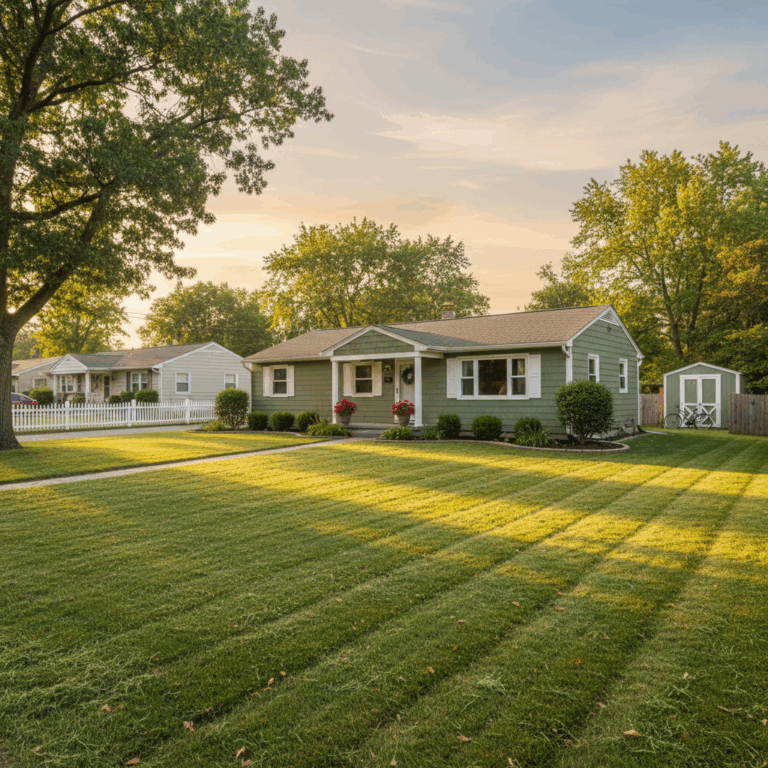
Before the Mow, After the Mow: What Changes in 90 Minutes
A yard left unmaintained doesn’t stay that way invisibly. Tall grass sends signals—to code enforcement, to neighbors, to the person living there. Over time, an overgrown lawn can become a source of stress that touches nearly every part of a person’s life.
When a volunteer from I Want To Mow Your Lawn shows up with a mower on a Saturday morning, 90 minutes of work can shift that calculus entirely. Here’s what actually changes.
The Immediate Practical Relief
For an older adult with arthritis, a veteran managing a physical disability, or a neighbor facing a sudden financial squeeze, lawn care isn’t optional—it’s a burden that grows heavier every week. When grass reaches code violation height, the stakes climb fast.
Unmown grass tells passersby that no one cares about the property, which invites criminal activity—and it creates practical problems. Many neighborhoods have nuisance ordinances in place that carry steep fines or worse for property owners who fail to keep up with their lawns. Fines typically range from $50 to several hundred dollars per violation, and they can accumulate. Left unpaid, they attach to the property as liens—creating a cascade of complications when someone needs to sell or refinance.
A 90-minute mow erases that immediate risk. The yard meets code. The notices stop. The pressure lifts.
The Dignity That Comes With a Maintained Home
But the change isn’t only financial or legal. There’s something psychological that shifts when a person can look out their window and see a yard that’s been cared for.
Research consistently shows that outdoor spaces and gardening have profound effects on mental health. Engagement with gardening fosters mindfulness, emotional stability, cognitive function, and social cohesion, reducing stress, anxiety, and depression. For older adults specifically, gardening has been linked to greater feelings of connection and a stronger sense of purpose.
A freshly mowed lawn isn’t gardening—but it restores the foundation. It says: this place matters. You matter. Someone sees you.
That matters more than it might seem. Dignity shouldn’t depend on a person’s ability to push a mower. Yet for many, an overgrown yard becomes a quiet source of shame—a visible sign of a struggle they may have hoped to keep private. A volunteer’s 90 minutes can undo that.
The Practical Safety Win
There’s also a safety layer. Tall, unmown grass creates habitat for unwanted wildlife. Rodents like rats and mice use unmown lawns as habitat, and these animals may carry disease. Beyond that, overgrown yards hide hazards—exposed roots, debris, uneven ground—that increase fall risk for older adults and people with mobility challenges.
A mowed yard is a safer yard.
Why 90 Minutes Matters
I Want To Mow Your Lawn describes its service as temporary relief, not guaranteed recurring help. That matters. A single mow isn’t forever—but it’s often exactly what’s needed to reset. It buys time. It removes the immediate crisis. It restores a person’s sense of control over their own home.
For a volunteer, 90 minutes is a manageable commitment. For the person on the receiving end, it can be transformative.
The organization has connected 1,800+ volunteers across all 50 states with older adults, veterans, and neighbors in need. Each connection starts the same way: a neighbor reaches out, a volunteer responds, and 90 minutes of work changes the equation.
Getting Involved
Neighbors who want to help don’t need professional equipment or certification. They need availability, willingness, and a mower (or access to one). Becoming a volunteer is straightforward.
For those curious about the ripple effects of yard care, IWTMYL’s free MOW app (available on the App Store and web) offers an interactive way to explore community impact and volunteer stories.
One 90-minute mow might seem small. But dignity, safety, and relief rarely announce themselves in grand gestures. They show up on a Saturday morning with a mower and a neighbor willing to help.
Deep Dive