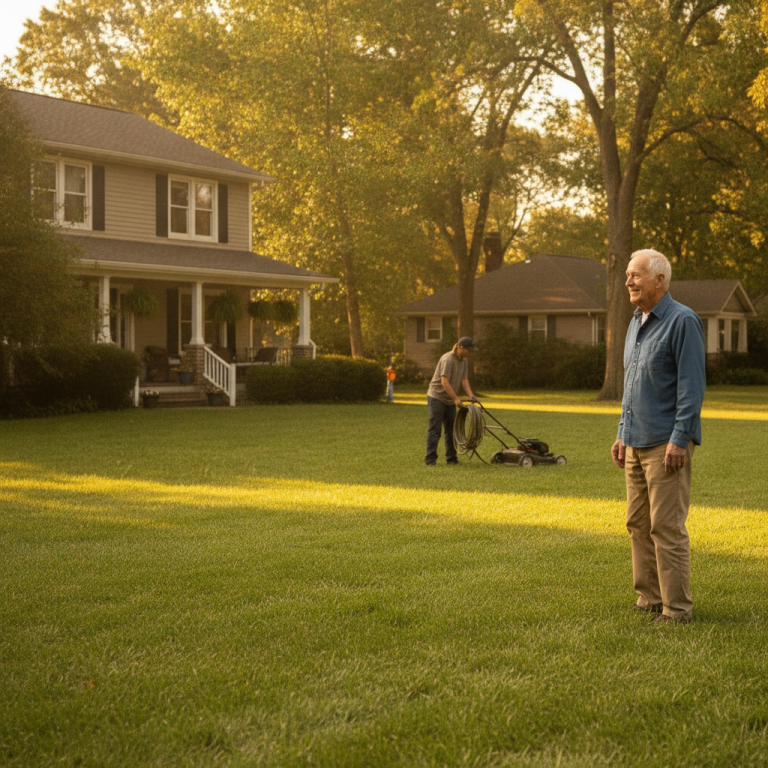
There’s a moment that happens often, quietly: an older adult steps outside after a volunteer has finished mowing, and for the first time in weeks, the yard looks like theirs again. Not someone else’s problem. Not a source of shame or anxiety. Just home.
It’s easy to underestimate what a single mow accomplishes. On the surface, it’s grass cut to a reasonable height. But the ripple effects extend far deeper—into mental health, physical safety, dignity, and the everyday sense that someone still belongs in their own neighborhood.
The Hidden Weight of an Overgrown Lawn
For many older adults, maintaining a home and yard becomes a significant financial and physical obstacle to aging in place—something they desperately want to do. What once took an afternoon now feels unsafe: balance is shakier, joints protest, and the risk of injury looms larger. For veterans, yard work can trigger physical pain from service-related injuries, or it might stir up emotions tied to outdoor spaces and vulnerability.
When the lawn grows beyond what someone can manage, it’s not just aesthetics that suffer. An unkempt yard becomes a visible reminder of lost capacity. It invites judgment from neighbors. It can trigger code enforcement attention. For people already navigating the isolation and identity shifts that come with aging or transition out of service, a neglected yard feels like one more thing slipping out of control.
But there’s something beyond the neuroscience. When a volunteer shows up and mows, they’re also sending a message: Your home matters. You matter. You’re not alone in this.
A volunteer mowing a lawn isn’t just a transaction. It’s a neighbor showing up. It’s a moment of connection in a week that may have felt isolating. It’s practical care delivered with respect, not pity.
What Happens After the Mow
In the week following a mow, patterns shift. An older adult feels safe stepping outside again. A veteran might sit on the porch—visible, present, part of the neighborhood rhythm. Both experience something neurologically and emotionally measurable: reduced stress, improved mood, a sense of control restored.
The lawn stays mowed for a while, yes. But the real change is quieter: a restored sense of dignity, a reminder that independence is possible with the right support, and the knowledge that there are still people who care about neighbors.
Joining This Movement
I Want To Mow Your Lawn operates across all 50 states with 1,800+ volunteers who understand that yard care is community care. There’s no contract, no ongoing obligation—just neighbors helping neighbors when it matters most.
If this resonates, consider becoming part of the solution. Volunteer with IWTMYL and experience firsthand what one afternoon of help can do. Want to explore the impact in a more interactive way? Try the MOW app, available at iwanttomowyourlawn.com/play or in the App Store, to better understand the needs in communities near you.
One mow. One afternoon. One person who cared enough to show up. That’s how change happens at the neighborhood level.
The Science-Backed Checklist: Maximizing Yard Care Benefits for Older Adults and Veterans
Discover the specific timing, techniques, and environmental factors that amplify the mental health and safety benefits of yard work—whether you’re volunteering, coaching a neighbor, or planning support.
Timing and Frequency for Maximum Benefit
Research shows that the mental health and stress-reduction benefits of outdoor yard work become most pronounced around the 20–30 minute mark, with even greater cumulative benefits when yard engagement reaches 2.5+ hours per week. For volunteers and those coordinating care, this suggests a sustainable rhythm: weekly or bi-weekly mowing sessions (typically 45–90 minutes including setup and cleanup) align with evidence-based mental health outcomes.
Pro tip: If scheduling a single longer session, break it into two shorter visits per month. This maintains consistent outdoor engagement and the weekly rhythm that shows the strongest wellbeing correlation.
Environmental and Safety Factors That Matter
Not all yard work is equally beneficial—or safe. Consider these variables:
Temperature and time of day: Early morning (before 10 a.m.) or late afternoon (after 5 p.m.) work is safer and offers better stress-reduction outcomes than midday heat exposure. Monitor weather forecasts and avoid extreme heat alerts.
Sunlight exposure: While green space connection is crucial, aim for a balance of shade and sun. Extended UV exposure carries its own risks. Encourage shade breaks and hydration stations.
Visual access to the home: Positioning yard work so the person can see their home during or immediately after creates psychological closure—a tangible sense of accomplishment and restored control.
Sound environment: If possible, mow when conversation is still possible (or schedule time for a brief chat after). Isolation during the work can diminish the community-care aspect.
Pre- and Post-Mow Practices That Amplify Impact
Before the volunteer arrives: A brief check-in call or message helps the person feel seen and prepared. It’s not a formal assessment—just “We’re coming by on Saturday morning. Is there anything you’d like us to know about the yard?”
During the mow: If the person is present and able, invite them outside (even briefly). The combination of being outside, witnessing their yard being restored, and experiencing a neighbor’s presence multiplies the psychological benefit.
After the work: A few minutes of standing back and looking at the finished yard together—or a photo to document the change—reinforces the sense of accomplishment. Some volunteers offer a brief update: “Your lawn looks great. Same time next month?” This builds predictability and social connection.
Recognizing and Supporting Physical Limitations
Older adults and veterans may have:
Joint or back pain that makes standing for extended periods uncomfortable
Balance issues that make outdoor activity risky if unsupervised
Sensory changes (hearing loss, vision changes) that affect communication
PTSD or anxiety triggered by loud equipment or certain outdoor scenarios
Best practice: Before starting, ask simple, direct questions: “Would you prefer to stay inside, or would you like to sit on the porch?” “Do you want me to let you know when we’re done, or would you rather not hear the mower?” Respect these choices without commentary. The goal is restoration, not obligation.
Measuring Success Beyond the Mow
The real outcome isn’t a perfectly cut lawn—it’s the person’s experience. A few quiet indicators of success:
The person steps outside more often in the days following
They mention the yard or the visit to neighbors or family
They express interest in future visits or seasonal care
Their mood or language shifts toward a sense of control and belonging
These aren’t things you need to formally measure. Just notice them. That’s the real impact.
Connecting Knowledge to Neighbor Care
Understanding the science behind yard work—the cortisol reduction, the BDNF elevation, the loneliness-interruption effect—transforms how volunteers and caregivers approach this work. It’s not charity; it’s evidence-based community health care. Whether you’re volunteering, encouraging a teen to help a neighbor, or advocating for yard care as part of a veteran or aging-in-place support plan, remember this: one afternoon of consistent, respectful yard care can meaningfully shift someone’s week, their stress response, and their sense of belonging. That’s worth knowing.
Support our foundation to unlock this resource
A donation of any amount unlocks all bonus guides, templates, and deep dives for 30 days.
100% goes toward connecting volunteers with neighbors in need.
Choose your donation amount
$
Choose how to donate:
I Want To Mow Your Lawn Inc. is a 501(c)(3) nonprofit and registered charity with PayPal Giving Fund. EIN: 85-3447661. Your donation is tax-deductible.
Have a group?Organize a Community Service Day — we'll match your team with neighbors who need help.
Want to help us reach more neighbors?Our Marketing Toolkit has copy-ready posts, press materials, and flyers you can share in five minutes.