Planning a Corporate Volunteer Day Around Yard Care: A Practical Guide
July 30, 2026 · I Want To Mow Your Lawn
Planning a Corporate Volunteer Day Around Yard Care: A Practical Guide
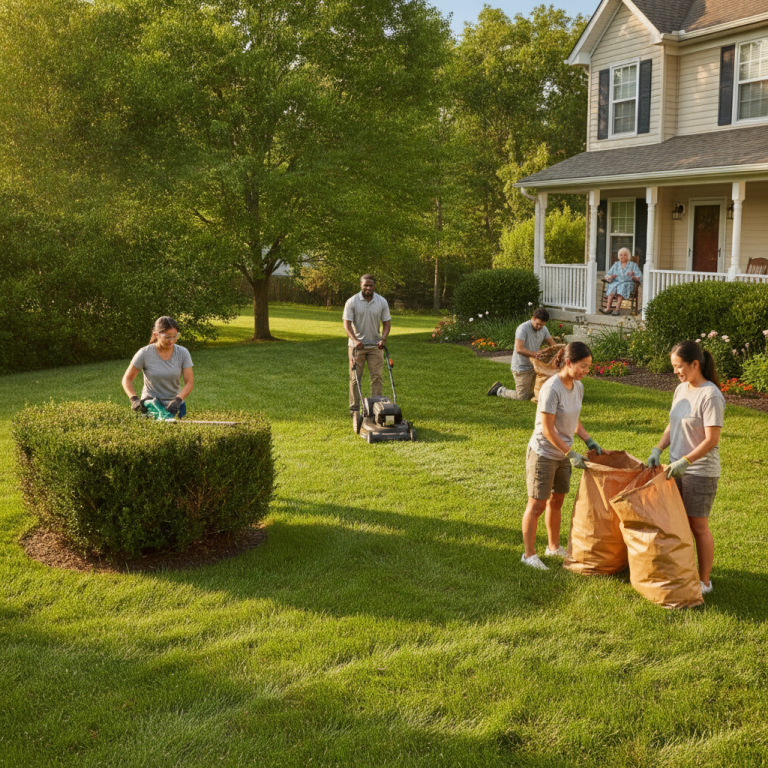
It’s mid-morning on a Saturday, and a group of employees from a local tech company are scattered across three yards in the neighborhood. One team is edging a garden bed. Another is trimming branches that have overgrown a walkway. A third is mowing and bagging clippings. By lunch, three older adults who haven’t been able to maintain their yards in months are looking at their homes differently—not with frustration, but with relief. That’s the power of a well-planned corporate volunteer day focused on yard care.
Yard care is an underrated category for corporate volunteering days, but it hits a lot of the right notes. It’s outdoor work that doesn’t require specialized skills, it tangibly improves a neighbor’s life the same day, it builds team camaraderie, and it addresses a real, immediate need in many communities.
Start with clarity on what yard care means to your group
Before scheduling, decide the scope. Yard care doesn’t mean a full landscape overhaul. It means mowing, edging, trimming, raking, weeding, cleaning gutters, clearing fallen branches, or power-washing walkways. These are tasks that take a few hours and deliver visible results. Be honest about what your volunteers can realistically accomplish in a day, and set expectations accordingly.
Partner with an established organization
Trying to source yard care needs on your own is time-consuming. Organizations like I Want To Mow Your Lawn connect volunteers with older adults, veterans, and neighbors in need across all 50 states. These partnerships handle the vetting, logistics, and matching—all the administrative work that makes a volunteer day actually happen. Your team shows up, does the work, and leaves knowing it made a real difference.
Plan for the practical stuff
Assign a coordinator to handle equipment (mowers, trimmers, rakes, bags), transportation, and communication with volunteers beforehand. Send a reminder 48 hours prior with weather conditions, what to bring (water bottle, sunscreen, closed-toe shoes), and where to meet. Break your group into smaller teams of 3–5 people and assign each team to a specific yard. One person can serve as the point of contact for each location.
Safety first, always
Yard work isn’t risk-free. Make sure volunteers wear appropriate clothing and closed-toe shoes. Have a first aid kit on hand. Brief volunteers on how to use any powered equipment before they touch it. If someone isn’t comfortable with a particular tool, reassign them to a different task. Hydration and shade breaks matter, especially on warm days.
Build in reflection time
At the end of the day, gather the group. Let volunteers share what they noticed or felt. This isn’t mandatory cheerleading—it’s real processing. Many volunteers discover that a “simple” yard care job unlocked someone’s ability to age in place with dignity, or gave a veteran relief from a task that triggered old frustrations. Those moments stick with people and drive future participation.
Consider making it an annual tradition
One volunteer day is great. But sustained impact comes from repetition. If your company adopts yard care volunteering as an annual event, the message shifts from “we did a nice thing once” to “we show up for our neighbors, regularly.” Employees begin to expect it. Community partners can reliably plan around it. Real relationships form.
Yard care volunteering works because it’s practical, visible, and meets people where they actually need help. It doesn’t require special training. It doesn’t demand hours of paperwork. It just asks: Can your team show up, pick up a tool, and help a neighbor reclaim their home’s outdoor space?
If your company is ready to organize a yard care volunteer day, I Want To Mow Your Lawn makes it easy to connect. The organization coordinates the entire process. Alternatively, volunteers can explore opportunities through the MOW app, available on the App Store, which offers flexible sign-ups and real-time community needs. Either way, the result is the same: a yard transformed, a neighbor relieved, and a team that knows they did something that mattered.
The Technical Setup: Organizing Equipment, Safety Protocols, and Logistics for a Corporate Yard Care Volunteer Day
Planning the details is what separates a chaotic Saturday from a smooth, impactful volunteer day. This guide walks through equipment checklists, safety briefings, team assignments, and post-work logistics—so your volunteers can focus on helping, not figuring things out.
Pre-Event Equipment Checklist
Create a master equipment list based on the number of volunteers and yards being served. A typical setup for a team of 12–15 volunteers might include: 3 push mowers, 2 string trimmers, 3 rakes, 2 leaf blowers, pruning shears, hedge trimmers, a few shovels, work gloves (assorted sizes), trash bags (heavy-duty), and a first aid kit. Assign one person to collect, check, and transport all equipment the day before. Test each piece of powered equipment beforehand—a broken mower discovered on-site wastes valuable time.
Pro tip: Label all equipment with tape and marker. It’s easier to account for tools at the end of the day if they’re marked.
Safety Briefing Script
Conduct a 10-minute safety briefing before volunteers disperse to yards. Cover: (1) Proper footwear is required—no sandals, ever. (2) Demonstrate safe grip and stance for powered tools; never use equipment you haven’t been trained on. (3) Point out the hydration station and shade areas. (4) Establish a “no solo work” rule—at least two people per yard. (5) Identify the coordinator on-site who can address injuries or issues immediately. (6) Make clear that if someone feels unsafe, they should speak up and switch tasks.
Team Assignment Strategy
Divide volunteers into balanced teams of 3–4 people per yard. Mix skill levels—pair experienced mowers with first-timers. Assign one person as the team lead for communication. Give each team a printed card with the homeowner’s address, a brief description of the work to be done, and a contact number for the coordinator. Before leaving the volunteer hub, have teams take a photo together—it builds camaraderie and gives you content for future communications.
Time and Task Management
Front-load heavier, more time-sensitive tasks (mowing, trimming) in the first 90 minutes while energy is high. Reserve the final 45 minutes for cleanup, edge refinement, and bag staging. Set phone reminders for staggered task transitions. A typical 3-hour volunteer window for a moderate residential yard breaks down roughly as: 40 minutes mowing and primary trimming, 30 minutes detail work and edging, 30 minutes cleanup and staging, 20 minutes final walk-through and photo.
Weather Contingency and Hydration
Check the forecast 72 hours before and again the morning-of. Heat index above 90°F warrants extended shade breaks every 30 minutes and doubled water supply. Have a backup indoor location identified if weather turns dangerous. Set up a hydration station at a central point (or at each yard if distance allows). Stock water, electrolyte drinks, and simple snacks like fruit. Assign someone to monitor volunteer well-being—heat exhaustion is real and preventable.
Documentation and Cleanup Protocol
Before volunteers leave each yard, conduct a final walk-around. Take a “before and after” photo if the homeowner is comfortable. Have the team lead confirm with the homeowner that the work meets expectations. Collect all equipment and trash into designated bins. Do a quick head count of tools before departing—it only takes 30 seconds and prevents lost equipment. Stage all equipment at the collection point in clean, organized sections by type.
The Reflection and Debrief
Gather the full group for 15–20 minutes once cleanup is complete. Invite volunteers to share one observation or feeling from the day—not forced, but genuinely open. This turns individual yard visits into a collective community experience. It’s also where stories emerge: how a homeowner teared up, or a veteran shared something meaningful, or a team discovered they work really well together. Those moments drive retention and future participation.
Connecting to the Mission: Yard care volunteering removes a barrier that prevents older adults, veterans, and neighbors from maintaining their homes with dignity. The technical planning you’re doing—the equipment, the safety briefings, the team logistics—exists to make that human outcome possible. When volunteers understand they’re not just mowing grass but enabling someone to age in place safely, or relieving a veteran of a task that carries old weight, the day becomes something deeper than a corporate service event. It becomes a real neighborhood.
Support our foundation to unlock this resource
A donation of any amount unlocks all bonus guides, templates, and deep dives for 30 days.
100% goes toward connecting volunteers with neighbors in need.
Choose your donation amount
$
Choose how to donate:
I Want To Mow Your Lawn Inc. is a 501(c)(3) nonprofit and registered charity with PayPal Giving Fund. EIN: 85-3447661. Your donation is tax-deductible.
Have a group?Organize a Community Service Day — we'll match your team with neighbors who need help.
Want to help us reach more neighbors?Our Marketing Toolkit has copy-ready posts, press materials, and flyers you can share in five minutes.