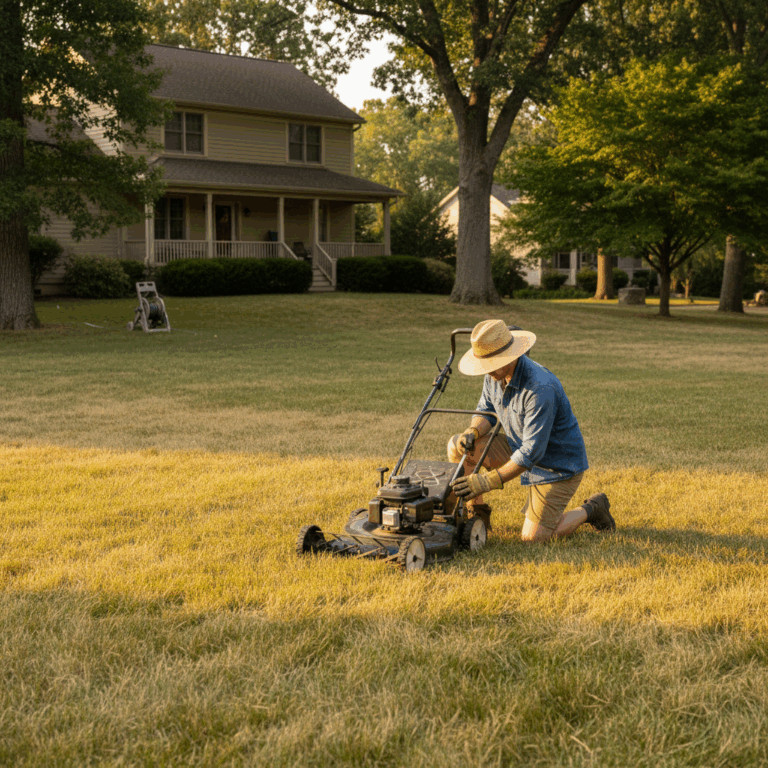
When Heat Hits the Yard
It’s mid-June, and the thermometer keeps climbing. A veteran stepping outside to survey the yard notices the grass looks pale and tired. An older adult who used to spend weekends maintaining the landscape now watches from the porch, uncertain what’s normal and what’s damage. Across the country, above-average temperatures are expected over most of the nation this summer, with the most intense heat centered over the interior West, with 50–60% probability of above-normal temperatures in Utah, Colorado, Nevada, and surrounding states. Even the Northeast and major cities like Boston, Chicago, New York, and Philadelphia are bracing for near or above-average numbers of 90-degree days.
Heat stress on a lawn isn’t always what it looks like, and understanding the difference between temporary dormancy and real damage can ease a lot of worry.
How Grass Responds to Heat
Cool-season grasses—the kind most homeowners in northern and central regions grow—begin to struggle when temperatures push past 85°F. Above 90°F, the pressure intensifies. When heat persists for several days, especially combined with low soil moisture, grass enters a protective state called heat-induced dormancy.
Here’s the important part: dormancy is not death—it’s a natural defense mechanism. The grass isn’t giving up; it’s slowing down to survive. The lawn turns brown or patchy, but cool-season grasses like Kentucky bluegrass will routinely go into a dormant-like condition when water is lacking and temperatures are high, and this is often a temporary condition.
Heat and drought stress show themselves in telling ways. One early sign is the footprint test: walk on the grass and notice whether it springs back. On lawns in need of water, grasses will not spring back following foot traffic, whereas adequate moisture allows grasses to recover. As stress deepens, blade tips brown, color fades from rich green to pale or gray, and the lawn may look wilted.
Practical Steps to Help a Lawn Through the Heat
Let the Grass Grow Taller
One of the simplest tools is the mower height. Taller grass shades the soil and cools it considerably—taller grass can cut surface temperature by up to 15°F. During peak summer heat, raising the mower to 3.5 or 4 inches protects the crown of the plant and keeps roots cooler. This isn’t just theory; it’s biology working in favor of survival.
Water Deeply and Less Frequently
When watering is needed, the goal is deep penetration, not daily sprinkles. One thorough, early-morning watering—about 1 to 1.5 inches per week—encourages deep root growth and helps the plant survive heat better than frequent shallow watering. Early morning is critical; it reduces evaporation and gives the grass a chance to absorb water before the heat of the day.
In some regions facing severe drought, like Utah (which issued a statewide emergency declaration in May 2026 due to drought conditions), local watering restrictions may be in place. Check local guidelines first.
Ease Off on Fertilizer
Summer is not the time to push new growth. Fertilizing during heat stress forces the plant to work harder precisely when it’s trying to conserve energy. Save the nitrogen for spring and fall when the grass is actively growing in cooler conditions.
Mow When It’s Cool, and Mow Less Frequently
If mowing is necessary, do it early morning or late evening when temperatures are lower. Raise the blade height as mentioned above, and consider extending the interval between mows. The grass isn’t growing as fast in heat, so it doesn’t need cutting as often.
Let Dormancy Happen
This may be the hardest advice: accept that brown grass in summer isn’t failure. If the lawn enters dormancy and it’s not being walked on heavily, there’s no harm in letting it rest. The plant is alive; it’s just not putting on green growth. Once cooler, wetter weather returns in fall, it will recover.
When to Reach Out for Help
Managing a yard during extreme heat can be physically demanding—especially for older adults, veterans, or anyone managing property maintenance alongside health challenges or limited mobility. That’s where community support matters. I Want To Mow Your Lawn connects volunteers across all 50 states with neighbors, older adults, and veterans who need temporary relief from yard care.
Whether it’s adjusting mower height, reducing mowing frequency during dormancy, or simply handling the physical work during a heat wave, volunteers provide practical assistance when it’s needed most. This kind of seasonal support—especially during summer stress—can make the difference between a manageable yard and one that becomes overwhelming.
A Reasonable Perspective on Heat and Lawn Health
Summer heat is part of the natural cycle. The average number of heat waves major U.S. cities experience each year has doubled since the 1980s, and lawns will need strategies to adapt. But understanding that dormancy is protection, not panic, takes a lot of the stress out of summer yard care.
Taller grass, strategic watering, and patience through the hot months keep a lawn healthy for fall recovery. And if the physical demands of yard work become too much—especially during a heat wave—there’s no shame in asking for help. Community exists for exactly these moments.
For those interested in volunteering lawn care support in their neighborhood, learn more about joining I Want To Mow Your Lawn’s 1,800+ volunteers. You can also try the MOW app—play a quick game or download from the App Store to support the mission while on the go.
Printable Guide