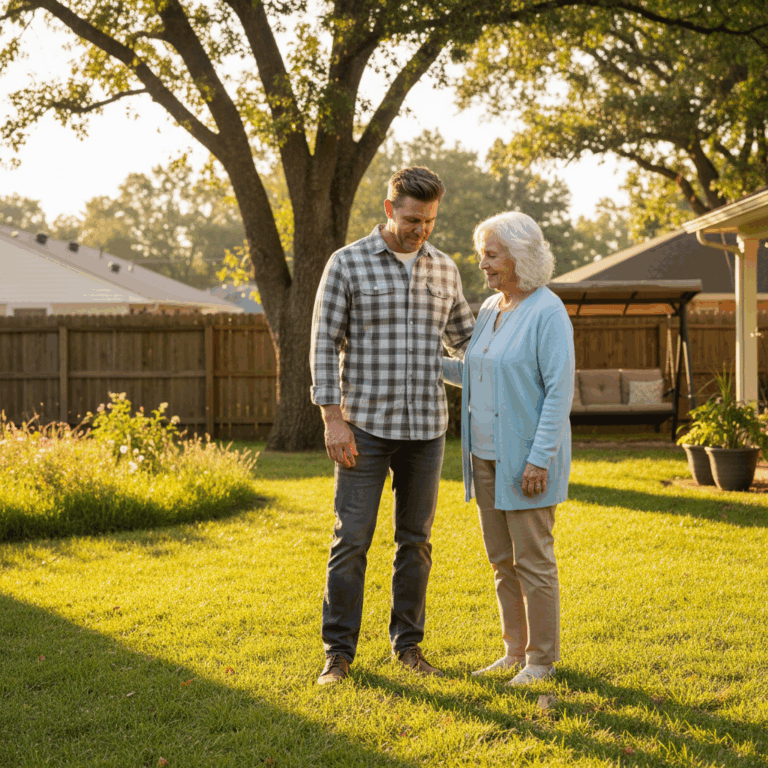
The Moment You Realize Something Has Changed
There’s often no single announcement. Instead, it’s a series of small observations: a parent mentions their back hurts after mowing. The lawn isn’t as neat as it used to be. They’re spending longer outside in the heat, moving slower, stopping to rest. Or maybe there’s a near-miss—a stumble while carrying the weed trimmer, a close call on the slope near the driveway.
For adult children watching a parent age, these moments can bring complicated feelings. Pride in their independence mixes with concern for their safety. The desire to help bumps up against a parent’s reluctance to admit they need it. And underneath it all is the practical question: Now what?
This is real. And it matters more than many people realize.
Why Yard Work Becomes Unmanageable—It’s Not Just “Getting Older”
Age alone doesn’t make yard work dangerous. But the physical changes that come with age—especially when combined with common health conditions—absolutely do.
Age-related declines in strength, balance, and flexibility often compromise older adults’ ability to maintain their homes, making it harder to do the tasks they’ve managed for decades. Arthritis stiffens the joints needed for raking and trimming. Back pain makes bending intolerable. Balance issues turn an uneven lawn into genuine fall risk.
And 30 million elderly Americans fall every year—roughly someone falling every second. Most of these aren’t dramatic slips; they’re the quiet, preventable kind that happen in yards during routine tasks.
Then there’s the equipment itself. Power mowers, trimmers, and pruning tools demand strength, balance, and quick reflexes. A moment of lost footing while operating a running mower, or a loss of grip strength while handling a trimmer on a slope, can lead to serious injury.
The Safety Risk Is Significant—And Often Underestimated
Parents often don’t think about the statistics. But the data is worth knowing, especially for adult children trying to have the conversation about help.
Lawn mower injuries peak in people ages 60 and older, with those 60–79 representing about 57% of all deaths from lawn and garden injuries over the past decade. Nearly 80,000 Americans require hospital treatment from lawn mower injuries each year. And when injuries do happen, they’re expensive and serious: the average cost of a lawn mower injury requiring surgery is $37,000 per patient.
These aren’t rare outliers. They’re the outcome of a simple mismatch between what a body can safely do and what yard work demands.
Summer adds another layer of risk. Older adults are more vulnerable to heat-related illness during outdoor work, and the cardiovascular stress of physical exertion in warm weather can trigger serious health events. A parent might feel fine one moment and suddenly find themselves overheated, dizzy, or worse.
The Conversation Matters More Than the Solution
The first step isn’t finding help—it’s talking about it honestly. Many older adults resist the idea of outsourcing yard work, seeing it as a loss of independence or control over their home. That’s a legitimate feeling, not stubbornness.
A helpful framing: yard work relief isn’t about taking over their home or implying they can’t manage. It’s about removing one specific task that has become unsafe, so they can stay in their home longer and keep doing the things that matter more—gardening, walking the property, enjoying the space they’ve built.
Listen to what they say. If they’re resistant, explore why. Is it cost? Trusting someone new? The emotional weight of admitting they need help? Different barriers need different solutions.
Where Help Comes From—And Why It Matters That It’s Real
Many families hire professional landscapers. That’s a valid choice, though cost and reliability can be challenges. Others turn to family, though that often means adult children spending weekends on yard work instead of time they actually have.
There’s another option: volunteer lawn care networks connecting neighbors who can help with those who need it.
I Want To Mow Your Lawn is a nonprofit that does exactly this. With 1,800+ volunteers across all 50 states, IWTMYL matches older adults, veterans, and neighbors with volunteers who provide free yard and exterior home care relief. It’s not a recurring guarantee—it’s temporary, neighbor-to-neighbor help when someone’s yard has become unmanageable.
The model is simple: a parent or adult child requests help, and IWTMYL connects them with a volunteer in their community. No cost. No long-term contract. Just someone who shows up, does the work, and knows they’re helping someone stay safe in their own home.
What Adult Children Can Do Right Now
Watch for the signs. Notice if yard work is taking longer, if your parent is coming inside exhausted, or if the lawn is looking neglected. These are gentle signals, not judgment.
Start the conversation early. Don’t wait for an injury. When you’re visiting, mention what you’re observing—not as criticism, but as concern. “I noticed you’re moving a little slower when you’re working outside. How are you feeling about it?”
Offer options, not ultimatums. Whether it’s professional help, volunteer support, or family involvement, present it as a choice. Control matters.
Know that accepting help is smart, not weak. A parent who lets go of yard work to focus on health, family, and things that bring joy isn’t declining—they’re adapting.
The Bigger Picture
As the Baby Boomer generation continues to age, more and more families will face this exact moment. The U.S. population is aging rapidly: in 2026, approximately 1 in 5 Americans will be 65 or older. Many of them live independently in homes with yards they’ve maintained for decades.
The question isn’t whether older adults need help with yard work. It’s how communities will step up to provide it—safely, respectfully, and without shame.
That’s where grassroots solutions matter. Neighbors helping neighbors isn’t a corporate service. It’s a community choice to value the safety and dignity of older adults and make it easier for families to do the right thing.
Next Steps
If a parent or older neighbor needs yard care help, consider reaching out to IWTMYL to request free volunteer support. Volunteers are carefully matched with households in their community and typically handle mowing, edging, raking, and basic exterior maintenance.
If you’re interested in being the helper instead of the one asking for help, IWTMYL is always looking for volunteers. You can sign up to volunteer here. There’s also the MOW app, available in the App Store, which makes it easy for volunteers to manage their service.
Yard work is a small thing. But keeping an older adult safe at home, out of the emergency room, and able to stay in the place they’ve built—that’s everything.
Printable Guide