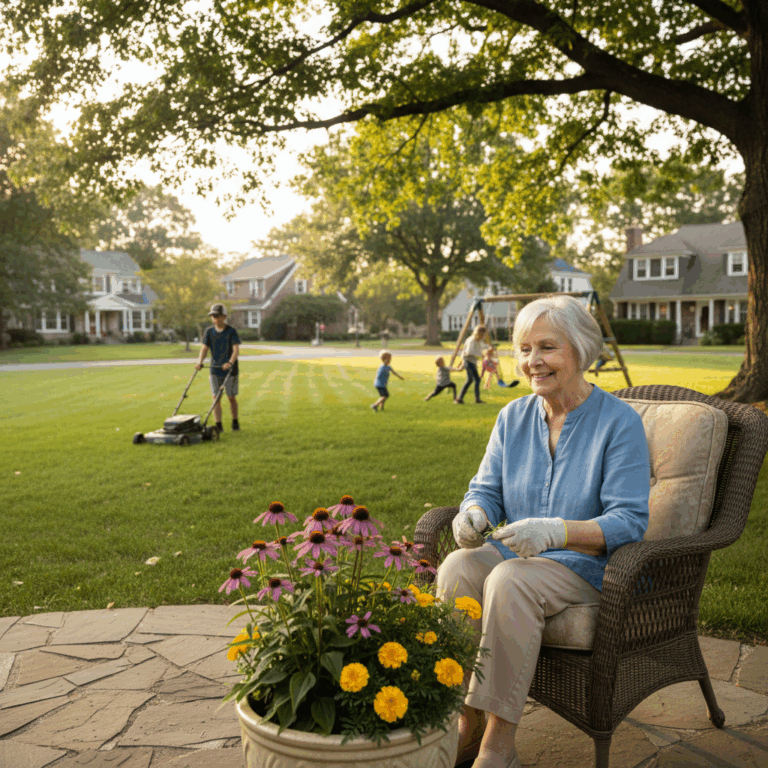
Arthritis and Yard Work: What’s Still Safe and What Should Stop
Spring arrives, the grass grows, and the yard suddenly demands attention again. For an older adult with arthritis, or a veteran managing post-traumatic joint wear, that first warm weekend can feel less like opportunity and more like a ticking clock. The question isn’t always whether yard work is possible—it’s which tasks stay safe and which ones risk real pain or injury.
The scale of this challenge is real. Nearly 54% of adults age 75 and older have arthritis, and the numbers climb with each decade. But age isn’t the only factor. Arthritis prevalence among veterans is roughly double that of non-veterans in younger age groups, a gap that reflects the physical toll of military service and the unique risk for post-traumatic osteoarthritis. Even more telling: rural areas see higher arthritis rates than urban centers, and lower-income households carry the heaviest burden. For many of the neighbors IWTMYL serves, yard maintenance isn’t a weekend hobby—it’s a real barrier to staying safe at home.
The Good News: Some Yard Work Can Help
Before talking about what to stop, it’s worth saying this: movement matters. The CDC affirms that regular physical activity improves arthritis pain and physical function, and light gardening ranks among the low-impact aerobic activities that count toward weekly activity goals. An older adult who can comfortably garden is getting genuine health benefit—better pain management, improved mood, stronger function.
Light raking, hand-weeding flower beds, pruning shrubs with handheld clippers, watering plants, and gentle yard walking all fall into this category. The key word is light. These tasks should feel purposeful, not punishing. If someone finishes and feels energized rather than in pain, that’s the right range.
The Line: When Yard Work Becomes a Risk
The line between helpful and harmful shifts based on a few factors: the specific type of arthritis, how many joints are affected, current pain levels, and how the body responds after activity. But some yard tasks consistently create problems for people with arthritis, and knowing the difference can prevent weeks of regret.
High-risk tasks include:
- Mowing—Repetitive gripping, vibration from the mower, and sustained hand and shoulder tension strain arthritic joints. Even riding mowers require core stability and fine motor control that can aggravate symptoms.
- Heavy raking or bagging—Repetitive overhead motion, gripping force, and bending strain the wrists, shoulders, and lower back.
- Hedge trimming or saw work—Vibration, sustained gripping, and awkward positioning create compounding stress on arthritic hands and shoulders.
- Digging or heavy tilling—Sustained gripping combined with trunk rotation and bending puts serious stress on the hips, knees, and hands.
- Power tool use—Vibration, noise, and sustained postures are particularly hard on arthritic joints.
- Heavy lifting or hauling—Bags of soil, mulch, or brush place sudden stress on wrists, shoulders, and knees.
Pain that appears during or immediately after a task is a clear signal to stop. But delayed pain—soreness that shows up hours later or the next day—is equally important. That’s the body’s way of saying the demand exceeded what the joints could safely handle.
Practical Strategies for Staying Active Safely
Know the 2-hour rule. Most arthritis specialists recommend stopping yard work after 1–2 hours of activity, even if more could be done. Fatigue changes body mechanics and increases injury risk.
Use adaptive tools. Long-handled tools reduce bending. Ergonomic grips reduce strain. Lightweight rakes and hoes exist. Tools matter more than most people realize.
Plan for rest days. If yard work happens on Monday, the body may need Tuesday and Wednesday to recover. That’s not weakness—that’s smart management.
Watch for weather. Cold, damp days often worsen arthritis pain. Warm, dry days are better for yard activity.
Be honest about change. Arthritis isn’t static. What was safe last year might not be safe this year. Checking in with a doctor about what’s realistic is worth the appointment.
When It’s Time to Ask for Help
There’s no shame in reaching the point where yard work isn’t safe anymore. In fact, it’s the responsible choice. An overgrown yard is fixable. An injured shoulder or inflamed knee is not—not easily, anyway.
That’s where community comes in. Across all 50 states, IWTMYL volunteers help older adults, veterans, and neighbors who need free lawn and exterior care relief. These are neighbors, not contractors—people who show up because they believe nobody should have to choose between their health and a safe home.
Recognizing when to stop yard work isn’t a loss of independence. It’s wisdom. And asking for help isn’t weakness—it’s the foundation of neighborhood strength.
Next Steps
If yard work has become painful or unsafe, or if a neighbor is visibly struggling with lawn care, there are options. Those interested in volunteering can join IWTMYL’s volunteer network, and those in need can reach out through the same channel. IWTMYL also offers the MOW app—available to play online or download from the App Store—which makes it simple to connect with local help and stay part of the broader movement.
Arthritis is real. So is community. Both matter.
Downloadable Template