Aging in Place in 2026: What It Really Takes—and Where the Gaps Are
May 10, 2026 · I Want To Mow Your Lawn
The Dream vs. the Reality
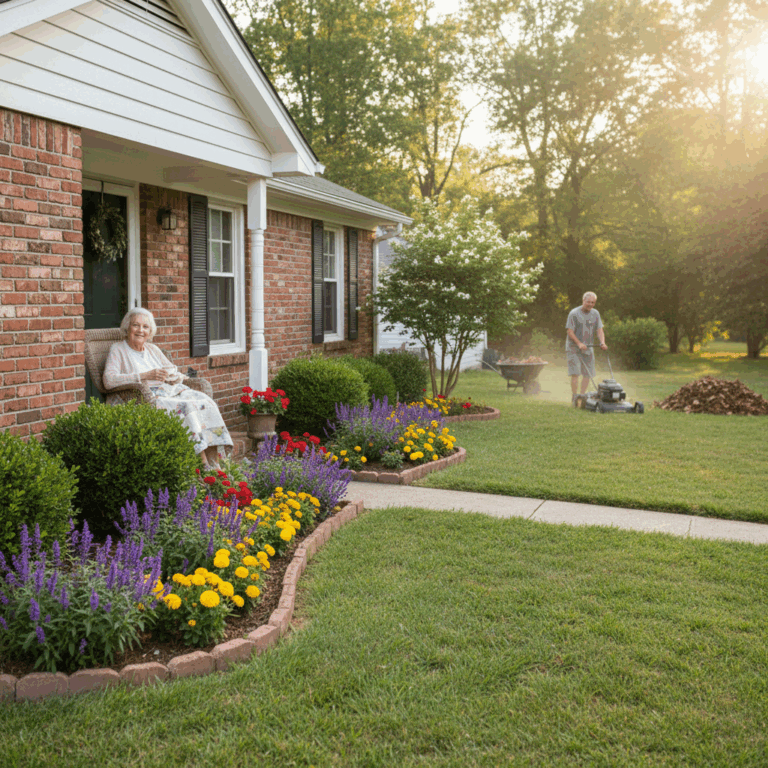
An older adult sits on the porch of the home they’ve lived in for thirty years. The lawn has grown wild. The gutters need cleaning. They want to stay here—really want to—but the maintenance keeps piling up, and the cost of hiring help feels impossible on a fixed income. They’re not alone in this tension.
But here’s where the gap widens: Among those who want to stay home with a caregiver, only 37% say it’s extremely or very likely to happen. Eighteen percent say it’s not too or not at all likely.
The barrier? Cost.
The Cost Problem
Nearly half of older adults say that cost-of-living increases are making it more difficult to age in place. Only 21% have long-term care insurance. Home maintenance—yard work, gutter cleaning, minor repairs—becomes a luxury item on a fixed income, which means it often doesn’t happen at all. A lawn goes unmowed. Debris piles up. The exterior of a home that someone has invested decades in begins to deteriorate, and with it, so does the older adult’s sense of security and independence.
This is where temporary relief matters.
Practical Support, Temporary Relief
Aging in place isn’t about grand interventions. It’s about the smaller supports that keep someone stable in their home. A neighbor who shows up to clear storm debris. A volunteer who mows the lawn so the grass doesn’t become a tripping hazard or code violation. Someone who catches the small problems before they become expensive ones.
I Want To Mow Your Lawn connects 1,800+ volunteers across all 50 states with older adults, veterans, and neighbors who need exactly this kind of relief. The service is free. The help is temporary. The impact on whether someone can actually stay home—that’s real.
An overgrown yard isn’t just an aesthetic issue. It can trigger code violations, create safety hazards, and push someone toward a decision they didn’t want to make: leaving home. But when that yard gets mowed, when the gutters get cleaned, when someone shows up and says “this is what neighbors do,” the calculus changes. Staying home becomes possible again.
May’s Lesson
Older Americans Month 2026 focuses on “Champion Your Health,” which means taking an active role in managing health, advocating for oneself, and accessing the preventive care that keeps people independent. Yard work—keeping the exterior safe, manageable, and code-compliant—is part of that prevention. It’s not glamorous, but it’s foundational.
Aging in place works best when it’s supported by community. Not by luck. Not by someone affording expensive contractors. By neighbors who show up.
What This Means for Community
If an older adult is someone’s parent, relative, or neighbor, the question isn’t whether they’ll age in place—it’s whether they’ll do it safely and with dignity. The practical supports that make that possible don’t have to be expensive. They have to be available, reliable, and offered with respect.
That’s what volunteer yard care does. It removes one barrier. It makes one hard thing easier. And across thousands of homes in all 50 states, it’s the difference between staying and leaving.
Getting Involved
For those interested in supporting older adults in their communities, volunteering with I Want To Mow Your Lawn requires no prior experience. The organization provides volunteers with resources, safety guidance, and connections to the people who need help. Learn how to volunteer here.
For those looking to understand volunteer yard care better or to engage younger generations in the mission, the MOW app offers an accessible way to learn about the movement. Play the MOW app or download it from the App Store.
Aging in Place Readiness Checklist: 12 Steps to Help Older Adults Stay Home Safely
A practical, printable checklist for family members, caregivers, and neighbors to help assess whether an older adult’s home is set up to support aging in place. Covers safety, maintenance, accessibility, and community connections.
Aging in Place Readiness Checklist
A practical guide for family members, case managers, and neighbors
Before You Begin
Use this checklist to identify gaps in an older adult’s home setup for aging in place. Some items address safety, others address maintenance and practical support. Not every item will apply to every person—adjust based on individual needs, mobility, and local climate.
Safety & Accessibility
☐ Walkways and entry: Are driveways, sidewalks, and entryways clear of trip hazards, cracks, or uneven surfaces?
☐ Lighting: Are exterior areas (porch, walkway, driveway) well-lit, especially at night?
☐ Stairs and railings: Are outdoor stairs stable? Do railings exist where needed?
☐ Grab bars and handholds: Are there secure grab bars or rails near exterior steps, porches, or deck areas?
☐ Flooring: Are there slip hazards on porches, decks, or entry areas due to moss, ice, or moisture?
Yard & Exterior Maintenance
☐ Lawn care: Is the grass kept to a manageable height? (Overgrown lawns create fire hazards and code violations.)
☐ Debris: Are fallen branches, leaves, or storm debris cleared regularly?
☐ Gutters: Are gutters and downspouts clear and functioning? (Standing water attracts mosquitoes and causes foundation issues.)
☐ Vegetation: Are shrubs and tree branches trimmed back from the home? Do they block views or create hiding spots?
☐ Pests: Are there signs of rodent, insect, or pest activity around the exterior?
Practical Support & Resources
☐ Help network: Does the older adult have neighbors, family, or trusted contacts nearby who can provide occasional support?
☐ Volunteer resources: Is the older adult aware of free or low-cost yard care and home maintenance volunteer programs in the area?
☐ Transportation: Can the older adult access medical appointments, groceries, and community services without driving?
☐ Communication: Does the older adult have reliable phone/internet access and know how to reach help if needed?
Legal & Compliance
☐ Code compliance: Is the property at risk of code violations due to overgrown vegetation, debris, or exterior maintenance issues?
☐ Insurance: Does homeowners insurance remain current and adequate?
Next Steps
If you’ve identified gaps:
Prioritize the highest-safety issues first (trip hazards, lighting, accessible entry).
For yard and exterior maintenance, explore free volunteer resources like I Want To Mow Your Lawn, which connects older adults with volunteers who help with lawn care and light exterior work—no charge, no strings attached.
Talk with the older adult about what support they feel comfortable accepting and what they’d like to maintain independence in.
Check in regularly. Needs change, and seasonal issues (fall leaves, winter debris, spring growth) require ongoing attention.
About I Want To Mow Your Lawn: This 501(c)(3) nonprofit connects 1,800+ volunteers across all 50 states with older adults, veterans, and neighbors who need free yard and exterior home care relief. Aging in place works best when it’s supported by community—not luck or expensive contractors. If you or someone you know could benefit from volunteer yard help, or if you’d like to volunteer, visit iwanttomowyourlawn.com.
Support our foundation to unlock this resource
A donation of any amount unlocks all bonus guides, templates, and deep dives for 30 days.
100% goes toward connecting volunteers with neighbors in need.
Choose your donation amount
$
Choose how to donate:
I Want To Mow Your Lawn Inc. is a 501(c)(3) nonprofit and registered charity with PayPal Giving Fund. EIN: 85-3447661. Your donation is tax-deductible.
Have a group?Organize a Community Service Day — we'll match your team with neighbors who need help.
Want to help us reach more neighbors?Our Marketing Toolkit has copy-ready posts, press materials, and flyers you can share in five minutes.