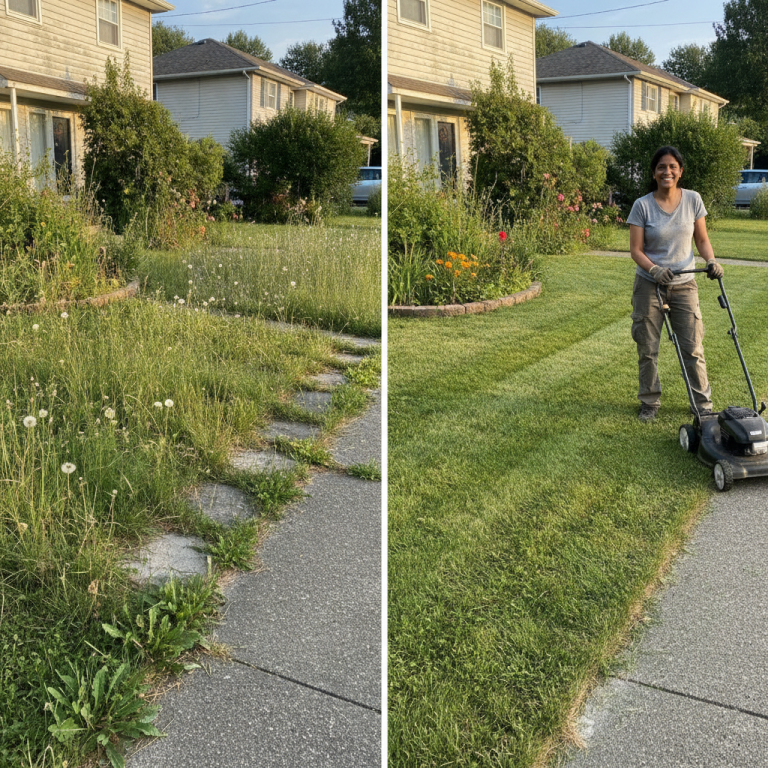
The Same Yard, Two Different Visits
A property sits quietly on a suburban street. The grass is tall. Weeds have taken over the flower beds. A neighbor notices it. A complaint is filed. Within days, an official letter arrives in the mailbox: a code enforcement violation notice, complete with a deadline and the implicit threat of a fine.
That same yard might also be noticed by someone very different—a volunteer from the community who saw a request for help and showed up on a Saturday morning with a mower and a willingness to work.
Same property. Same overgrown lawn. Completely different intervention, outcome, and human experience.
What the Code Officer Sees
Code enforcement exists for legitimate reasons. Municipal codes protect neighborhood safety, property values, and public health. A code officer conducting an inspection has a clear mandate: identify violations of local ordinances and document them.
When an officer approaches that overgrown yard, they’re seeing it through a legal and regulatory lens. They’re checking whether grass height exceeds local limits—which typically range from 6 to 12 inches depending on the city. They’re looking for evidence of code violations: accumulated debris, noxious weeds, visible junk, deteriorating structures.
The officer isn’t making a judgment about the person who lives there. They’re performing their job—investigating a complaint, documenting findings, and issuing a notice if violations exist. The system is impersonal by design.
But then come the numbers.
About 30 to 40 percent of all code enforcement complaints involve property maintenance issues like tall grass, weeds, trash, and debris. In Garland, Texas alone, fiscal year 2024–25 saw more than 5,700 code complaints and more than 1,900 criminal code citations issued. These are not rare edge cases. They’re routine work for enforcement officers across the country.
What happens next matters enormously. If the property owner doesn’t—or can’t—fix the violation within the given timeframe, fines accumulate. Some cities issue citations that accrue daily—a $50 citation could become $500 in 10 days or $1,500 in a month. Left unpaid, these fines can become tax liens on the property, making it nearly impossible to sell. The machinery of enforcement, once set in motion, doesn’t stop because someone couldn’t afford a lawn service.
What the Volunteer Sees
A volunteer looking at that same yard sees possibility, not violation.
They see an older adult who can no longer physically manage yard work. Or a veteran dealing with mobility issues or mental health challenges that make routine home maintenance feel impossible. Or a neighbor without resources to hire help, watching their property deteriorate and feeling shame mount with each passing week.
The volunteer doesn’t arrive with a citation or a deadline. They arrive with equipment, time, and a simple willingness to help—no strings, no payment expected, no judgment implied.
They mow. They trim. They clear. And in a few hours, the yard is transformed. But more than that: the person living there has been given relief. The immediate threat of fines is averted. The isolation that often accompanies a deteriorating home is interrupted by human presence and practical kindness.
The Gap That Matters
Code enforcement and volunteer yard care aren’t enemies. Both exist in response to real need. But they operate from different places and produce different outcomes.
Code enforcement is reactive and punitive by necessity—it’s the last resort when voluntary compliance hasn’t happened. Volunteers are preventive and compassionate—they step in before crisis occurs, offering help without judgment or legal consequence.
The gap between these two approaches matters deeply. A person facing code enforcement fines doesn’t need punishment; they likely need help. An older adult with mobility restrictions doesn’t need citations; they need temporary relief so they can stay in their home with dignity. A veteran struggling to maintain their property doesn’t need legal pressure; they need community support.
I Want To Mow Your Lawn exists in that gap. The organization connects more than 1,800 volunteers across all 50 states with older adults, veterans, and neighbors who need free lawn and exterior home care relief. The model is simple: identify need, mobilize neighbors, provide temporary assistance before problems spiral into legal and financial crisis.
It’s not a replacement for municipal codes or enforcement. It’s an alternative to letting problems fester until enforcement becomes necessary.
What This Means Practically
If someone’s yard is slipping—whether it’s their own property or a neighbor’s—the smart move is to seek help early. That might mean reaching out to a volunteer organization before a complaint ever reaches code enforcement. It might mean helping an older adult arrange seasonal support. It might mean noticing a neighbor’s struggle and asking how to help, rather than filing a complaint.
The code officer will still be there if needed. But they’re the final stop, not the first one.
Community care happens first.
Getting Involved
Volunteers make this work possible. Whether someone has a few hours on a Saturday morning or wants to coordinate yard care for a group of neighbors, there’s a role to play in building community resilience before crisis hits.
Those interested in volunteering can sign up through I Want To Mow Your Lawn’s volunteer portal. For a fun way to engage with the mission, the MOW app is available to play online or download from the App Store—a small way to support the cause while learning about yard care and community building.
Printable Guide