When a Yard Becomes a Legal Problem
The notice arrives in the mail or gets posted on the front door: “Violation of Property Maintenance Code.” The language is official and serious, but the situation often feels sudden to the property owner. A yard that’s gotten overgrown—maybe because of illness, mobility issues, financial strain, or simply being overwhelmed—has caught the attention of code enforcement. Now there’s a deadline, and the threat of fines looms.
For older adults, veterans, and families stretched thin, this moment can feel like the walls are closing in. But understanding how code enforcement actually works—and knowing that help exists—can change the outcome.
How Code Enforcement Works
Code enforcement refers to the process local governments use to enforce property maintenance standards on existing buildings and properties. In plain terms: cities and counties set rules about how properties should be maintained, and they have staff who investigate violations and issue citations when those rules aren’t met.
Violations can be identified in a few ways:
- Neighbor complaints — someone reports overgrown grass or maintenance issues
- Routine inspections — code officers patrol neighborhoods
- Proactive checks — officers focus on specific areas flagged as high-priority
When an officer finds a violation, they typically post a notice on the property and mail a citation to the owner with a deadline to fix the issue. Sounds straightforward enough. But here’s where things can go sideways.
The Snowball Effect: How Fines Escalate
Many property owners assume they’ll get one citation and one fine. That’s not always how it works. Some cities don’t just issue a one-time citation—instead, the citation sets a fine amount that accrues each day until the city confirms the violation has been fixed. This means a $50 citation could become $500 in ten days, or $1,500 in a month, depending on local ordinance.
Here’s a snapshot of how different cities approach grass height limits and penalties:
- Dearborn, Michigan: Grass must not exceed 6 inches
- Winston-Salem, North Carolina: Grass cannot be higher than 8 inches
- Richmond, Virginia: Grass and weeds must be cut to less than 12 inches
- Bettendorf, Iowa: From May to November, grass cannot exceed 10 inches
And the fines? They vary just as widely. In Corpus Christi, Texas, fines for non-compliance range from $100 up to $2,000. Some Florida municipalities impose fines of $100 to $250 per day. In worst-case scenarios, these daily fines compound into thousands of dollars within weeks.
Adding another layer of hardship: many cities don’t require sending homeowners proper notice of a violation, so fines may accrue without a homeowner even being aware of an issue.
Beyond Fines: Liens and Property Loss
When fines go unpaid, the consequences extend beyond the bill itself. Property owners who don’t pay fines could face liens, which can make it difficult to sell the property later on. In some cases, if the property owner doesn’t resolve the violation within the required timeframe, the city may perform the work itself and place a tax lien against the property.
For older adults on fixed incomes or families already struggling financially, this can be the difference between keeping a home and losing it.
Why This Hits Harder Than It Should
Code enforcement exists for legitimate reasons—maintaining neighborhoods, preventing hazards, protecting property values. But the system often doesn’t account for why a yard became overgrown in the first place. Mobility limitations. Medical crises. Caregiver burnout. Inability to afford a lawn service. A sudden job loss. Depression or grief. These are the real reasons properties fall into disrepair, and none of them are solved by a fine.
The irony is that fining someone who can’t afford lawn care makes it less likely—not more—that they’ll be able to fix the problem.
Getting Ahead: What Families Can Do
If you’ve received a violation notice:
- Read it carefully and note the exact deadline and fine amount
- Take photos of the property as it currently is (documentation helps if you later dispute the notice)
- Contact the code enforcement office directly—sometimes there’s flexibility on timelines, especially if you can show you’re actively working on the problem
- Ask about hardship exemptions or grace periods (some municipalities offer them)
- Explore free and low-cost yard help options immediately
If you’re concerned but haven’t been cited yet:
- Know your local grass height limit (check your city or county website)
- Take photos regularly to track your property’s condition
- If yard maintenance is becoming difficult, reach out for help before code enforcement does
Free Help Is Available
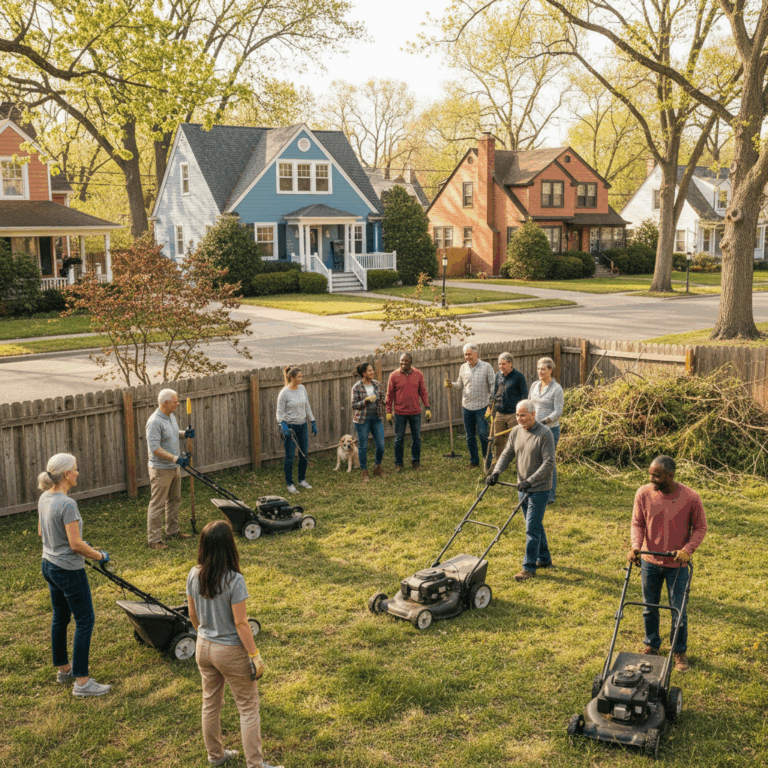
This is where I Want To Mow Your Lawn steps in. IWTMYL connects 1,800+ volunteers across all 50 states with older adults, veterans, and neighbors who need free lawn and exterior home care relief. Volunteers aren’t contractors—they’re neighbors showing up with mowers, trimmers, and rakes to help someone get their yard back to compliance.
For anyone facing code enforcement, IWTMYL isn’t a permanent solution, but it can be the immediate relief needed to stop the fine clock and buy time to sort out a longer-term plan. Many municipalities are willing to work with property owners who can show they’re taking action.
Getting help doesn’t mean admitting defeat. It means taking the problem seriously before it becomes a financial crisis.
The Takeaway
Code violations rarely happen in a vacuum, and they rarely resolve themselves. The longer a yard remains overgrown, the higher the fines climb and the more desperate the situation becomes. But help is available, and reaching out early—whether to code enforcement for a grace period, to friends and family, or to free volunteer lawn care services—can make all the difference.
A yard that needs mowing is a fixable problem. Thousands of dollars in fines and a lien on a property is not.
Ready to Help a Neighbor or Get Involved?
Volunteers needed in every state. Whether you have an hour to spare or want to organize a group, you can sign up to volunteer with I Want To Mow Your Lawn here. If you prefer a more interactive way to see how the mission works, try the MOW app or download it from the App Store to learn more while supporting the cause.
Printable Guide