Drought Conditions and Lawn Care: What to Do When Water Restrictions Hit
August 1, 2026 · I Want To Mow Your Lawn
When the Tap Runs Short: Navigating Drought and Yard Care
August heat brings familiar challenges to yard work, but this year feels different for millions of households. The sprinkler that ran freely in June is now regulated by city ordinance. The afternoon watering window has shrunk to two days a week—or disappeared altogether. A neighbor who spent decades maintaining a green lawn is suddenly facing restrictions that make that impossible, not because of neglect, but because the water simply isn’t there.
Water restrictions are typically tiered, meaning they tighten as drought deepens. A Stage 1 restriction might limit outdoor watering to certain days of the week. A Stage 2 or 3 restriction can cut allowed usage significantly—or ban it entirely for non-essential purposes like lawn irrigation.
The first step is knowing what applies where you live. Check local water authority websites, city ordinances, or county drought information centers. Restrictions change frequently, and penalties for violations can be steep.
The Reality: Most Outdoor Water Goes to Waste Anyway
Restrictions, while restrictive, can actually lead to smarter practices. Shorter watering windows, applied early morning or evening, can be more efficient than longer midday sessions that lose water to heat. Deep, infrequent watering (when allowed) encourages deeper root systems than frequent shallow watering.
Practical Strategies for Restricted Watering
Accept dormancy as normal. Cool-season grasses naturally go dormant in July and August—this is survival, not failure. A dormant lawn that survives the summer will recover in fall. Do not fertilize dormant grass.
Mow higher. Taller grass shades soil, reducing water loss. If restrictions allow any watering, taller grass makes every drop count.
Stop fertilizing. Fertilizer encourages growth that demands more water. In drought, less feeding means less thirst.
Use mulch on beds. Landscape beds and gardens lose water faster than lawns. Mulch reduces evaporation significantly.
Prioritize trees and shrubs. If watering is severely limited, focus on woody plants that provide long-term shade and structure. Young trees especially need periodic deep watering to establish.
Rethink the landscape. Native plants adapted to local climate require far less supplemental water. This is a good time to explore alternatives to thirsty ornamentals.
What Communities Can Do Together
Drought doesn’t affect everyone equally. An older adult on a fixed income can’t suddenly replace their entire landscape. A veteran with mobility challenges can’t hand-water delicate plants during a narrow watering window. A busy family working multiple jobs has no time to hand-irrigate their trees.
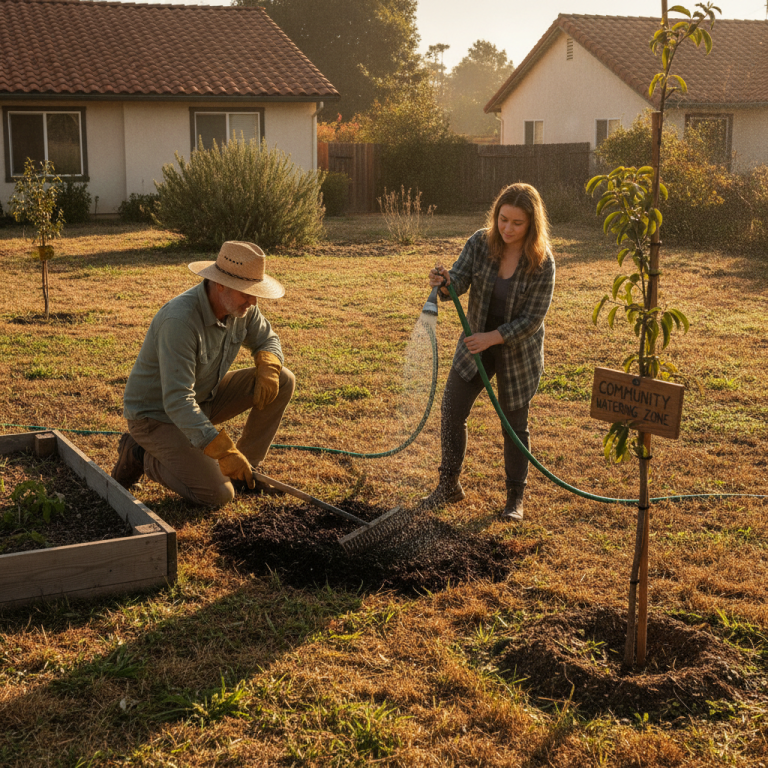
This is where neighbors matter. Helping someone adapt to drought might mean mulching their beds to conserve water, adjusting their mowing height to shade the soil, removing non-essential plants, or simply checking in during heat advisories. It’s not about maintaining perfection—it’s about helping people maintain dignity and health through a difficult season.
I Want To Mow Your Lawn connects 1,800+ volunteers across all 50 states with older adults, veterans, and neighbors facing yard care challenges. In drought conditions, that support becomes even more critical. Volunteers can help adapt yards to water restrictions, mulch strategically, and remove deadweight plants—practical steps that honor both water scarcity and human need.
The Bigger Picture
Restrictions feel restrictive because they are—but they’re also honest. They acknowledge that water is finite and that everyone’s lawn doesn’t matter more than everyone’s drinking water. Communities that adapt together, help each other adjust, and rethink what “healthy yards” actually look like often emerge stronger.
This August, as heat settles in and restrictions tighten, the goal isn’t a perfect lawn. It’s keeping neighbors safe, connected, and supported through a season that demands both pragmatism and compassion.
Want to Help?
Volunteers are needed now more than ever—especially in drought-affected regions. Whether it’s mulching, mowing, tree care, or simply checking on neighbors during extreme heat, there’s meaningful work to be done. Explore ways to volunteer with I Want To Mow Your Lawn.
Not ready to commit yet? Try the MOW app to connect with yard care resources, request help, or learn more about community support in your area. Available on the App Store and Google Play.
Drought-Ready Yard Tactics: Specific Techniques for Water Restrictions
When restrictions hit, generic advice doesn’t cut it. This guide covers the exact mulching depths, mowing heights, watering schedules, and plant swaps that work in real drought—plus how volunteers can help neighbors adapt without overstepping.
Mulching for Maximum Water Retention
Mulch is one of the most cost-effective water-saving strategies. A 2–3 inch layer of organic mulch (wood chips, bark) reduces soil evaporation by up to 70 percent. Apply mulch 2–4 inches from tree trunks and shrub stems to prevent rot and pest issues. In landscape beds, this alone can cut supplemental watering needs by half.
If mulch isn’t available, fallen leaves work in a pinch. The goal is breaking the direct line between sun and soil.
Mowing Height: The Underrated Water-Saver
Mow grass to 3–4 inches during drought, not the typical 2–2.5 inches. Taller grass creates a denser canopy that shades soil, reducing evaporation significantly. Taller grass also develops deeper root systems that access moisture further down in the soil profile. Mow less frequently—every 10–14 days rather than every 7—to reduce plant stress.
Leave grass clippings on the lawn (mulch-mowing). Clippings return moisture and nutrients, reducing the need for supplemental fertilizer (which increases water demand).
Strategic Watering: Timing and Depth
When restrictions allow watering, apply it in early morning (before 8 a.m.) or late evening (after 6 p.m.) to minimize evaporation loss. Water deeply but infrequently: one 1-inch watering per week beats four 0.25-inch sessions. Deep watering encourages root growth; shallow watering keeps roots near the surface where they dry out faster.
Use drip irrigation or soaker hoses rather than sprinklers—drip systems deliver 90+ percent of water to plant roots vs. 50–70 percent for overhead spray.
Plant Selection: Native and Drought-Tolerant Alternatives
Ornamental grasses, native wildflowers, and adapted shrubs require 50–75 percent less water than traditional landscape plants. Examples include coneflowers, black-eyed Susans, sedums, ornamental grasses (fountain grass, feather reed grass), and native shrubs (serviceberry, sumac, dogwood—species vary by region). Check local university extension websites for native plant lists specific to your region.
Replace turf in low-traffic areas with mulched beds or native plantings. This isn’t “giving up”—it’s adapting the landscape to reality.
Prioritization During Severe Restrictions
When outdoor watering is banned or severely limited, prioritize in this order:
Newly planted trees and shrubs (first 2–3 years): These haven’t developed deep root systems and will die without water.
Mature trees providing shade: Deep-rooted mature trees can survive longer but benefit from deep watering at the drip line during extreme drought.
Vegetables and edibles (if home gardens are permitted): Food production is often exempt from restrictions; prioritize high-value crops.
Turf lawns: Last on the list. Lawns are resilient; they go dormant in summer and recover in fall.
Common Mistakes Volunteers and Homeowners Make
Mistake 1: Frequent light watering. This keeps roots shallow and makes plants more stressed. Instead, water less often but deeper.
Mistake 2: Fertilizing during drought. Fertilizer pushes new growth that demands more water. Skip fertilizing from June through August in drought conditions.
Mistake 3: Ignoring dormancy. A brown lawn in July isn’t dead—it’s surviving. Dormant grass recovers fully in fall if it’s not over-stressed.
Mistake 4: Over-mulching. More than 4 inches of mulch can retain too much moisture and invite pests. Stick to 2–3 inches.
How Volunteers Can Help Adapt Yards
Volunteers don’t need to be experts, but these focused tasks make a measurable difference:
Apply or refresh mulch in landscape beds (2–3 inches, pulled back from stems).
Adjust mowing height on rotary mowers to 3–4 inches and confirm mulch-mowing capability.
Remove ornamental plants that are water-intensive or non-native, replacing them with drought-tolerant options.
Install or adjust soaker hose layouts to target high-priority plants (new trees, edibles).
Clear gutters and downspouts to maximize rainwater capture when restrictions allow.
Trim dead branches from stressed trees to reduce water demands on living wood.
The goal isn’t perfection—it’s resilience. Helping a neighbor understand that dormancy is normal, that mulch matters, and that their yard can survive drought with small, smart changes is powerful support during a stressful season.
Support our foundation to unlock this resource
A donation of any amount unlocks all bonus guides, templates, and deep dives for 30 days.
100% goes toward connecting volunteers with neighbors in need.
Choose your donation amount
$
Choose how to donate:
I Want To Mow Your Lawn Inc. is a 501(c)(3) nonprofit and registered charity with PayPal Giving Fund. EIN: 85-3447661. Your donation is tax-deductible.
Have a group?Organize a Community Service Day — we'll match your team with neighbors who need help.
Want to help us reach more neighbors?Our Marketing Toolkit has copy-ready posts, press materials, and flyers you can share in five minutes.