How One Mow Can Change Someone’s Week
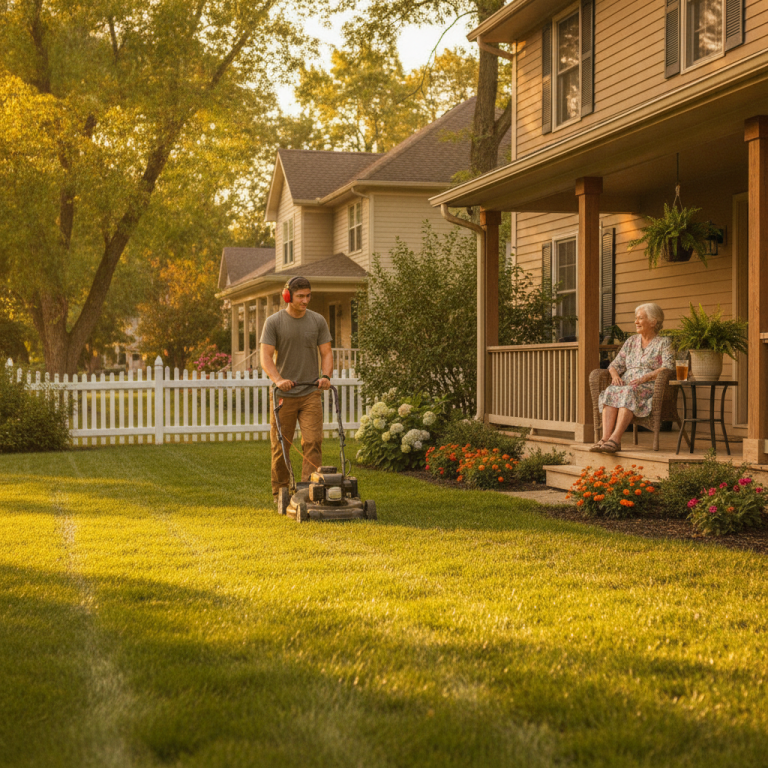
There’s a moment that happens on a lot of lawns across America that nobody talks about much. A volunteer shows up on a Saturday morning. The grass gets mowed. But what actually changes isn’t just the lawn.
An older adult who’s been watching their yard get overgrown—not from laziness, but because their knees don’t work the way they used to—gets to sit on the porch and watch someone care enough to help. A veteran who hasn’t had a conversation in days suddenly has a neighbor asking how they’re doing. A household stretched thin between work and caregiving gets five free hours back in their week.
These aren’t small things. And they’re not accidents of kindness. There’s real science behind why one visit can ripple through an entire week.
The Isolation That Lawn Care Hides
Approximately one-quarter of community-dwelling Americans aged 65 and older are considered to be socially isolated. That’s not a minor statistic. Isolation carries real health consequences—lacking social connection can increase the risk for premature death as much as smoking 15 cigarettes a day.
For veterans, the stakes feel even sharper. Nearly 40% of older U.S. veterans exhibit moderate to high levels of loneliness, with both groups showing increases over time. And that loneliness isn’t just uncomfortable—it’s a known trigger for mental health crises.
But here’s what’s often missed: yard work becomes the barrier to connection. When an older adult can’t mow their lawn, they often stop inviting neighbors over. When a veteran’s yard falls behind, they pull further inside. The unmowed grass isn’t the problem. The isolation it creates is.
What a Single Visit Actually Does
When a volunteer from I Want To Mow Your Lawn shows up, the immediate relief is obvious—the yard gets maintained, and that’s real. But the secondary effects are quieter and often more important.
There’s the conversation that happens while the mower is running. There’s the chance to sit outside again without feeling embarrassed. There’s the return of agency—the ability to say “my lawn is taken care of” instead of watching it become a source of shame or worry.
That shift matters psychologically. A 2025 peer-reviewed study found that higher frequency of gardening and yard engagement attenuated the negative relationship between stress and mental health. In other words: people who can engage with their outdoor spaces—without the burden of doing the physical work themselves—experience measurably better mental wellbeing.
One mow can restore that engagement. It clears the physical barrier and, often, the emotional one too.
The Week After
What happens in the days following a volunteer visit often goes unnoticed. An older adult might invite a grandchild over to the porch. A veteran might sit outside longer, because the yard no longer feels like a failure. A family might have energy that morning for something else—a doctor’s appointment, a hobby, time with grandchildren—because they’re not exhausted from fighting the yard.
These aren’t dramatic transformations. They’re the opposite: they’re quiet returns to normalcy. And normalcy is exactly what people in these situations need.
Why This Matters at Scale
I Want To Mow Your Lawn connects 1,800+ volunteers across all 50 states with older adults, veterans, and neighbors who need free lawn and exterior home care relief. Each volunteer visit is temporary relief—not a permanent solution, but a real interruption in the cycle of isolation and decline.
The organization’s mission is simple: remove one barrier so people can stay connected to their homes and communities. One mow at a time.
What makes this work isn’t complicated equipment or corporate infrastructure. It’s neighbors. It’s someone who understands that yard work isn’t just landscaping—it’s about dignity, connection, and the freedom to age in place, to recover at home, to stay part of your community.
If You’re Considering Volunteering
One visit changes a week. But it also changes something for the volunteer—a sense of tangible impact, connection across generations, and the knowledge that a Saturday morning can matter in ways that are hard to measure but easy to feel.
If this resonates, volunteer with I Want To Mow Your Lawn. The organization matches volunteers with neighbors in need, handles coordination, and makes it simple to show up and help. For those interested in exploring the mission further or supporting the work, the MOW app is also available on the App Store—a way to engage with the community and see the impact in action.
One lawn might not change the world. But for someone waiting on their porch, it changes everything about their week.
Downloadable Template