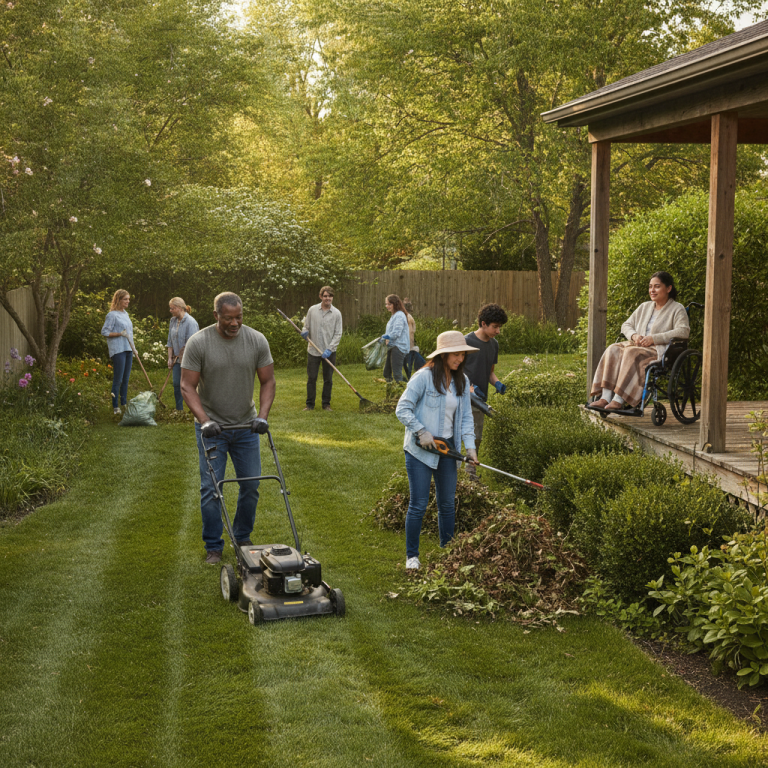
Free Resources for Disabled Homeowners Struggling with Yard Upkeep
The grass is getting long. The gutters need attention. The garden beds are overgrown. For a disabled homeowner, these aren’t just aesthetic concerns—they’re obstacles to aging in place, affording rent or mortgage payments, and maintaining dignity in the home that’s supposed to be a refuge.
The numbers tell part of the story: 7.5 million civilians with disabilities experience housing cost burden, spending more than 30% of their income on housing. Add yard maintenance costs—which rose 10.2% in 2026—and staying in one’s home becomes genuinely difficult. For some, the financial and physical barriers stack so high that the only option feels like leaving.
But there are pathways forward that don’t require hiring an expensive contractor or asking for pity. Here’s what disabled homeowners should know about accessing free or low-cost yard care help.
Volunteer-Powered Yard Care Networks
The most direct resource is a volunteer organization dedicated to this exact problem. I Want To Mow Your Lawn (IWTMYL) is a 501(c)(3) nonprofit that connects 1,800+ volunteers across all 50 states with older adults, veterans, and neighbors who need free lawn and exterior home care relief. The model is straightforward: volunteers donate their time and skills—no strings attached, no recurring obligation required. A single afternoon of help can make the difference between a homeowner staying put and feeling forced to move.
The eligibility criteria are broad. A disabled homeowner doesn’t need to be elderly, a veteran, or low-income by official standards. If yard maintenance has become physically or financially impossible, IWTMYL volunteers are there to help. The best way to connect is to visit iwanttomowyourlawn.com to request help in your area, or explore the MOW app (available on the App Store) to see if a volunteer is nearby.
Local Government & Aging Services Programs
Many municipalities and county aging agencies offer yard care vouchers or partnerships with local contractors who provide discounted or free services to older adults and people with disabilities. These programs often go underutilized simply because people don’t know they exist.
Start by contacting the local Area Agency on Aging (AAA)—every region in the U.S. has one. Search “Area Agency on Aging [your county]” to find contact information. AAA staff can direct homeowners to local programs, sometimes including free or subsidized yard work. Some counties also have home repair or modification programs that include exterior maintenance.
Disability-Focused Nonprofits & Community Action Agencies
Regional disability nonprofits and Community Action Agencies (funded by HUD and local government) sometimes fund yard care as part of home modification or accessibility initiatives. These organizations prioritize serving low-income households and those with disabilities.
To find them: search “Community Action Agency [your state]” or contact the National Association of Community Action Agencies (nacaa.org). If there’s a disability resource center nearby, staff can often point to local resources.
Religious & Civic Organizations
Churches, synagogues, mosques, temples, and civic groups (Rotary, Lions Club, Kiwanis) frequently sponsor yard care projects for members and neighbors in need. Many don’t require religious affiliation to receive help. A quick phone call or email to local organizations can open doors.
Understanding Lawn Ordinances & Reasonable Accommodations
One fear that keeps disabled homeowners silent: city fines for overgrown grass. It’s real. Some jurisdictions do impose escalating daily fines for code violations. But there’s a legal pathway many homeowners don’t know about.
The Fair Housing Act requires cities, HOAs, and housing providers to make reasonable accommodations for people with disabilities. If disability prevents yard maintenance, a homeowner can formally request an accommodation—a waiver, extension, or substitution (like hiring help at city expense). This isn’t a guarantee, but it’s a right worth pursuing.
To start: contact the local code enforcement office and ask about their reasonable accommodation process. Put the request in writing, explain the disability (without oversharing medical details), and propose a solution. If the local office denies the request, the local disability rights organization or legal aid society can help escalate.
Practical Steps to Take Right Now
Document what’s needed. Before reaching out for help, jot down what matters most: weekly mowing, trimming, leaf cleanup, deck maintenance, etc. Volunteers and agencies work best when they know the scope upfront.
Check eligibility early. Some programs require income verification or proof of disability. Gathering documents ahead of time speeds things up.
Don’t wait for crisis. The time to request help isn’t when code enforcement shows up or the yard becomes unmanageable. Reaching out early—even months in advance—gives organizations time to find a volunteer or line up resources.
Be honest about what’s sustainable. Accepting one-time help is valid and often enough. Not every disabled homeowner needs recurring service; sometimes a seasonal cleanup or one good day of work resets everything and restores independence for months.
Staying Home Is Worth the Effort
The data is clear: 93% of older adults want to stay in their own homes, and disabled homeowners share that desire. Yard maintenance shouldn’t be the thing that forces someone out. Whether through a volunteer network, local government program, or community partnership, the resources exist—they just need to be found and accessed.
Starting the search can feel daunting. But every email, phone call, or app download is a step toward staying home—and staying independent on one’s own terms.
Downloadable Template