A Summer That Counts
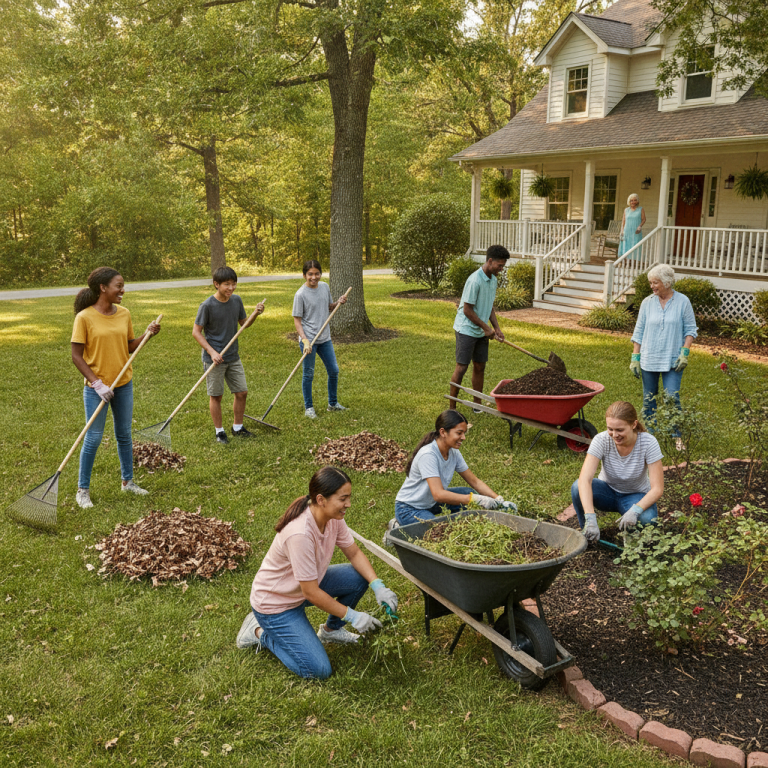
It’s July, and a group of sixteen-year-olds stands in a yard that hasn’t been maintained in months. The grass is overgrown. Weeds crowd the edges. An older adult sits on the porch, grateful but also relieved—not because someone pities them, but because neighbors showed up to help.
For those teens, this isn’t community service as punishment or a résumé line. It’s something real. They’re doing work that matters, outdoors, together. Their hands are dirty. They’re sweating. And they’re learning something that no classroom can quite teach: what it feels like to solve a problem for someone who genuinely needs it.
Outdoor service projects—especially lawn and yard care—are one of the most straightforward ways youth groups can build community connection while getting teenagers outside and away from screens. The benefits go far beyond a mowed lawn.
Why This Matters Right Now
The numbers tell a clear story. Approximately 15.5 million youth—55% of young people ages 12 to 19—volunteer each year, and Gen Z leads all generations in volunteer participation, with 69% identifying as volunteers. But that desire to help exists alongside a real struggle: screen dependency.
During 2021–2023, 50.4% of teenagers ages 12–17 had 4 or more hours of daily screen time (excluding schoolwork). More concerning, about 1 in 4 teenagers with 4+ hours of daily screen time have experienced anxiety or depression symptoms in the past 2 weeks.
Outdoor work provides an antidote. Time in nature lowers stress markers—cortisol, blood pressure, and heart rate all drop. The research is consistent: spending time outside, especially in purposeful activity, improves mental health and builds resilience.
What Teens Actually Gain
Beyond fresh air, youth who volunteer develop measurable skills and confidence. Youth who volunteer just one hour or more per week are 50% less likely to abuse alcohol, cigarettes, or engage in other destructive behaviors. Those who volunteer over 100 hours annually show even stronger outcomes: lower drug and alcohol abuse, better academic performance, and a higher likelihood of continuing to volunteer as adults.
On a personal level, teens report that volunteering teaches them to respect others, develop leadership skills, become more patient, and understand what it means to be a good neighbor. A 2025–2026 Gallup survey found that 52% of youth said their service activities had a positive impact on feeling prepared for a future career.
These aren’t abstract benefits. Teens see directly that their effort improved someone’s home and reduced stress for someone who was genuinely struggling. That’s purpose.
How to Organize a Meaningful Yard Care Project
Start with Community Connection
The best projects don’t begin with a lawn—they begin with relationships. Partner with local organizations, schools, religious communities, or nonprofits that serve older adults and veterans. Talk to neighbors directly. Ask where help is needed most. A veteran living alone might not ask for help, but they’ll deeply appreciate it when it arrives.
Match Teens with Realistic Tasks
Lawn mowing, weeding, edging, clearing debris, light pruning, and mulching are ideal entry points. These tasks are manageable, clearly defined, and produce visible results quickly—all important for building teen confidence and buy-in. More complex landscaping or tree work should only happen with proper training and supervision.
Plan for Safety and Structure
Provide gloves, tool training, and clear expectations. Set a reasonable timeline—two to three hours is often better than a full day for first-time volunteers. Have adults supervise, not to hover, but to teach and ensure no one gets hurt. Make it clear that showing up is the goal, not perfection.
Debrief and Reflect
After the work is done, take time to talk about what happened. Did the volunteers notice the person’s relief? What was surprising? How did it feel to do something that directly helped? This reflection transforms a service day into a learning experience and builds empathy that lasts.
A Proven Model
Organizations like I Want To Mow Your Lawn demonstrate how this works at scale. IWTMYL connects 1,800+ volunteers across all 50 states with older adults, veterans, and neighbors who need free lawn and exterior home care relief. Many of those volunteers are youth and youth groups. The model is simple: match need with willingness to help, provide coordination, and trust that neighbors will show up for neighbors.
Youth groups can adopt this same approach on a smaller, local scale. Use the summer months to identify neighbors in need—someone recovering from injury, an older adult whose knees won’t allow yard work anymore, a veteran who’s isolating. Then organize the help.
The Bigger Picture
A single yard project doesn’t solve systemic problems. But it does something powerful: it builds a culture where asking for help is normal and where service is understood not as charity, but as community. Teens who grow up understanding that responsibility learn to be the kind of adults who show up.
And for the neighborhoods involved, the impact is immediate. A yard that’s been neglected gets tended. An older adult feels cared for. A veteran realizes that people are thinking of them. A teen learns that their time and effort have real value.
That’s the point of summer service projects. Not perfection. Not checking boxes. Real connection, real work, and real change—one yard, one neighbor, one teen at a time.
Ready to Organize a Project?
Youth groups interested in starting or joining a lawn care service initiative can volunteer with I Want To Mow Your Lawn or use the organization’s MOW coordination app to find and connect with neighbors in need. The app is available to play online or download from the App Store.
Whether working independently or as part of a larger network, the key is to start—to get teens outside, to connect them with neighbors who need help, and to let them experience the quiet satisfaction that comes from showing up and doing the work.
Downloadable Template