The Hidden Benefit Nobody Talks About
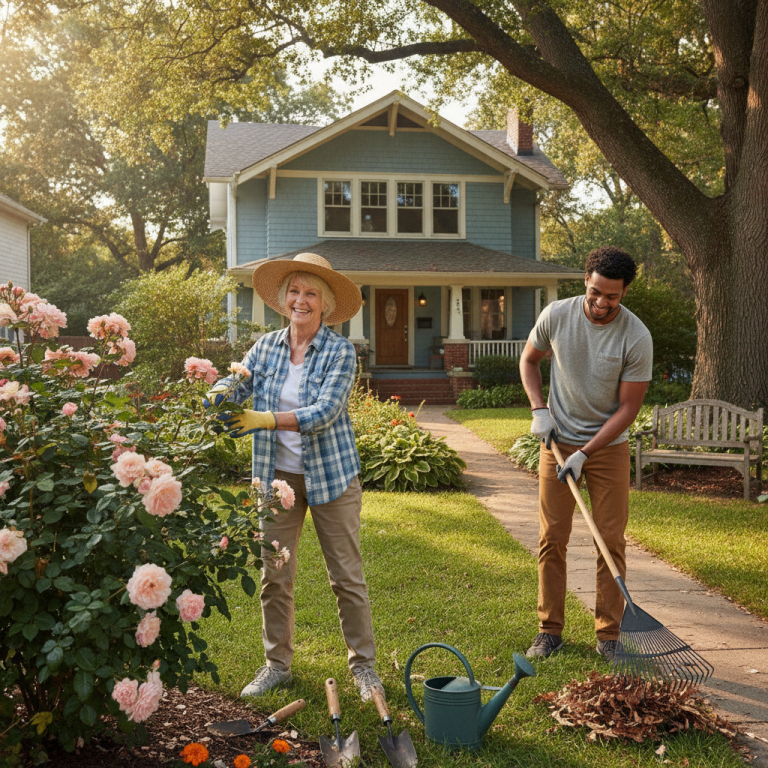
There’s a quiet moment that happens when an older adult steps outside to tend their yard for the first time in weeks. The sun feels different. The work feels purposeful. For many retirees, yard maintenance isn’t simply a chore—it’s a lifeline to independence, health, and belonging.
Yet as more people reach retirement age, fewer are able to keep up with the physical demands of lawn care. In 2025 alone, more than 4.18 million Americans turned 65, and projections suggest that the number of older adults will more than double over the next several decades to top 88 million people by 2050. That’s a lot of yards, and a lot of people searching for solutions.
What’s less obvious is why yard work matters so much beyond aesthetics. The science is clear: one hour of yard work a week can be transformative for physical health, mental wellbeing, and social connection—three things retirees need most.
It Counts as Real Exercise
The Centers for Disease Control and Prevention explicitly recognizes yard work as moderate-intensity physical activity. Mowing the lawn and raking leaves both count toward the recommended 150 minutes of aerobic activity per week that older adults need to maintain cardiovascular health and independence.
Consider the numbers: lawn mowing burns approximately 120–300 calories per hour, depending on intensity. A typical 30-minute mowing session burns 60–150 calories. Over time, that adds up to meaningful cardiovascular work without the joint stress of running or high-impact exercise.
And it’s not just cardiovascular. Research on horticultural therapy suggests that regular yard work may improve physical function, reduce body mass index, and enhance positive mood in older adults. The ideal duration? About 60 to 120 minutes per week—roughly one focused hour.
The beauty is that yard work engages multiple types of activity at once. Digging builds strength. Raking develops balance and coordination. Movement outdoors supports bone health. It’s exercise that doesn’t feel like exercise—because there’s a tangible result at the end.
The Loneliness Crisis Nobody’s Talking About
Beyond physical health, yard work is one of the few activities that naturally connects older adults to their community. And that matters urgently.
In 2024, 33% of older adults felt lonely some of the time or often, with 29% reporting feelings of isolation. A 2025 global analysis found that 27.6% of older adults worldwide experience loneliness, with the highest rates in North America at 30.5%.
The health consequences are severe. Poor social relationships have been associated with a 29% increased risk of coronary heart disease and a 32% increased risk of stroke.
When a neighbor shows up to help with yard work, something shifts. It’s not charity—it’s connection. An older adult sees their yard getting maintained. They exchange conversation. They’re reminded that someone cares. The psychological impact extends far beyond the grass.
Why This Hour Matters Now
Many older adults face real obstacles to yard maintenance. Retirement income constraints make hiring professional landscapers unfeasible. Physical limitations—arthritis, balance issues, chronic health conditions—make yard work unsafe or impossible to manage alone. And as people age, their social circles often shrink, leaving fewer neighbors nearby to lend a hand.
This is where volunteer yard care becomes essential. Organizations like I Want To Mow Your Lawn connect 1,800+ volunteers across all 50 states with older adults and veterans who need temporary relief from yard maintenance. The goal isn’t to create dependency—it’s to preserve independence by removing one barrier to health and connection.
For a retiree who can no longer safely manage their lawn, one volunteer visit a week can mean the difference between feeling capable and feeling stuck. It keeps yards from falling into neglect. It keeps older adults engaged with their homes and neighborhoods. And it signals, loudly and clearly, that someone sees them.
The Practical Takeaway
If yard work is on the list of things that need to happen but feels impossible, that’s a sign it’s time to reach out for help. There’s no shame in that—there’s wisdom in it. Whether through family, neighbors, or community volunteers, getting support with yard maintenance is an investment in long-term health and dignity.
For those interested in being that neighbor, volunteering yard care is straightforward, meaningful work. It doesn’t require specialized skills or your own equipment. It just requires showing up and working alongside someone who needs the help.
One hour a week. That’s all it takes to support an older adult’s physical health, mental wellbeing, and sense of belonging. It’s remarkable how much that simple hour can change.
Get Involved
Ready to make a difference in your community? Become a volunteer with I Want To Mow Your Lawn. Sign up to volunteer today—no experience necessary.
Prefer to explore the mission at your own pace? Try the free MOW app, available to download from the App Store, and learn more about how yard care strengthens communities.
Printable Guide