Summer Volunteering with Kids: Building Community One Yard at a Time
July 15, 2026 · I Want To Mow Your Lawn
Summer Volunteering with Kids: Building Community One Yard at a Time
Summer arrives, school lets out, and suddenly there’s a stretch of weeks that feels both full of possibility and slightly daunting. For many families, it’s a season to explore, rest, and maybe find something worthwhile to do beyond screens and structured activities.
Volunteering together—helping neighbors with yard work, for instance—offers something quieter and more grounded. It’s a chance for kids to see how community actually works, to spend time outdoors doing something concrete, and to understand that small acts of care matter.
Those aren’t abstract benefits. They translate to kids who feel more grounded, more aware of the world around them, and more confident in their own ability to help.
What Summer Volunteering Looks Like in Practice
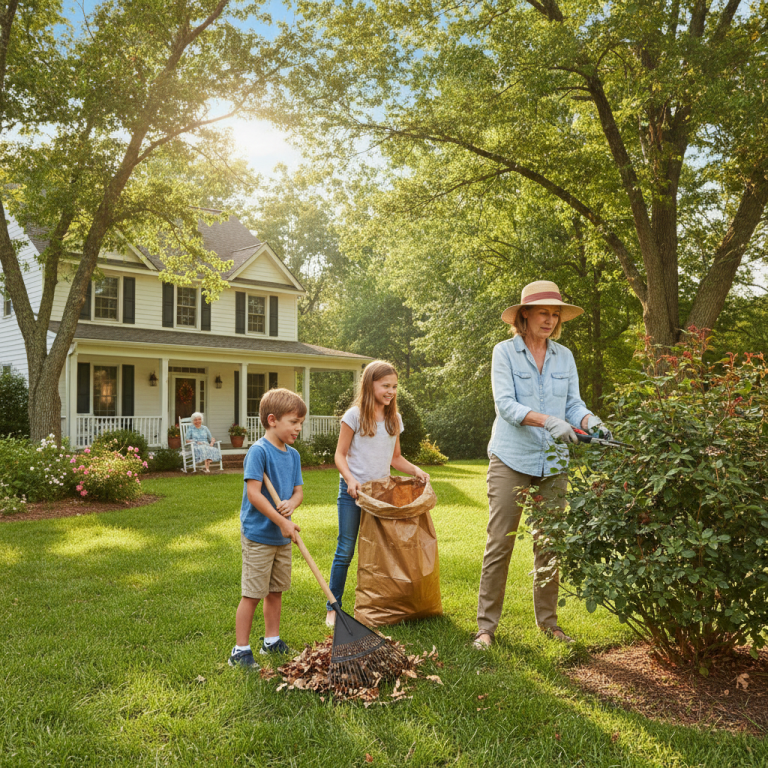
Yard care volunteering is tactile and immediate. There’s no ambiguity about impact. A kid rakes leaves, and a neighbor’s yard is clearer. A family trims overgrown shrubs, and an older adult can see their porch again. The work is seasonal—lawn mowing happens in summer, gutter cleaning in fall—so it naturally fits around school calendars and family plans.
For organizations like I Want To Mow Your Lawn (IWTMYL), summer is peak season. The nonprofit, a 501(c)(3) founded during the pandemic, connects 1,800+ volunteers across all 50 states with older adults, veterans, and neighbors who need free lawn and exterior home care relief. Many of those volunteers are families. Parents bring kids along, or teens volunteer on their own, motivated by genuine community need.
The work itself teaches practical skills—how to use tools safely, how to assess what a yard needs, how to work as a team. But it also teaches something less tangible: that some problems don’t need to be solved alone, and that neighbors help each other.
A single afternoon spent helping can be enough. Kids don’t need to commit to weekly shifts or formal programs. One Saturday morning helping an older adult with yard work teaches as much as a structured eight-week program—and sometimes more, because the connection is direct and the need is real.
And there’s a quieter benefit: kids who help others feel competent. They understand, directly and early, that they have something valuable to offer. That changes how they see themselves and their place in the community.
A Practical Next Step
If summer is already underway and this resonates, the path forward is simple. Families interested in volunteering together can sign up through IWTMYL’s volunteer portal, where they’ll be matched with neighbors in their area who need yard care help. For those looking for a lighter first step, IWTMYL also offers the MOW app, an interactive way to explore the mission and even play a game while learning about the organization’s work.
Summer doesn’t have to be about filling time. It can be about building something—skills, connections, confidence, and a sense that kids belong to a community that looks out for itself. That’s worth an afternoon in the yard.
The Volunteer’s Toolkit: Practical Tips for Yard Work with Kids
Want to make summer volunteering safe, productive, and genuinely fun for kids? This guide covers the specific tools, techniques, and strategies that experienced volunteers use to get the work done right—while making sure every family member stays safe and engaged.
Safety First: The Non-Negotiable Foundation
Before any volunteer work with kids begins, establish clear safety boundaries. Assign age-appropriate tasks: children under 10 typically handle raking, bagging leaves, or light weeding. Ages 10-14 can learn to use basic hand tools like hand-pruners or small shovels under direct supervision. Teenagers (15+) can operate basic power tools like electric leaf blowers or string trimmers, but only after a brief safety orientation and with ongoing oversight.
Always use sunscreen and hats. Bring plenty of water—more than you think necessary. Take breaks every 20-30 minutes in hot weather. Keep a basic first aid kit on hand for small cuts or blisters.
Tools That Work for Young Hands
Invest in lightweight, child-sized tools if possible. A shovel or rake that’s too heavy becomes frustrating and unsafe. Adjust tool sizes to fit each child’s height—a tool should feel balanced and controllable, not unwieldy.
For most yard tasks, families need: hand rakes, shovels, hand-pruners, work gloves, bags or bins for debris, and possibly a small wheelbarrow for moving heavier materials. Avoid power tools for children under 15, unless part of a structured educational program with trained instruction.
Label tools if working with multiple families. A simple marker or colored tape prevents mix-ups and helps with cleanup.
Structuring the Work for Engagement
Break larger projects into smaller, visible chunks. Instead of “clean the entire yard,” frame it as “clear the front flower bed” or “rake the side porch.” Kids thrive when they can see a finished section and understand what comes next.
Rotate tasks every 20-30 minutes. Variety keeps energy high and prevents fatigue. If kids are raking, switch them to bagging, then to light weeding. Movement and changing scenery maintain engagement.
Celebrate small wins aloud. When a section is done, pause and acknowledge it: “Look at how clear that area is now.” This reinforces the impact of effort.
Common Mistakes to Avoid
Overestimating what can be done in one session. A three-hour volunteer shift with kids often accomplishes what one skilled adult might do in 1.5 hours. That’s fine. The goal is sustainable, safe work—not maximum output.
Assigning overly complex tasks. If kids can’t understand what success looks like, they disengage. Stick to concrete, visible results: leaves raked, area cleared, debris removed.
Forgetting to communicate with the neighbor beforehand. A brief conversation with the older adult or veteran being helped sets expectations and ensures the work aligns with their actual needs and preferences.
Skipping the thank-you moment. When work is done, spend a few minutes with the neighbor. Let kids hear direct gratitude. That human connection is often the most meaningful part.
Pro Tips from Experienced Volunteers
Start early in the day. Heat builds by afternoon, and energy dips. A 9 a.m. start and 12 p.m. finish often works better than a long afternoon session.
Pair each child with an adult or older teen. This isn’t about micromanaging—it’s about safety and continuity. A clear partnership keeps focus high.
Bring a neighbor’s simple refreshment if appropriate. Homemade lemonade, water bottles, or cookies afterward create a ritual. Kids remember the person as much as the task.
Document the work if the neighbor is comfortable. A quick photo of the “before and after” is powerful. It gives kids a lasting memory and helps volunteers see their impact.
Connecting the Work to Deeper Learning
After the work is done, small conversations deepen the experience. Ask kids what they noticed—what was hardest, what surprised them, how they think the neighbor felt seeing their yard cleared. These reflections turn a service task into a learning moment about community, empathy, and personal capability.
Summer volunteering with kids isn’t complicated, but it does require intention. Use these practical strategies, and the experience becomes something kids remember for years—not as a chore, but as a time they helped someone real, in a concrete way, and felt truly needed.
Support our foundation to unlock this resource
A donation of any amount unlocks all bonus guides, templates, and deep dives for 30 days.
100% goes toward connecting volunteers with neighbors in need.
Choose your donation amount
$
Choose how to donate:
I Want To Mow Your Lawn Inc. is a 501(c)(3) nonprofit and registered charity with PayPal Giving Fund. EIN: 85-3447661. Your donation is tax-deductible.
Have a group?Organize a Community Service Day — we'll match your team with neighbors who need help.
Want to help us reach more neighbors?Our Marketing Toolkit has copy-ready posts, press materials, and flyers you can share in five minutes.