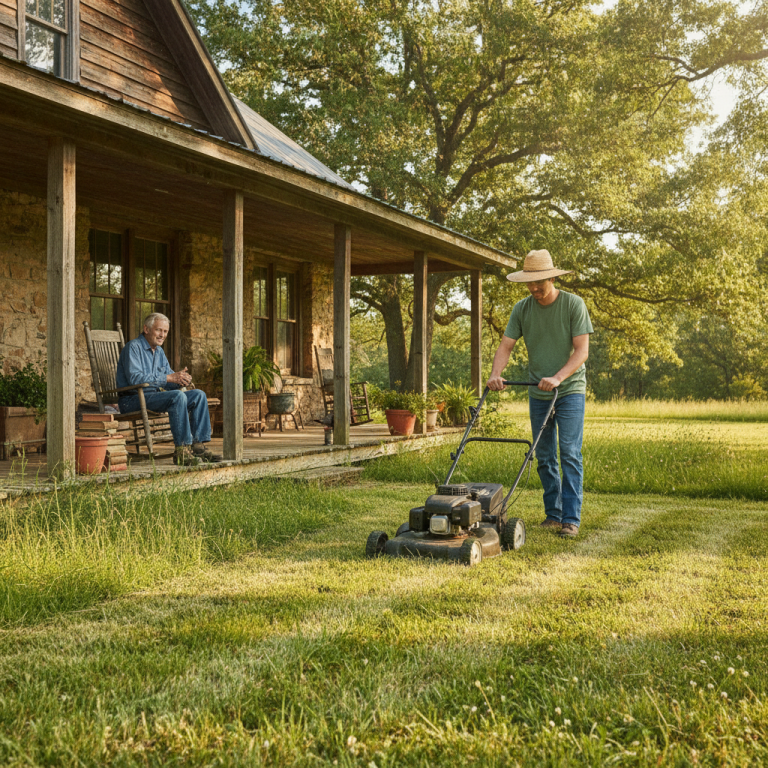
The Generation That Doesn’t Ask: Why Vietnam-Era Veterans Need Yard Care Help They Won’t Request
July 12, 2026 · I Want To Mow Your Lawn
The Generation That Doesn’t Ask: Why Vietnam-Era Veterans Need Yard Care Help They Won’t Request
A 75-year-old veteran stands in his driveway on a humid Saturday morning, looking at grass that’s grown shin-high over the past month. His knees won’t let him kneel the way they used to. His hands shake a little more these days. But the thought of calling someone—of admitting he can’t manage what he used to do without thinking—feels like something he just doesn’t do.
They came home to a country that didn’t celebrate them the way it celebrated other generations of soldiers. Many faced indifference or outright hostility when they returned from service. That changed how they relate to asking for anything—especially help.
Why Asking Feels Impossible
Military culture runs deep. Stoicism, self-reliance, handling things without complaint—these aren’t just personality preferences. They’re the values that kept people alive in combat and that stayed with them for five decades after.
Aging changes everything about yard work. A task that once required an afternoon now carries real risk: falls from mowers, heat exhaustion in summer, overexertion on joints and a cardiovascular system that may be working harder than it appears. Recent research from Columbia University’s Mailman School of Public Health found that combat exposure and PTSD in Vietnam veterans are linked to chronic health conditions that persist decades after service—conditions that make physical labor riskier than it seems from the outside.
The paradox is sharp: the generation most trained to handle things alone is also the generation most likely to face serious health consequences from trying to manage yard work independently.
What Neighbors Can Do
Asking permission isn’t always the right approach. Veterans who won’t request help often respond differently to an offer framed as something a neighbor is doing anyway, or a way someone can be useful.
Look for the signs: grass growing tall over weeks, a yard that was once maintained and now isn’t, an older person moving more slowly or carefully than they used to. Sometimes the offer is simply, “I’m cutting my grass Saturday—I’ll run the mower over yours while I’m at it.” That’s different from asking if they need help. That’s just being a neighbor.
I Want To Mow Your Lawn (IWTMYL) exists because this exact situation plays out across all 50 states. Volunteers connect with veterans and older adults who need this kind of relief—no application process, no guilt, no red tape. Just help.
How to Help
If there’s a Vietnam-era veteran in your neighborhood whose yard is becoming overgrown, consider volunteering to help. Joining IWTMYL takes just a few minutes. Volunteers across the country are already doing this work—maintaining safety, preserving dignity, and showing a generation of quiet, self-reliant people that it’s okay to let neighbors help.
For a more interactive way to learn about the mission, try the MOW app or download it from the App Store. It’s a simple way to understand how the network works and how quickly yard care can change a neighbor’s situation.
The generation that doesn’t ask for help deserves neighbors who offer anyway.
Reading the Yard: How to Recognize When a Vietnam-Era Veteran Needs Yard Care Support
Not every overgrown yard is a cry for help—sometimes it’s a quiet sign that mobility, health, or injury has made yard work dangerous. Learn what to look for, how to approach the conversation, and why the way you offer help matters more than the help itself.
The Visible Signs: What an Unmaintained Yard Actually Tells You
An overgrown lawn isn’t always laziness. In the case of an older adult or veteran, it often signals a change in physical ability, health status, or access to help. Key indicators include grass that’s grown noticeably taller over several weeks, weeds that have taken over garden beds that were once maintained, leaves or branches that haven’t been cleared, and visible safety hazards like trip risks near walkways or the porch.
The timeline matters. If a yard has been well-maintained for years and suddenly declines over a few weeks or months, something has shifted. That shift is worth paying attention to.
Understanding the Real Barriers
For Vietnam-era veterans specifically, the barriers to asking for help operate on multiple levels. First is physical: arthritis, joint pain, cardiovascular concerns, and balance issues make mowing and yard work genuinely risky. Second is psychological: a lifetime of military conditioning toward self-reliance makes asking feel like failure. Third is practical: rural veterans often live far from organized services and may not even know yard care help exists.
Understanding these layers changes how neighbors approach the conversation. It’s not about pity or guilt-tripping. It’s about recognizing that a capable, independent person now faces a genuine safety issue.
How to Approach the Conversation
Lead with what you’re doing, not what they need. Instead of “Your yard looks overgrown—do you need help?”, try “I’m mowing this Saturday and I’m doing the neighbors. I’ll swing by yours.” This frames the offer as an easy favor, not a charity case.
Avoid language that signals pity or diminishment. Skip phrases like “You must be struggling” or “It must be hard for you.” Instead, acknowledge reality directly: “Yard work gets tougher as we get older. I’m offering to help.”
Make it brief. Veterans and older adults often respond better to straightforward, short offers than lengthy explanations. Don’t over-explain. Don’t ask permission multiple times.
Respect “no,” but offer again later. Someone may refuse the first time. That doesn’t mean they’ll refuse the second. Persistent, low-pressure offers often work better than single asks.
Practical Steps for Neighbors
If you notice a veteran’s yard is becoming unsafe, consider these steps: First, ask a mutual neighbor or friend whether they know if something has changed (health issue, injury, death in the family). Second, make a direct, simple offer—not a question, but an action. Third, follow through consistently. One mowing is helpful; regular support is transformative.
If the person lives alone, yard care often becomes a moment when other needs surface: groceries, home repairs, social isolation. One volunteer mowing can open the door to broader community connection.
Why This Matters
Yard maintenance isn’t just aesthetics. It’s safety, dignity, and independence. A veteran who can no longer manage yard work may also be at risk for falls, injury, heat exhaustion, or the emotional weight of watching their home decline. Offering help preserves independence—it doesn’t replace it. You’re removing one barrier so the person can keep living in their own home, their own way.
A donation of any amount unlocks all bonus guides, templates, and deep dives for 30 days.
100% goes toward connecting volunteers with neighbors in need.
Choose your donation amount
$
Choose how to donate:
I Want To Mow Your Lawn Inc. is a 501(c)(3) nonprofit and registered charity with PayPal Giving Fund. EIN: 85-3447661. Your donation is tax-deductible.
Have a group?Organize a Community Service Day — we'll match your team with neighbors who need help.
Want to help us reach more neighbors?Our Marketing Toolkit has copy-ready posts, press materials, and flyers you can share in five minutes.