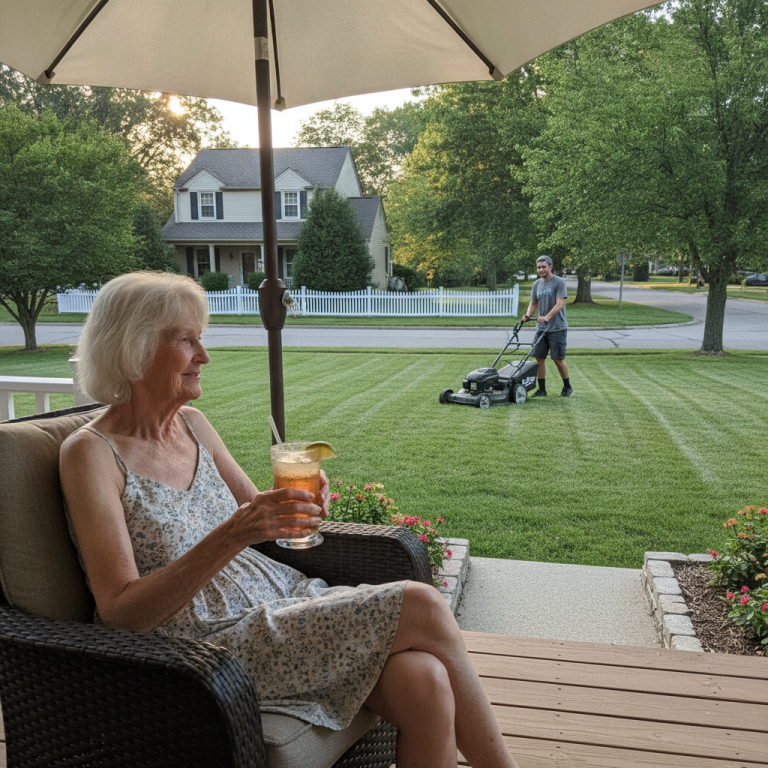
When the Heat Index Climbs: A Family Guide to Talking with Older Adults About Lawn Care
It’s mid-July, temperatures are climbing past 100°F, and an older adult in the neighborhood is still out there with the mower at 10 a.m.—the worst possible time. The grass doesn’t look that bad. The work needs doing. And they’ve been managing their own yard for decades. So why does something feel off?
There’s a good reason for that instinct. Extreme heat is the leading cause of weather-related fatalities in the United States, and older adults face significantly higher risks when doing physical work outdoors during heat waves. Yet conversations about scaling back yard work often feel uncomfortable—like suggesting someone is no longer capable, or imposing limits they haven’t asked for. The goal isn’t to take away independence. It’s to keep someone safe during a season when their body works harder just to cope with the heat.
Why Heat Hits Older Adults Harder
The physiology is important to understand. As people age, the body’s ability to cool itself declines. Individuals over 60 experience reduced sweating and less effective blood vessel response to heat, which means core body temperature rises faster during physical activity. Add humidity—and heat index values during recent heat waves have climbed to nearly 110°F in many regions—and the challenge compounds. The body can’t shed heat as efficiently, dehydration happens more quickly, and fatigue sets in earlier.
The risk is concrete: heat-related deaths among people aged 65 and older increased by 68% between 2000–2004 and 2017–2021. And the trends aren’t moving in a safer direction. Heat-related mortality for people over 65 has increased approximately 85% in recent decades. A heat wave in July isn’t just uncomfortable—it’s a genuine health event.
How to Start the Conversation
Approaching this topic requires care. The person mowing their lawn isn’t being reckless—they’re following a habit, maintaining something they take pride in, and likely not thinking about heat as a threat the way a family member watching from a distance might be.
Start by asking questions rather than making statements. “I noticed you were mowing during the heat yesterday—how are you feeling about yard work in this weather?” opens a dialogue. Listen without judgment. Many older adults will acknowledge that heat makes the work harder, but they may not connect that discomfort to actual danger.
Frame the conversation around protecting health, not limiting capability. “During heat waves, even people in their 30s struggle with outdoor work. Your body is managing a lot right now. I’d rather see you safe than see you pushing through something that could hurt you.” This acknowledges effort while redirecting toward safety.
Offer specific, temporary alternatives. Don’t say, “You shouldn’t mow anymore.” Instead: “What if we got the lawn mowed while it’s cooler, so you don’t have to worry about it this week?” or “For the next few weeks while this heat wave is happening, let’s find someone to help.” Framing it as seasonal relief—not a permanent change—reduces resistance and protects dignity.
Practical Heat Safety Steps
If an older adult does continue yard work during warm months, a few precautions matter:
- Timing is everything. Early morning (before 10 a.m.) or evening (after 6 p.m.) dramatically reduces heat stress. Suggest rescheduling yard work to these windows, or breaking it into smaller sessions on cooler days.
- Hydration before, during, and after. Thirst isn’t a reliable signal for older adults, so encourage drinking water on a schedule, not on demand.
- Watch for warning signs. Dizziness, nausea, confusion, chest discomfort, or shortness of breath during yard work aren’t normal and warrant stopping and cooling down immediately.
- Consider the body’s baseline. Medications for blood pressure, diabetes, or heart conditions can affect heat tolerance. A conversation with their doctor about summer yard work isn’t overprotective—it’s smart.
When to Bring in Help
Some seasons or years, yard work should take a backseat. When temperatures climb above 95°F for extended periods, when an older adult has health conditions that complicate heat tolerance, or when they’re already tired—these are moments when bringing in a helping hand makes sense.
Help can come from family, friends, or neighbors. But there are also community organizations designed for exactly this purpose. I Want To Mow Your Lawn, a 501(c)(3) nonprofit, connects 1,800+ volunteers across all 50 states with older adults, veterans, and neighbors who need free lawn and exterior home care relief. During heat waves—when safety becomes urgent—reaching out for a few weeks of assistance is a practical way to remove the risk without adding burden or cost.
The Conversation Matters
These conversations feel awkward because they touch on independence and aging, topics people don’t naturally discuss. But having them early—before a crisis happens—honors someone’s autonomy while protecting their health. It says: “Your safety matters to me. Let’s figure this out together.”
Extreme heat is temporary. July and August will pass. But the habit of checking in, adjusting expectations seasonally, and knowing when to ask for help—those habits protect someone’s long-term wellbeing and independence far more than a mowed lawn ever could.
How to Help
If the conversation leads to a need for assistance, volunteering can be straightforward. Those interested in helping older adults, veterans, and neighbors with yard care during peak heat season—or anytime—can sign up to volunteer with I Want To Mow Your Lawn. Volunteers work at their own pace and schedule, offering temporary relief when it matters most.
For those looking for a fun, community-driven way to engage with the mission, the MOW app is available to play online or download from the App Store—a way to learn more while supporting the cause.
Downloadable Template