The Quiet Crisis Nobody Talks About
Transition out of military service brings profound change. The structure, purpose, and tight-knit community that defined years of life suddenly disappear. For many veterans, this adjustment is harder than the physical challenges of leaving active duty.
The isolation that follows can be devastating. Half of U.S. veterans report feeling like they don’t belong in society after separation from military service, and 56.9% of veterans surveyed reported feeling lonely sometimes or often. For some, loneliness becomes intertwined with depression, anxiety, and thoughts of suicide.
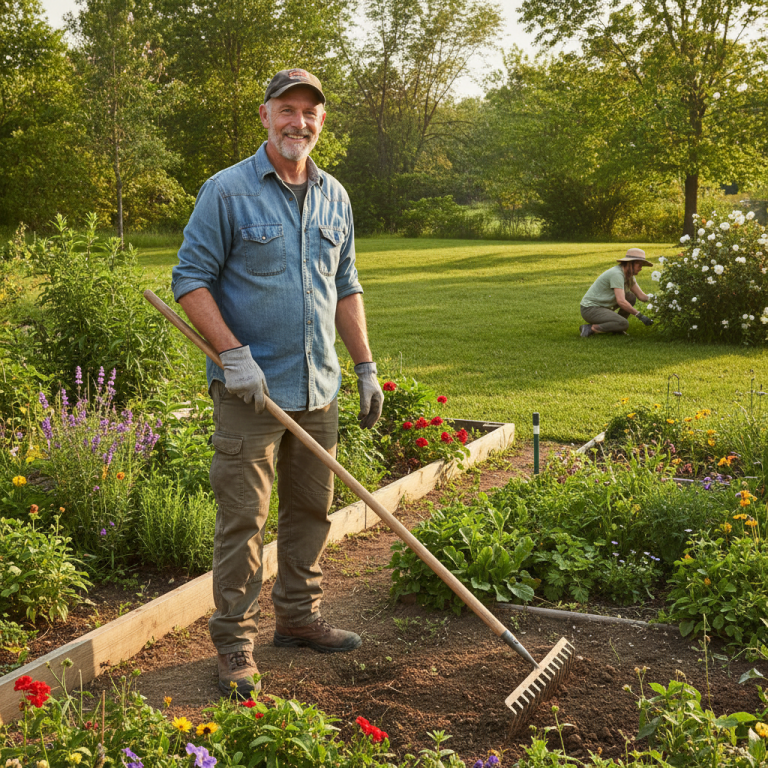
The good news: something as straightforward as yard work—tending a garden, maintaining outdoor space, or simply being outside in nature—is emerging as a genuine therapeutic tool for veteran mental health recovery. It’s not a replacement for clinical care, but it’s a powerful complement that meets veterans where they are: at home, in their community, with real work that produces visible results.
What Happens in the Brain During Garden Work
Horticultural therapy—the therapeutic use of plants and gardening activities—has solid research backing, particularly for veterans dealing with trauma and PTSD. A five-week horticultural therapy pilot program for veterans showed participants reported significantly lower depression and stress on validated clinical scales after completing the program.
The mechanisms are both psychological and physiological. A VA-funded study found that horticultural therapy was associated with a 12% reduction in salivary cortisol—a physiological marker of stress—and showed measurable improvements in quality of life and depressive symptoms. Research conducted at the University of Tennessee Gardens found cortisol levels dropped within the first 30 minutes to one hour of outdoor therapeutic activity, suggesting that even brief garden engagement creates measurable calming effects.
Beyond stress reduction, yard work offers veterans something equally vital: purpose. Completing a tangible task—mowing a lawn, clearing overgrown beds, planting something new—provides immediate feedback. The work is real. The results are visible. This matters enormously for people whose service was defined by duty and measurable contribution.
The Social Healing That Nobody Plans For
One of the deepest wounds of veteran transition is social disconnection. Military life demands constant interdependence; civilian life often feels isolating by comparison.
Yard work becomes a natural bridge back into community. Whether a veteran is helping maintain a neighbor’s property, receiving help with their own yard, or simply being outdoors where neighbors pass by and stop to talk, outdoor work creates informal social connection. Research on horticultural therapy for veterans documents improvements in social engagement, increased physical activity, sense of purpose, and improved self-esteem—outcomes that ripple far beyond the yard itself.
For rural veterans especially, this matters. An estimated 4.4 million veterans live in rural communities, where isolation is particularly acute and professional health services are sparse. A volunteer helping with yard care isn’t just mowing grass—they’re creating a touchpoint, a reason to be outside, a moment of human connection.
Why This Matters Right Now
The need is urgent. Over 2.8 million veterans are now service-connected for mental health conditions, a record high. An estimated 41% of veterans are in need of mental health care programs every year, yet barriers remain—cost, stigma, access, waitlists.
Yard care sits in an overlooked gap. It’s not clinical. It doesn’t require a therapist’s office or a diagnosis code. It’s practical, accessible, and meets an immediate household need. When a volunteer helps a veteran maintain their yard, they’re simultaneously addressing a logistical problem, reducing stress, creating social connection, and supporting the kind of outdoor activity that research shows genuinely helps.
How to Get Involved
I Want To Mow Your Lawn connects volunteers across all 50 states with older adults, veterans, and neighbors who need free yard care. The organization operates with 1,800+ volunteers who understand that this work is about far more than grass and leaves.
For veterans looking for support: reach out through IWTMYL’s volunteer network. For those interested in volunteering: sign up to volunteer and become part of a community dedicated to practical, neighbor-to-neighbor care. Those looking to learn more or engage with the community can also explore the MOW app, available for download on the App Store, which connects volunteers and those seeking help in real time.
Yard work may seem like a small thing. But for a veteran finding their footing after service, it’s a door back to purpose, community, and healing.
Printable Guide