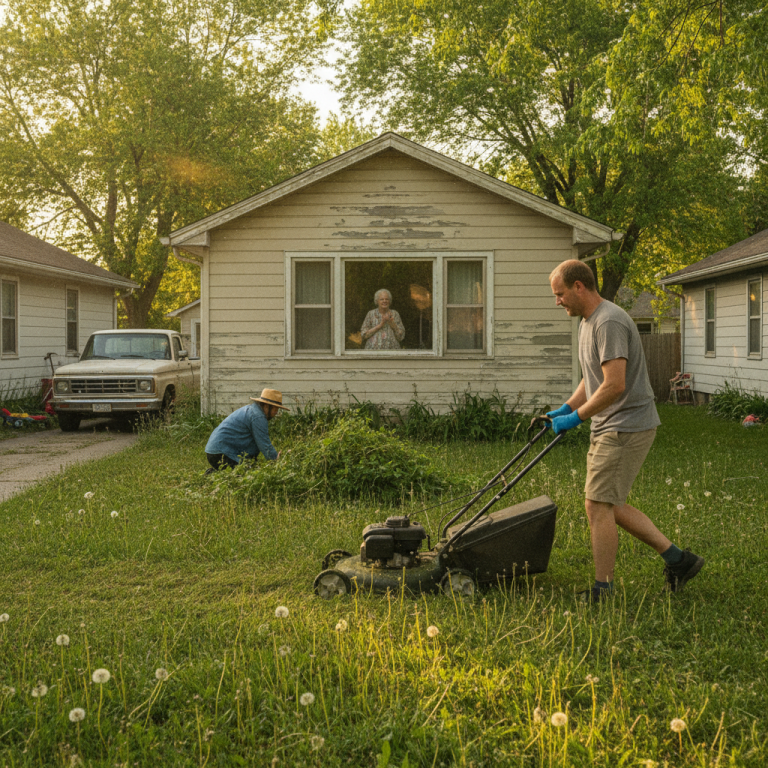
Overgrown Yard and Code Enforcement: A Family Guide to Getting Help Before Fines
July 6, 2026 · I Want To Mow Your Lawn
When a Yard Becomes a Problem Nobody Planned For
It starts small. A knee injury, a hospital stay, a medication that makes outdoor work impossible. Then the grass gets longer. The weeds thicker. A notice appears on the door—not friendly, not helpful, just an official warning about “code violations” and “corrective action required within 30 days.”
At that point, panic sets in. And for good reason. Tall grass fines can cost $50 to $2,000 per day, depending on the city. The clock starts ticking. But there are options—and understanding them early can mean the difference between a fixed yard and a financial crisis.
How Code Enforcement Works (And Why It Escalates So Fast)
Most cities use a straightforward approach: someone reports a violation, an inspector investigates, and a notice goes out. What catches people off guard is how quickly fines compound.
Here’s the typical flow:
Step 1: Notice. A courtesy letter arrives (or sometimes doesn’t). It explains the violation—usually overgrown grass or weeds—and gives a grace period to fix it, typically 30 days.
Step 2: Citation. If the issue persists, a formal violation notice arrives with a fine amount.
Step 4: Legal Escalation. Continued non-compliance can trigger liens on the property, court orders, or even municipal abatement (where the city does the work and bills the owner).
The takeaway: check the specific ordinance for the local jurisdiction. A quick call or online search can clarify the exact standard before a violation notice arrives.
July Is Peak Enforcement Season—And There’s a Reason
Summer heat and dry conditions turn tall grass and weeds into fire hazards. July marks the peak of code enforcement inspections across the country as municipalities prioritize weed abatement programs to reduce wildfire risk. If a yard is borderline in June, July is when the inspection usually happens.
This seasonal urgency means it’s worth acting early rather than waiting for a notice.
Getting Help Before the Fine Arrives
For older adults, veterans, and neighbors dealing with health challenges, disability, or other barriers to yard work, waiting until a violation notice arrives creates unnecessary stress and financial burden.
Several options exist:
Free community help: Organizations like I Want To Mow Your Lawn connect 1,800+ volunteers across all 50 states with neighbors who need temporary yard care relief. No fees, no hidden costs. Volunteers simply show up and help.
Local nonprofits: Many communities have yard care programs through senior services, veteran organizations, or faith-based groups.
Seasonal services: Some lawn care companies offer discounted rates for qualifying residents or payment plans that spread costs over time.
Negotiation with code enforcement: Before a citation is issued, property owners can contact the enforcement office directly, explain the situation, and sometimes request an extension if concrete steps toward resolution are underway.
The Practical Path Forward
If a yard is already overgrown or a violation notice has arrived, the first step is clarity: understand the specific local rule and timeline. Call code enforcement or check the municipal website. No surprises from there.
Next, explore free or low-cost help. A single volunteer visit to mow and clear can prevent escalating fines and restore dignity to a property—and to the person living there.
The difference between a $100 fine and a $10,000 lien often comes down to whether someone reached out early and whether that person found a neighbor willing to help.
Yard Recovery 101: Practical Steps to Clear an Overgrown Property Fast
Code enforcement on your doorstep? This guide breaks down exactly how to tackle an overgrown yard—from safety basics to equipment choices to timeline management. Learn what professionals do, what shortcuts to avoid, and how to make the work manageable.
Start With a Safety Assessment
Before clearing anything, walk the property and identify hazards: hidden objects, fire ant mounds, septic tank covers, underground utilities, or water features. Mark these mentally or physically. Call 811 before digging or clearing near underground lines. This 10-minute step prevents injuries and costly mistakes.
Plan the Work Zone by Zone
Don’t try to tackle the entire yard at once. Divide it into sections: front foundation plantings, main lawn area, side yard, rear lawn, and garden beds. Prioritize the front—code enforcement usually checks curb appeal first. A cleared front lawn and visible effort often satisfy initial compliance even while side areas are still being addressed.
Equipment Essentials (Without Breaking the Bank)
A standard push mower works for grass up to 12 inches. For anything taller or thick with weeds, a string trimmer (weed whacker) is more efficient than a mower. A leaf blower helps clear debris after cutting. If grass is extremely overgrown (18+ inches), consider renting a brush cutter or sickle bar mower from a local equipment rental shop—one-day rental typically costs $40–$75 and saves hours of manual work.
For safety: wear long pants, closed-toe boots, eye protection, and gloves. Remove the area of hazards before operating any equipment.
The Cutting Strategy
Overgrown grass should be cut in stages, not all at once. First pass: use a string trimmer to knock down height to 6–8 inches. Let the clippings dry (24 hours if possible). Second pass: use a mower to bring it down to 3–4 inches. This prevents mower clogging and makes cleanup easier. If the grass is dense with weeds, a third pass may be needed to reach the final target height (usually 2–3 inches for residential standards).
Weed and Debris Removal
After mowing, remove visible debris: branches, trash, rocks, and dense clumps of dead vegetation. A leaf blower or rake speeds this up. For stubborn weeds in garden beds or cracks, pull by hand or use a hoe. Bagging vs. leaving mulch: check the local code. Some municipalities require bagged clippings; others allow mulching back onto the lawn.
Timeline and Effort Estimation
A typical overgrown residential lot (1/4 acre) takes 3–5 hours with two people using basic equipment. A quarter acre with dense weeds and debris may take a full day. Breaking this into two 3-hour sessions across two days is often easier than one long push, especially for older adults or those with physical limitations.
Document Your Progress
Take before and after photos. If code enforcement is involved, send photos to the enforcement office showing corrective action. Many jurisdictions will extend deadlines if they see concrete progress, even if full compliance takes another week or two.
When to Call for Help
If the property is extremely overgrown, health limitations prevent physical work, or the timeline is urgent, reaching out to a volunteer yard care organization or local nonprofit is the fastest and most sustainable path. A single organized volunteer visit can clear most residential yards in 2–4 hours—faster and safer than struggling alone.
Understanding these steps empowers neighbors to take action, ask for help confidently, and avoid the shame and financial stress of code violations. Whether someone does the work themselves or connects with volunteers, the goal is the same: a safe, code-compliant property and restored peace of mind.
Support our foundation to unlock this resource
A donation of any amount unlocks all bonus guides, templates, and deep dives for 30 days.
100% goes toward connecting volunteers with neighbors in need.
Choose your donation amount
$
Choose how to donate:
I Want To Mow Your Lawn Inc. is a 501(c)(3) nonprofit and registered charity with PayPal Giving Fund. EIN: 85-3447661. Your donation is tax-deductible.
Have a group?Organize a Community Service Day — we'll match your team with neighbors who need help.
Want to help us reach more neighbors?Our Marketing Toolkit has copy-ready posts, press materials, and flyers you can share in five minutes.