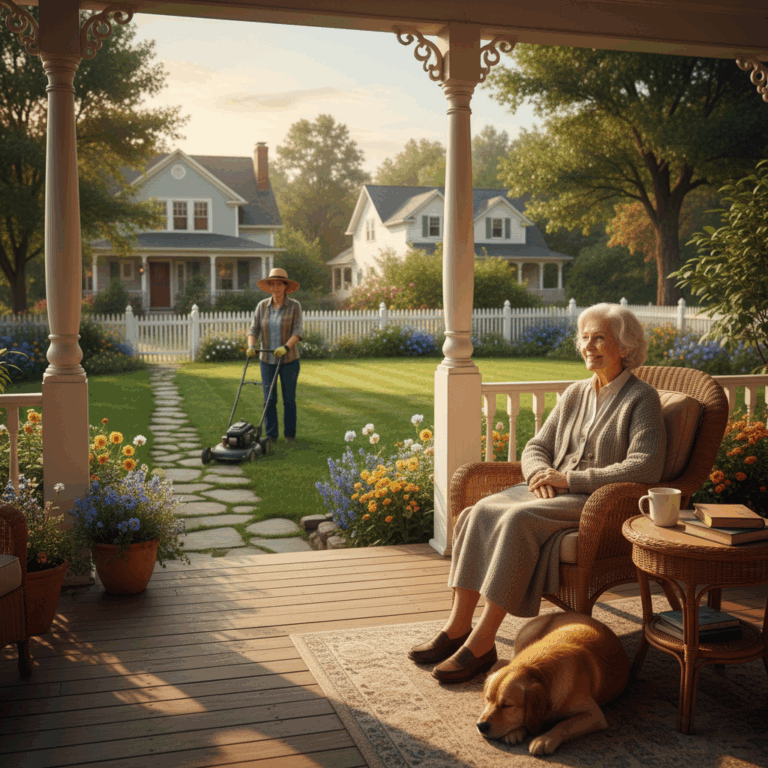
The Spring Yard Awakens—But Not Everyone Can Answer
Spring arrives with warm breezes and blooming foliage, and with it comes the familiar pull to get outside and tend the yard. For many adults over 70, that moment of looking at the overgrown grass brings something else: a quiet question about whether they can still do this safely.
It’s not laziness or loss of spirit. It’s a real physical calculation that happens without saying it out loud.
The data tells part of the story. Between 2010 and 2019, people aged 60 to 79 represented about 57% of all deaths from lawn and garden injuries. An estimated 934,394 lawn mower injuries were treated in U.S. emergency departments over a single decade—an average of nearly 85,000 injuries every year. By age 70, the statistical risk of a lawn mower injury reaches 1 in 160.
But numbers don’t capture what matters most: the independence that yard work represents, and the weight of knowing that one misstep could change everything.
What Changes in the Body After 70
The risks aren’t imaginary or exaggerated. They’re rooted in real physical changes that happen with age.
As people age, they naturally become less capable of pushing, lifting heavy objects, and bending down without strain. Grip strength and core stability—the foundations of balance and control—gradually diminish. Chronic conditions like arthritis, back pain, and balance issues make yard work not just uncomfortable, but genuinely dangerous. A moment of lost footing on uneven ground, or a slip while managing equipment, carries much higher consequences than it did at 40.
The injury patterns themselves reveal the specific vulnerabilities. Most lawn mower injuries involve lacerations, fractures, and amputations—with hands and feet bearing the brunt (65.4% and 19.8% of injuries, respectively). A single accident typically requires surgery, and the average cost per injury reaches $37,000.
Slope matters too. Lawn mower accidents are twice as likely to occur on sloped terrain. Add rocks, sticks, and uneven surfaces, and the risk compounds further.
The Deconditioning Trap
There’s another layer to this conversation that safety articles often miss. When older adults stop doing physical activity—including yard work—they actually become more fragile overall. Deconditioning leads to falls in everyday life: walking across the living room, moving between rooms, navigating stairs. The absence of activity doesn’t create safety; it erodes it.
This is why the decision isn’t simply “mow or don’t mow.” It’s about sustaining the strength and balance needed to move safely through the world. And for many, that means finding a path that preserves independence while protecting against injury.
If Mowing Continues: Practical Harm Reduction
Some older adults will decide that mowing is still right for them—and that’s a valid choice when approached thoughtfully. If that’s the case, these practical steps genuinely reduce risk:
- Choose the right equipment. A self-propelled or riding mower cuts the physical demand dramatically. Corded electric mowers are lightweight, easy to handle, and eliminate the weight and noise of gas-powered alternatives. Ergonomic tools with adjustable handles matter more than most people realize.
- Time it carefully. Mow during cooler parts of the day, stay hydrated, and take frequent breaks. Fatigue is the enemy—it decreases focus and increases accident risk exponentially.
- Spread the work out. Tackle different tasks on different days. A neighborhood yard doesn’t need to be conquered in one session.
- Know the terrain. Slopes are high-risk zones. Inspect the yard for hazards beforehand. Clear rocks and sticks. Be realistic about what the landscape demands.
- Protect yourself. Goggles, ear protection, sturdy shoes—these aren’t optional.
When Mowing Stops Being an Option
The harder conversation is this: for many older adults, the physical risks of mowing genuinely outweigh the benefits. The time may come when yard work transitions from enjoyable exercise to something that feels overwhelming or unsafe.
That doesn’t mean accepting an overgrown yard or losing the sense of pride and independence that a well-maintained home provides. It means recognizing when a different kind of help makes sense.
For older adults, veterans, and neighbors facing physical or financial hardship, the simple task of keeping up a yard can become an overwhelming burden. An overgrown lawn can signal—to the world and to themselves—a loss of independence. Yard work neglect can also become a safety hazard: uneven ground, hidden obstacles, and reduced visibility of potential problems.
This is where community steps in.
A Real Alternative
I Want To Mow Your Lawn connects 1,800+ volunteers across all 50 states with older adults, veterans, and neighbors who need free lawn and exterior home care relief. These aren’t contractors or services with hidden costs. They’re neighbors—retirees, families, young people, community members—who show up because they understand that keeping a yard maintained matters.
Spring is the natural time to think about this. If an older adult’s yard looked neglected last season, or if they seem hesitant about tackling it this year, that’s often a sign that help would genuinely change things. Not to rob them of independence, but to protect it—to keep their energy and safety intact for the things that matter most.
The decision about lawn mowing after 70 isn’t really about the lawn. It’s about sustained independence, community connection, and the difference between doing something because you can, and accepting help because it’s wise.
How to Connect
For those interested in helping, volunteering with I Want To Mow Your Lawn is straightforward. Volunteers aren’t required to have special skills—just willingness and a few hours. For a lighter engagement, the MOW app (available on the App Store and Google Play) lets people support the mission in ways that fit their schedule.
For those seeking help: reach out. There’s no shame in it, and the relief it brings often goes deeper than just a mowed lawn.
Downloadable Template