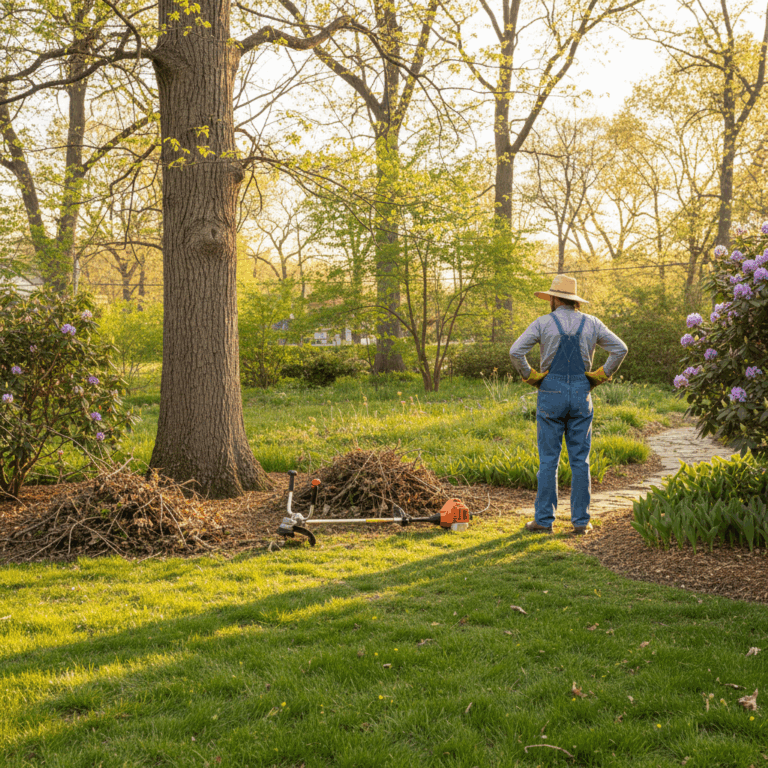
When the Yard Feels Impossible: A Practical Guide to Tackling Overgrowth
April 6, 2026 · I Want To Mow Your Lawn
When the Yard Feels Impossible: A Practical Guide to Tackling Overgrowth
There’s a particular kind of exhaustion that comes with looking out at a yard that’s gotten away. Grass taller than it should be. Weeds colonizing flower beds. Branches hanging over pathways. Debris scattered where care has lapsed. It doesn’t matter how it happened—life gets busy, mobility becomes harder, energy runs low. What matters is that the yard now feels like a problem too big to solve alone.
The good news: an overgrown yard doesn’t require a contractor or a weekend of grueling labor. It requires a plan, realistic expectations, and permission to break the work into manageable pieces.
Start With Honest Assessment, Not Panic
Before picking up a single tool, walk through the entire yard. Notice where grass grows tallest. Spot areas overrun with weeds. See where bushes have spread too far or branches hang low. Look for hidden obstacles—fallen branches, rocks, forgotten lawn furniture, trash. Take photos if it helps; they serve as a visual reminder of progress once work begins.
Write down a simple plan. Not a detailed spreadsheet—just a list of the main tasks. Pick up debris. Trim tall grass. Pull weeds from specific areas. Prune overgrown shrubs. This transforms the overwhelming into the concrete. Suddenly there’s a sequence, not a wall.
The Safe Way Forward
Safety matters, especially when tools are involved. Closed-toe shoes, work gloves, and eye protection are non-negotiable. Before starting, test equipment to make sure it works. More importantly: never use a standard lawn mower on overgrown grass. The engine can overheat, and the mower itself may jam or break. A string trimmer, scythe, or brush cutter handles tall grass far better. If heavy-duty tools aren’t available, hardware stores rent them affordably—often cheaper than an hour of a contractor’s time.
Work in Stages, Not in One Exhausting Day
Stage 1: Clear debris first. Remove junk, fallen branches, rocks, and obstacles. This prevents hidden hazards when mowing begins. Start a compost pile for organic waste; use garbage cans or bags for the rest.
Stage 2: Tackle the grass. Use a string trimmer or hand-held scythe to shorten overgrown turf to about half its current height—roughly 6 to 8 inches. This is not the final cut; it’s preparation. Let the lawn rest for a week, then use a regular mower for the final, uniform cut.
Stage 3: Deal with plants and weeds. Now that visibility is better, identify what’s worth keeping and what needs to go. Dead plants, invasive weeds, diseased limbs—remove them. If identification is uncertain, a local extension office or gardening group can offer guidance.
Stage 4: Prune and finish. Trim shrubs and trees. Pruning removes dead wood, encourages stronger growth, and gives the landscape a deliberate look.
Spreading this over two to four weekends is far smarter than a single overwhelming push. It’s safer. It’s sustainable. And honestly, it feels better to see progress in stages than to exhaust yourself in one day.
April Is the Right Time
Spring is ideal for yard recovery. Growth slows compared to summer, weeds are manageable, and soil is workable. Many communities organize spring cleanup events in April—group efforts where volunteers bring tools and hands. There’s no shame in joining one. Community work transforms isolation into connection.
Know When to Ask for Help
Overgrown yards often signal something deeper: illness, injury, aging, or life circumstance making upkeep impossible. That’s not failure. That’s being human.
I Want To Mow Your Lawn connects volunteers across all 50 states with older adults, veterans, and neighbors who need exactly this kind of relief. Volunteers show up not as contractors but as neighbors. The goal is temporary help that restores dignity and safety—not a recurring service, but a moment of real relief when the yard has become too much.
If managing yard work has become difficult, reaching out is worth it. If you’re someone with time and energy to offer, volunteers are needed everywhere. The work is simple. The impact is profound.
One Step at a Time
An overgrown yard doesn’t fix itself, and it won’t fix overnight. But it will fix. A day of debris clearing changes the visual landscape entirely. A week of rest between trimming stages prevents overwhelm. Pruning the final shrub is real progress, earned and visible.
The yard that feels impossible today is manageable when broken into pieces. And if pieces still feel too large, that’s exactly what neighbors are for.
The Technical Deep Dive: Tools, Techniques, and Pro Tips for Reclaiming an Overgrown Yard
Once you understand the right sequence and have the proper tools, tackling overgrowth becomes measurable work instead of a mystery. This guide covers equipment choices, specific techniques pros use, common mistakes, and the exact measurements that matter.
Tools: What You Actually Need
A standard lawn mower won’t cut overgrown grass. Instead, use a string trimmer (also called a weed wacker) or a brush cutter for initial work. Electric models work for moderately tall grass; gas-powered models handle dense, thick growth. For very severe overgrowth, a hand scythe or sickle gives precise control and requires no fuel or charging.
After initial trimming, a standard rotary mower handles the follow-up cut. Push mowers work fine for small yards; riding mowers make sense for larger properties. Rental costs typically run $30–60 per day, far cheaper than hiring a contractor.
Other essentials: sturdy work gloves (leather or reinforced nylon), eye protection, long pants, closed-toe boots, a sturdy rake, heavy-duty trash bags or a yard waste bin, and a wheelbarrow for moving debris.
The Two-Cut Method: Why One Pass Isn’t Enough
Attempting to cut overgrown grass in a single pass overheats mower engines and produces uneven results. Instead, use the two-cut method.
First cut: Use a string trimmer to reduce grass height to 6–8 inches. Work in overlapping passes, moving at a steady pace. Don’t rush; this is about safety and clarity, not speed.
Wait one week. This allows the lawn to recover and the soil to settle. It also reveals any obstacles you missed—rocks, sticks, or debris that weren’t obvious in tall grass.
Second cut: Now use a standard mower set to a normal height (2.5–3.5 inches, depending on grass type). The lawn now cuts evenly and looks finished.
Weed and Plant Identification: Keep What Matters
Before removing anything, identify it. Take a photo and check with a local cooperative extension office or gardening group. Some “weeds” are native plants worth keeping. Some shrubs might be salvageable with pruning.
Remove: dead plants, diseased limbs (look for discoloration, oozing sap, or fungal growth), and invasive species. If unsure, leave it standing until identified. Hasty removal sometimes means losing valuable plants.
Common Mistakes to Avoid
Using a mower on grass taller than 4 inches. It clogs, overheats, and tears rather than cuts. Always use a trimmer first.
Mowing wet grass. Wet clippings clog decks and create uneven cuts. Wait until grass dries.
Pulling weeds without digging the root. Surface pulling means they return. Dig at least 2 inches down, or use an herbicide for persistent perennials.
Pruning in the wrong season. Prune deciduous trees in late winter or early spring. Evergreens tolerate pruning year-round but grow best when trimmed before summer. Avoid heavy pruning in fall—it encourages weak new growth vulnerable to frost.
Overloading yourself in one day. Yard recovery is a process. Spreading work over weeks prevents injury, burnout, and poor-quality results.
Pro Tips for Faster, Safer Progress
Work in sections rather than attempting the entire yard at once. Divide the space into thirds or quarters. Complete one section fully before moving to the next. Psychological momentum builds with visible progress.
Rake as you go. Don’t let clippings pile up; they smother new growth and create fire hazards. A good rake clears debris and levels soil before final mowing.
For dense weeds, mow first, then address weeds after visibility improves. Trying to pull weeds from 12-inch grass is frustrating and ineffective.
If you find rocks, remove them entirely—don’t mow over them. Rocks damage blades and become projectiles.
Connecting Knowledge to Helping Others
Understanding these techniques transforms yard work from intimidating to manageable. For volunteers helping neighbors, this knowledge means working smarter, staying safe, and delivering visible results. For older adults and veterans managing yards alone, knowing the right sequence prevents injury and expense.
I Want To Mow Your Lawn volunteers use these exact methods when supporting neighbors. The knowledge is simple. The difference it makes is real.
Support our foundation to unlock this resource
A donation of any amount unlocks all bonus guides, templates, and deep dives for 30 days.
100% goes toward connecting volunteers with neighbors in need.
Choose your donation amount
$
Choose how to donate:
I Want To Mow Your Lawn Inc. is a 501(c)(3) nonprofit and registered charity with PayPal Giving Fund. EIN: 85-3447661. Your donation is tax-deductible.
Have a group?Organize a Community Service Day — we'll match your team with neighbors who need help.
Want to help us reach more neighbors?Our Marketing Toolkit has copy-ready posts, press materials, and flyers you can share in five minutes.