The Forgotten Year: Why Yard Care Disappears When Communities Need It Most
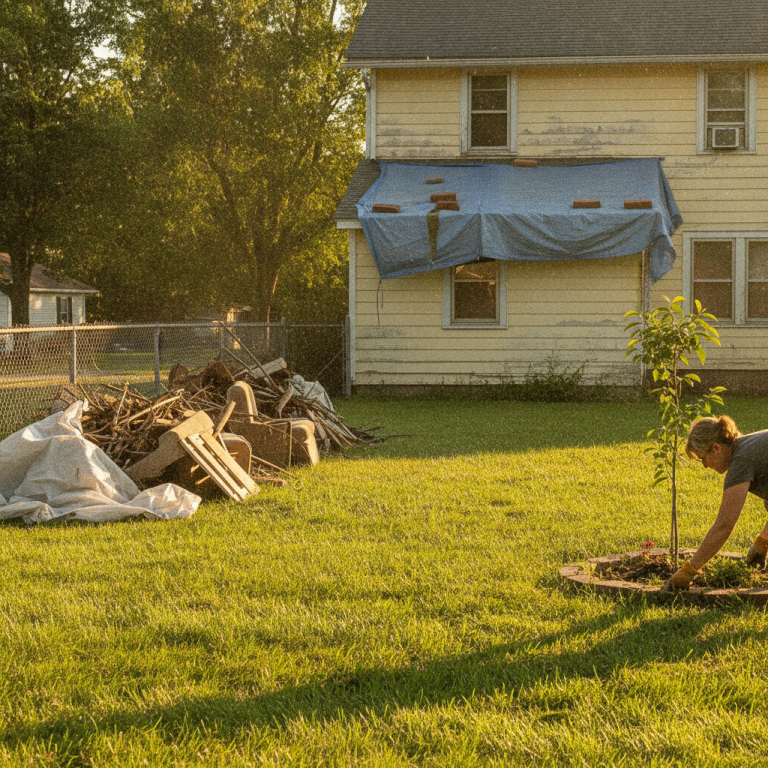
Two years after a hurricane, a neighborhood still wears the scars. Blue tarps sag over roofs. Fallen tree limbs pile up in yards. Grass grows thick and uneven where it hasn’t been touched since the storm hit. But the news crews are gone. The volunteers who showed up in week two have moved on to newer disasters. The community sits in what disaster recovery researchers call the “disillusionment phase”—the long, quiet stretch when recovery is actually hardest, yet outside help has largely vanished.
This pattern is remarkably consistent across disasters. Recovery lasts much longer than media attention. A natural disaster dominates headlines for weeks, maybe a month. But the work of putting a community back together takes years. And yard care—exterior maintenance, debris, overgrown landscaping—rarely makes anyone’s official checklist. So it gets forgotten. Not by choice. By design.
The Psychology of the Long Recovery
Disaster survivors experience a well-documented emotional arc. The first weeks bring an adrenaline-fueled sense of solidarity and action—neighbors help neighbors, volunteers pour in, media attention is intense. This honeymoon phase lasts weeks to a few months.
Then comes the disillusionment phase.
This phase, which can last from two months to one or even two or more years, is when the real hardship sets in. By month six or nine, disaster relief agencies start to pull back. Volunteers move to newer crises. The neighborhoods that sustained the worst damage watch as less-impacted areas return to normal life. Meanwhile, survivors juggle structural repairs, financial strain, potential relocation, and the grinding fatigue of living in a damaged or temporary home. The feeling is abandonment.
This is the exact moment when a simple act—mowing a lawn, clearing yard debris, trimming a fallen limb—becomes a lifeline. But it’s precisely when help tends to disappear.
Why Yard Care Isn’t on the Official Radar
FEMA’s Disaster Case Management program identifies long-term unmet needs as including financial, physical, emotional, or spiritual well-being—with referrals for materials and manpower. But yard care is rarely named explicitly. It’s not a structural repair. It’s not a utility restoration. It falls into the gap between what’s considered essential and what people actually need to reclaim their dignity and sense of home.
The math is stark. The average FEMA Individual and Households Program award totals just $3,446—far too small to cover both structural recovery and ongoing exterior maintenance. For renters and low-income homeowners, the gap is even wider.
Real recovery timelines underscore the problem. One year after Hurricane Helene in September 2024, piles of debris still marked the storm’s path in North Carolina communities. A Superstorm Sandy survivor in 2012 didn’t complete repairs until eight years later. After Hurricane Katrina, nearly a third of survivors continued to experience poor mental health years into recovery.
The Hidden Risks of Neglected Yards
A neglected yard isn’t just an eyesore. Overgrown vegetation can hide structural damage that worsens over time. Debris piles become breeding grounds for pests and mold. Fallen limbs and weakened trees pose safety risks to the home and anyone nearby. For older adults and veterans already stretched thin by recovery demands, a yard they can no longer manage becomes a source of shame and isolation rather than relief.
Some communities face code violations and fines—adding financial pressure to households already in crisis. Others simply withdraw. The yard becomes a symbol of a recovery that nobody’s helping with anymore.
What Communities Need: Sustained, Unglamorous Help
The path forward isn’t complex. Recovery needs to be understood as long-term, not emergency. Volunteers and organizations need to stay engaged beyond the honeymoon phase. Yard care—mowing, debris removal, tree maintenance—needs to be recognized as part of disaster recovery, not an afterthought.
I Want To Mow Your Lawn exists partly for this reason. The organization connects 1,800+ volunteers across all 50 states with older adults, veterans, and neighbors who need free lawn and exterior home care relief. This includes people recovering from storms and disasters. The work doesn’t solve the structural crisis, but it does offer something equally important: it signals that the community hasn’t forgotten. It eases a burden during the hardest, loneliest stretch of recovery. It restores a small corner of dignity when everything else feels fractured.
Volunteers understand that recovery is gradual. They’re neighbors, not contractors. They show up not because it’s trending, but because it matters.
How to Help in Your Community
If a neighbor or nearby community is in long-term recovery, yard care is one of the most practical, meaningful gifts you can offer. Watch for homes with persistent tarps, unmowed grass, or debris piles months after a disaster—these are signs that help has run out.
Volunteering with I Want To Mow Your Lawn is straightforward. Sign up to volunteer and be matched with neighbors in your area who need support. You can also test the mission playfully by playing the MOW app, which brings the community-care model to life in an interactive way.
The disillusionment phase is real. But it doesn’t have to mean abandonment. When volunteers stay engaged in the forgotten year, recovery becomes a shared responsibility—not something survivors face alone.
Downloadable Template