The Five-Minute Favor: Small Outdoor Tasks That Make a Big Difference for a Neighbor
April 22, 2026 · I Want To Mow Your Lawn
The Five-Minute Favor: Small Outdoor Tasks That Make a Big Difference for a Neighbor
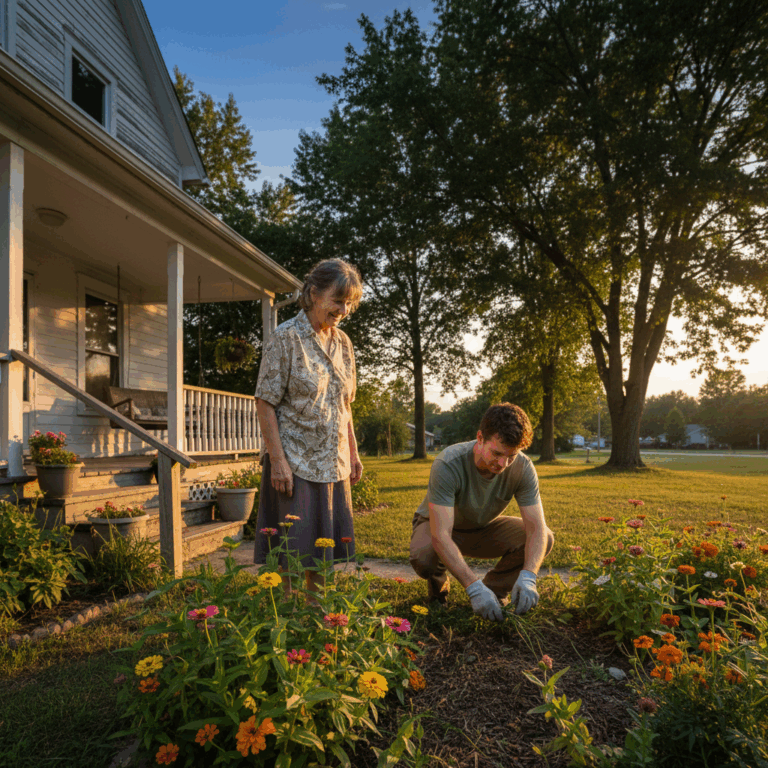
It doesn’t always take a full Saturday to change someone’s week. Sometimes it takes five minutes—a neighbor clearing fallen branches from a porch, someone else pulling weeds from a flower bed, or a quick sweep of the sidewalk after a storm. These small outdoor tasks rarely make headlines, but they’re often the difference between an older adult staying in the home they love and losing independence to maintenance concerns that feel overwhelming.
The five-minute favor bridges this gap. It’s not a commitment to becoming a property manager. It’s a neighbor noticing something and acting on it—quickly, kindly, and without drama.
Tasks That Take Five Minutes (But Mean Hours of Relief)
Clear the walkway or porch. Sweep off leaves, dirt, or debris that might create a tripping hazard. This takes three minutes and removes a daily worry.
Pull visible weeds from a flower bed. Not the whole yard—just the front area. Weeds visible from the street are often what trigger code enforcement attention.
Trim back low branches or brush. Anything that brushes someone’s head or blocks their path on their own property. Five minutes of pruning can open up a walkway.
Clean gutters (if safe). Clogged gutters lead to water damage, and water damage gets expensive fast. If the gutters are low enough to reach safely from the ground, a quick scoop can prevent real problems.
Rake or sweep the driveway. A clear driveway means someone feels like they can still use their own property without shame.
Pick up sticks after a storm. After wind or weather, a yard can look chaotic. Ten minutes of gathering branches restores a sense of order.
Spot-clean lawn edges. Trimming the edges where the lawn meets the sidewalk takes minutes but makes the whole property look intentional and maintained.
That human connection, wrapped inside a practical task, is what community actually looks like.
How to Offer (Without Overstepping)
If a neighbor’s yard is slipping, approach with respect. Notice the task, not the failure: “I was trimming my trees and thought I’d do yours too while I had the equipment out.” Offer the specific thing: “Can I rake your front porch this afternoon?” Make it easy to say yes or no, and make it clear you’re not expecting ongoing commitment.
The goal is temporary relief—a moment of help that restores someone’s agency, not creates dependency.
Volunteers and Neighborhoods
I Want To Mow Your Lawn connects 1,800+ volunteers across all 50 states with older adults, veterans, and neighbors in need. Many requests aren’t for a full lawn mow—they’re for these exact small tasks. A volunteer stops by for 30 minutes, handles two or three quick jobs, and that person can breathe easier for another month. That’s the model that works.
If offering small help fits how someone thinks about community, there are ways to get involved. Volunteers don’t need professional landscaping experience—they need willingness and a few basic tools. Some people commit to a regular day; others volunteer once when they see a need. Both matter.
Ready to help?Sign up to volunteer with I Want To Mow Your Lawn. Or play the MOW game—try it here or download from the App Store—and see how your choices support real neighbors in real yards.
Five minutes. It’s not much. And it changes everything.
A print-ready template to identify quick yard tasks and a fill-in letter to invite neighbors to help or receive help. Perfect for organizing informal neighborhood care networks or planning your own volunteer visits.
Use this checklist when you’re visiting a neighbor’s home or planning a volunteer yard visit. Check off tasks that would take 5–15 minutes and make a visible difference.
☐ Walkway/Porch: Sweep, rake, or clear debris
☐ Front Entry: Remove leaves or sticks blocking the path
☐ Weeds in Visible Areas: Pull weeds from flower beds or sidewalk edges
☐ Lawn Edges: Trim the line where grass meets sidewalk/driveway
☐ Low Branches: Trim or move branches blocking walkways
☐ Gutters (Safe Access): Clear visible debris if reachable safely
☐ Driveway/Patio: Sweep or clear fallen branches after weather
☐ Trash/Recycling Area: Tidy bins if they’re visible from street
☐ Storm Damage: Pick up sticks or debris from recent wind/rain
☐ General Clutter: Remove items that create safety hazards
Priority Note: Focus on safety and visibility first. A clear walkway and trimmed branches prevent falls and reduce code violations.
Neighborhood Outreach Letter Template
Use this template to invite neighbors to volunteer help or to gently offer help to a neighbor who might need it. Adapt as needed for your situation.
TO: __________________________________ DATE: __________________________________
Dear Neighbor,
I’ve noticed that __________________ (e.g., “your front walkway” or “some branches” or “the yard could use some attention”) could use a little help, and I’d like to offer a hand.
I’m planning to __________________ (e.g., “clear my gutters” / “rake leaves” / “trim some branches”) and would be happy to help with __________________ (specific task) as well. It shouldn’t take more than __________________ minutes, and I have the tools.
If this works for you, I can stop by on __________________ (day/time) or we can find another time that’s convenient. If you’d rather handle this yourself or prefer not to have help, I completely understand—just let me know.
Feel free to reach out at __________________ (phone/email/method).
Hope to see you soon,
__________________
(Your name)
Volunteer Notes: Making the Offer
Be specific: “I’ll clear the walkway” is clearer than “Let me help around the yard.”
Set a time boundary: “I can spend 15 minutes on this” respects their time and yours.
Bring tools or ask: “Do you have a rake, or should I bring one?”
Keep it light: Avoid language like “I noticed your yard looks bad.” Try: “I saw some branches down and thought I’d help clear them.”
One visit, one task: Don’t overwhelm. Come back another time if more help is needed.
Respect “no.” Some people want to maintain their own space. Honor that.
Planning a Volunteer Visit: Quick Checklist
Before you head to a neighbor’s or volunteer assignment, use this simple checklist.
☐ Confirm date and time with the neighbor or coordinator
☐ Check the weather forecast (avoid wet conditions)
☐ Bring: gloves, rake, broom, pruning shears, bags for debris
☐ Ask about allergies, pet safety, or areas to avoid
☐ Plan for 15–30 minutes (build in time to chat)
☐ After the visit, take a quick photo or note what was done
☐ Follow up: “Let me know if anything else comes up.”
A 501(c)(3) nonprofit connecting 1,800+ volunteers across all 50 states with older adults, veterans, and neighbors in need of free yard care.
Support our foundation to unlock this resource
A donation of any amount unlocks all bonus guides, templates, and deep dives for 30 days.
100% goes toward connecting volunteers with neighbors in need.
Choose your donation amount
$
Choose how to donate:
I Want To Mow Your Lawn Inc. is a 501(c)(3) nonprofit and registered charity with PayPal Giving Fund. EIN: 85-3447661. Your donation is tax-deductible.
Have a group?Organize a Community Service Day — we'll match your team with neighbors who need help.
Want to help us reach more neighbors?Our Marketing Toolkit has copy-ready posts, press materials, and flyers you can share in five minutes.