The Best Time of Day to Mow: Why Timing Matters for Grass Health, Noise, and Safety
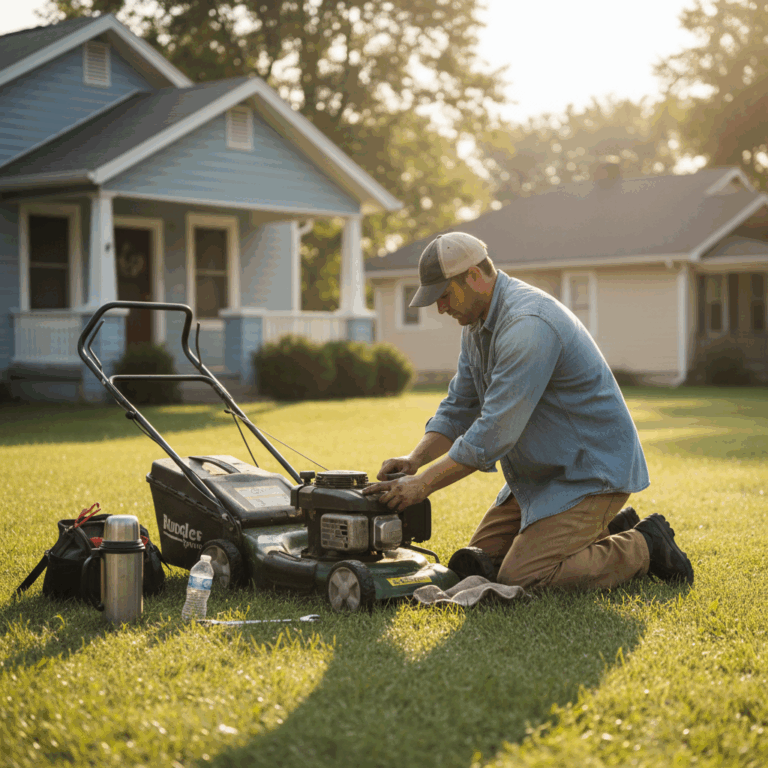
A volunteer arrives at a neighbor’s home on a Saturday morning with mower in hand, ready to help. But before starting up, a simple question arises: Is now actually the best time to cut this lawn? The answer matters more than most people realize—not just for the grass, but for the person doing the work and the community around them.
Lawn mowing might look straightforward, but timing shapes outcomes in three important ways: how healthy the grass stays, how much noise disturbs neighbors, and whether the person mowing stays safe and comfortable. Understanding these factors helps volunteers, neighbors, and anyone managing yard work make decisions that work for everyone.
The Grass Health Factor: When Lawns Are Ready to Be Cut
Grass isn’t the same throughout the day. Moisture, temperature, and the grass’s own stress levels shift constantly. That means some times are genuinely better for cutting than others.
The sweet spot is mid-morning—between 8 a.m. and 10 a.m. By this time, morning dew has dried, which is crucial. Cutting wet grass leaves lawn more susceptible to fungal diseases, and wet blades tear rather than slice cleanly. Additionally, temperatures are still cool enough that freshly cut grass doesn’t experience heat stress. The grass has energy to recover quickly, setting up a healthier lawn for the rest of the week.
Late afternoon mowing, roughly 4 p.m. to 6 p.m., is the second-best option. At this time, grass has dried from morning moisture, and cutting happens after the day’s most intense heat. The lawn still has several hours before nightfall to begin healing—enough time to reduce disease risk before evening damp settles in.
Two windows should be avoided for grass health: early morning (before 8 a.m.) when dew coats the blades, and midday (10 a.m. to 3 p.m.) when heat stress peaks. Many fungal pathogens thrive in damp environments, and mowing through wet grass can move spores across the lawn before it dries. In the heat of the day, cool-season grasses like Fescue and Kentucky Bluegrass can go dormant when temperatures exceed 80 degrees for extended periods, and cutting during peak heat accelerates moisture loss from freshly cut tips.
One more timing trap exists: mowing very late in the evening. Grass cut after 6 p.m. doesn’t have enough time to heal before nightfall, which means overnight moisture can trigger fungal growth on the fresh wounds.
The Noise Factor: Being a Respectful Neighbor
Lawn mowers are loud. Mid-morning mowing might wake someone recovering from a night shift. Early morning can disturb neighbors still asleep. These aren’t trivial considerations—noise complaints can become code violations, and more importantly, they strain the goodwill that makes community yard care possible.
Late afternoon and early evening mowing (4 p.m. to 6 p.m.) carries the best noise profile. Most neighbors are awake and active. Evening mowing doesn’t risk waking anyone, and it feels less intrusive than early morning work.
Early morning mowing, particularly before 8 a.m., may technically be legal in many areas, but it comes with social cost. The same applies to late evening work—even if a neighbor can’t legally complain, cutting grass at 7 or 8 p.m. can feel disruptive.
The Safety Factor: Heat, Hydration, and Who’s Holding the Mower
The person mowing matters just as much as the lawn. Midday heat—especially summer midday heat—turns a volunteer service into a genuine health risk. The sun is most potent from 10 a.m. to 4 p.m., when UV levels peak alongside the day’s highest temperatures. For an older adult or a volunteer working without a break, this window carries real risk of heat exhaustion or worse.
Mid-morning and late afternoon schedules protect both the volunteer and the person whose lawn is being mowed. Cooler temperatures mean less physical strain, lower dehydration risk, and a more sustainable pace for longer-term volunteers who serve multiple neighbors in a single day.
Putting It Together: A Simple Framework
For anyone mowing—whether a homeowner tackling their own yard or a volunteer helping a neighbor—the priorities align:
- Best times: 8 a.m. to 10 a.m., or 4 p.m. to 6 p.m.
- Avoid: Before 8 a.m. (wet grass), 10 a.m. to 3 p.m. (heat stress), and after 6 p.m. (healing time before dark)
- Remember: Always let morning dew dry completely before starting. Bring water. Consider the people nearby—early morning work should feel neighborly, not intrusive.
For volunteers with I Want To Mow Your Lawn, this kind of practical knowledge—understanding when and how to serve—is what transforms a generous impulse into genuine help. Scheduling yard work thoughtfully protects the grass, respects the neighborhood, and keeps volunteers safe. It’s a small detail that compounds across 1,800+ volunteers working across all 50 states.
Whether helping an older adult who can no longer manage yard work or supporting a veteran rebuilding their home life, timing matters. The best lawn care—whether professional or volunteer—comes when preparation meets opportunity. Knowing the right time to mow is part of what makes volunteer yard care truly work.
Want to Help Your Community?
Volunteers are the backbone of yard care relief for older adults, veterans, and neighbors in need. If you’d like to learn how to volunteer in your community, visit the IWTMYL volunteer page. You can also try the MOW app to find opportunities nearby or download it from the App Store.
Downloadable Template