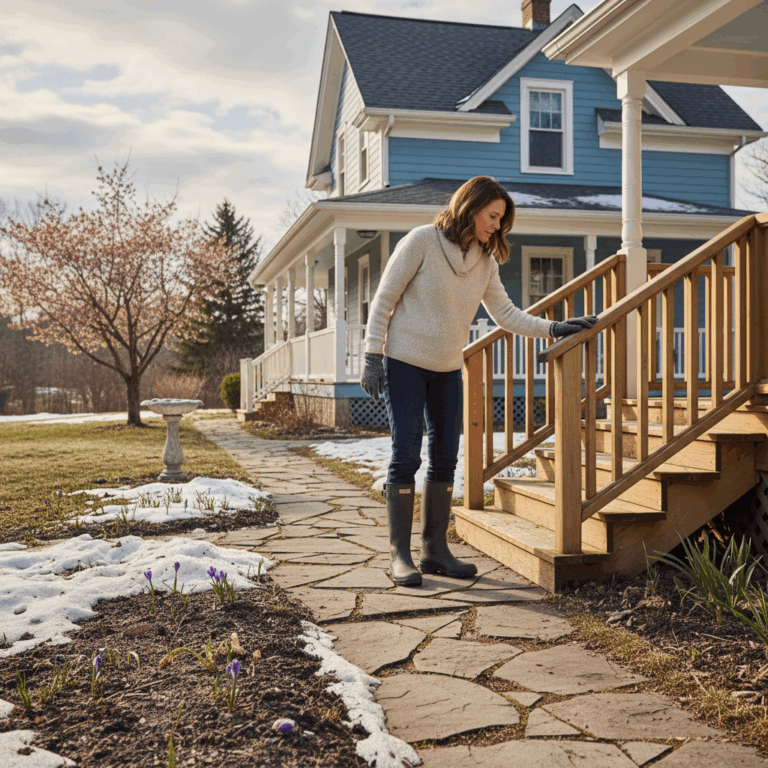
The Season When Falls Spike
April brings melting snow, shifting ground, and cracked concrete—hazards that are easy to miss but dangerous to ignore. While many think winter is the riskiest time for falls, the spring thaw introduces a different kind of danger: hidden damage and slippery surfaces that reveal themselves as snow retreats.
For older adults aging in place, veterans managing mobility challenges, and caregivers responsible for their safety, the yard can become a minefield. The stakes are real. Falls are the leading cause of injury-related death among adults ages 65 and older, and over 14 million older adults report falling every year.
What Changes When Winter Ends
The spring thaw is deceptive. While sunshine feels like relief, it reveals damage the winter covered up:
- Cracked sidewalks and driveways — Freezing and thawing cycles expand concrete, creating uneven surfaces and trip hazards.
- Debris-covered porches and steps — Leaves, pine needles, and winter debris trap moisture and become slippery, especially in early morning.
- Loose or rusted handrails — Salt and moisture weaken railings that were never properly secured.
- Loose roof shingles and gutters — Storm damage becomes visible, and deteriorating debris can fall unexpectedly.
- Uneven ground and settling mulch beds — Thawing soil shifts, creating subtle but dangerous elevation changes.
- Wet grass and moss growth — Spring rains accelerate moss and algae on shaded walkways.
Why This Matters Now
Older adults also face another risk: prolonged indoor activity during winter can lead to decreased strength and balance, making them more vulnerable to falls just as outdoor hazards reemerge. The combination is dangerous.
Caregivers—whether family members, neighbors, or volunteers—can prevent injuries with a simple 15-minute outdoor safety walk.
The 15-Minute Walkthrough
The goal: Spot hazards before an older adult or neighbor encounters them. This isn’t about deep repairs; it’s about identifying what needs attention.
Step 1: Walk the Path (Front Entry)
Start at the curb and walk the route an older adult would use to enter their home. Look for:
- Cracked, heaved, or uneven concrete on the sidewalk or driveway
- Loose gravel or mulch that shifts underfoot
- Debris (branches, leaves, pine needles) blocking the path
- Puddles or standing water indicating poor drainage
Step 2: Inspect Steps and Thresholds
Steps are where most outdoor falls happen. Check:
- Are all steps the same height? (Uneven risers are a major trip hazard)
- Is the step surface intact—no chips, cracks, or peeling paint?
- Are there handrails on both sides? (Recommend this, even if they’re absent)
- Is the handrail secure, free of rust, and at a comfortable grip height?
- Is the threshold level with the door frame, or does it create a lip?
Step 3: Check the Porch or Landing
- Is the surface wet, slippery, or covered in moss or algae?
- Are boards warped, cracked, or rotting?
- Are there items (planters, furniture, tools) that obstruct movement?
- Is lighting adequate, especially for early morning or evening?
Step 4: Examine Yard Hazards
Walk the perimeter and check:
- Uneven ground, tree roots pushing through soil, or settling areas
- Debris piles, fallen branches, or clutter that creates obstacles
- Areas with standing water or poor drainage
- Loose stones, gravel paths, or mulch that shifts
- Low-hanging branches that could obstruct vision or strike the head
Step 5: Assess Roof, Gutters, and Overhangs
From ground level (don’t climb), observe:
- Missing or damaged roof shingles
- Gutters pulling away from the fascia or clogged with debris
- Loose flashing or trim
- Any risk of ice dam buildup in the coming winter
Step 6: Document and Prioritize
Take notes or photos of issues. Categorize by urgency:
- Immediate: Cracked steps, missing handrails, debris blocking the path, slippery surfaces
- Soon: Loose handrails, uneven pavers, overgrown vegetation
- Plan ahead: Roof repairs, gutter cleaning, landscape work
What to Do With Your Findings
Depending on the scope and the older adult’s situation, options include:
- DIY fixes: Clearing debris, removing loose mulch, or securing small handrail issues
- Volunteer help: Lawn care volunteers often assist with yard cleanup and seasonal maintenance
- Professional services: Concrete repair, structural handrail installation, or roof work typically require licensed contractors
- Community resources: Some nonprofits and aging-in-place organizations offer safety consultations or repair assistance
The Bigger Picture
A safe yard isn’t about perfection—it’s about removing obstacles to independence. When an older adult can navigate their own home and outdoor space without fear of falling, they maintain dignity, stay active, and avoid the cascade of health challenges that follow a serious fall.
For caregivers and neighbors, that 15-minute walk is an act of attention. It says: Your safety matters, and I’m paying attention to the details you might miss.
If yard cleanup or maintenance is beyond reach—whether due to mobility, cost, or time—help is available. Volunteers across all 50 states connect with older adults and veterans through I Want To Mow Your Lawn to provide temporary relief with lawn and exterior home care. Those seeking help can explore the MOW app, which makes it easy to request or offer assistance in your community.
Spring is the season of renewal. Make it safe.
Printable Guide