A Simple Way to Honor Veterans This Memorial Day
Memorial Day weekend is coming, which means cookouts, time with family, and—for many people—a renewed focus on yard work before summer heat sets in. But for some neighbors, especially older veterans, that overgrown lawn or neglected landscaping isn’t just a seasonal task. It’s a barrier to enjoying their own outdoor space and a source of real stress.
The good news: there’s a concrete, meaningful way to help. Yard care before Memorial Day can make a tangible difference for veterans in your neighborhood who can’t manage the work themselves.
Why April Matters for Yard Prep
April is the ideal time to tackle lawn preparation work. Spring is when lawns recover from winter dormancy and start to establish themselves for the demanding months ahead. Getting the yard in shape before Memorial Day weekend—a natural gathering season—gives everyone time to enjoy their outdoor space with confidence.
For older adults and veterans, especially those managing physical limitations or disabilities, yard work can pose real health risks. Mowing uneven terrain, dealing with heat exposure, and managing heavier equipment becomes harder with age or service-related injuries. A well-maintained yard isn’t a luxury; it’s part of being able to age safely in place.
Practical Pre-Memorial Day Tasks
If you’re thinking about helping a veteran neighbor, here are the key tasks that make the biggest difference:
- Mower blade sharpening: Dull blades shred grass instead of slicing cleanly, stressing the lawn and making it vulnerable to disease. A sharp blade is foundational.
- Spring cleanup: Clear winter debris—branches, leaves, and clutter—that accumulated over the cold months.
- Lawn assessment: Walk the yard to identify any damaged patches, newly seeded areas, or trouble spots that need protection before regular mowing starts.
- First mowing: Wait until grass reaches about 3 inches tall, then mow with blades set high. Never remove more than one-third of the grass blade in a single cut.
- Fertilizer timing: If fertilizing, use slow-release products and avoid quick-release options. Wait until mid-May for best results, right around Memorial Day, for optimal timing into summer.
These aren’t complicated tasks. They just require time, a working mower, and the willingness to show up.
Finding Veterans Who Need Help
The hardest part isn’t the yard work—it’s knowing who needs it. Many veterans are quietly managing overgrown yards or avoiding their outdoor spaces because the work has become too much. They may not ask for help, and they won’t advertise their situation on social media.
Start by talking to neighbors. Mention casually that you’re thinking about helping with yard work this spring. Check in with older neighbors you know have military backgrounds. Veterans service organizations in your area—like local DAV chapters or community veteran support groups—can sometimes point you toward neighbors who need assistance.
And if you’re not sure where to start, organizations like I Want To Mow Your Lawn connect volunteers directly with older adults, veterans, and neighbors who need free lawn care relief. Over 1,800 volunteers across all 50 states participate in this grassroots movement, which began during the pandemic to address exactly this need.
What Volunteers Actually Do
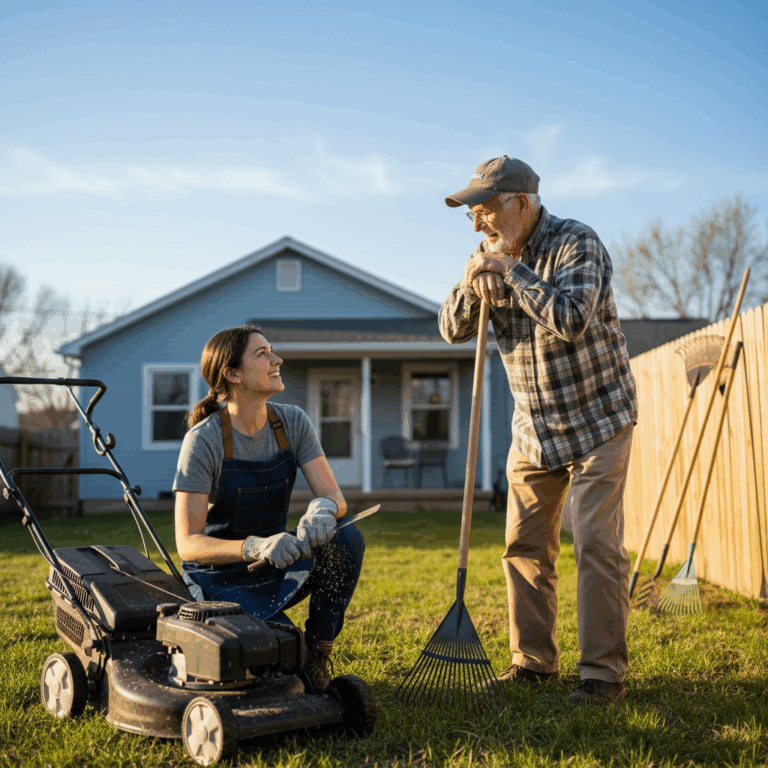
Volunteering doesn’t mean committing to ongoing lawn maintenance. It means showing up on a Saturday in April or early May, bringing your equipment or working together with what they have, and getting their yard into a manageable state before the season really kicks in. It’s temporary relief, not a long-term contract.
For volunteers, the work is straightforward: mow, edge, tidy up. For the veteran receiving help, the impact is significant. It’s the difference between avoiding their yard and being able to sit outside without embarrassment. It’s relief from physical strain they’re no longer equipped to handle.
This Memorial Day, Make It Local
Memorial Day is often about larger ceremonies and national remembrance—and those matter. But it’s also an opportunity for something quieter and more personal: showing neighbors you remember their service by removing barriers to their everyday life. A well-maintained yard isn’t a charity case. It’s dignity. It’s community. It’s the simple message that someone noticed, someone cared enough to help.
If you have equipment, time, and the willingness to help, your neighborhood likely has a veteran who would deeply appreciate it. The work is seasonal and bounded. The impact lasts far longer.
Getting Started
Want to help a veteran neighbor this spring? You can volunteer with I Want To Mow Your Lawn to connect with neighbors in your area who need support. You can also learn more about the movement and stay updated by playing the MOW app, available through the App Store.
April is the perfect month to start. Your neighbor is ready.
Downloadable Template