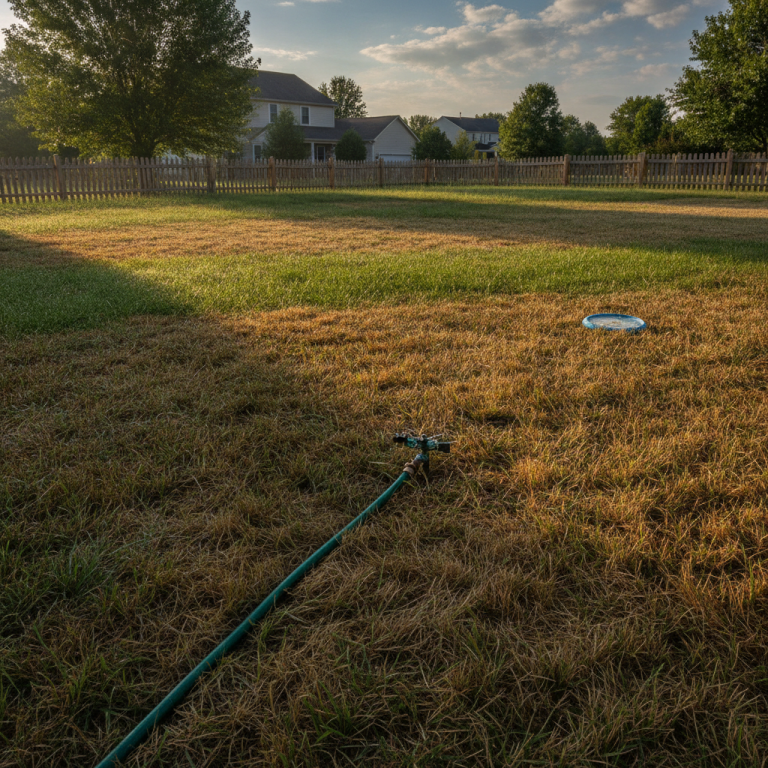
By mid-July, it’s not unusual to step outside and notice the lawn looks different than it did in May. The bright green has faded. There are patches that weren’t there before. The grass feels thin underfoot, and nothing seems to bounce back the way it used to.
For many people—especially older adults, veterans on fixed incomes, and neighbors managing health challenges or mobility limits—a struggling lawn can trigger real worry. It’s not vanity. It’s the concern that comes when something in your care starts slipping, and you don’t have the physical ability or financial means to fix it.
As stress deepens, more obvious signs appear: brown or yellow patches; thinner grass in areas that were dense a few weeks ago; weeds filling in bare spots; overall slower growth than during spring.
The tricky part? Drought stress often isn’t visible until it’s already fairly serious. A lawn might recover overnight if it’s just a hot day. But after days or weeks of heat and dry conditions without watering, recovery stops happening. The grass stays brown or tan, and bare soil begins showing through.
Location matters, too. Heat and drought stress typically hit the hottest, driest spots first—areas near pavement, on slopes, in full sun exposure, and along sidewalks or driveways. Shaded areas under trees or on the north side of a house may stay greener longer.
The Science Behind the Stress
Most lawns in the northern half of the United States are planted with cool-season grasses like Kentucky bluegrass, perennial ryegrass, or tall fescue. These grasses perform best when temperatures stay between 60°F and 75°F. Once the thermometer climbs above 90°F for several consecutive days, these grasses slow their growth dramatically and begin to struggle.
Beyond just heat, extended dry periods create another problem: soil can become hydrophobic—developing a waxy, water-resistant surface where irrigation beads up and runs off rather than soaking in. That means even when it does rain or when someone tries to water, the moisture doesn’t reach the root zone where it’s needed.
What Neighbors Can Actually Do
If a neighbor or family member is dealing with a stressed lawn, there are practical steps that help:
Water deeply and less frequently. Light, frequent watering encourages shallow roots. Deep, less-frequent watering helps roots reach moisture further down.
Water early in the morning. Early watering reduces evaporation and helps the plant use the moisture most efficiently.
Avoid mowing when stressed. Let the lawn rest during extreme heat. Mowing adds stress when the plant is already struggling.
Raise the mowing height. Taller grass shades the soil, keeping it cooler and reducing moisture loss.
Accept dormancy as recovery. Cool-season grasses can go dormant—turning brown—and bounce back when cooler weather and adequate moisture return. Dormancy is survival, not death.
But here’s the reality many communities face: some older adults, veterans, and neighbors in need don’t have the physical ability to implement these steps. They can’t bend down to adjust sprinklers. They can’t push a mower even at the best of times, let alone navigate it across uneven terrain. They can’t afford to hire professional lawn care services on a fixed income.
That’s where community support matters. I Want To Mow Your Lawn (IWTMYL) connects over 1,800 volunteers across all 50 states with neighbors who need temporary relief from yard care. Volunteers help mow, edge, trim, and clear debris—practical tasks that make an immediate difference. Whether the lawn is struggling with stress or simply beyond someone’s capacity to manage, a few hours of volunteer help can restore dignity and reduce the worry that comes with an overgrown yard.
If a neighbor’s lawn is showing signs of stress, a simple conversation might reveal they need help. If someone wants to volunteer their skills and time, IWTMYL makes it easy to connect with people in the local area who would benefit.
Volunteers can sign up here. Those looking to request help or learn more can explore the MOW app, available for download on the App Store, which makes connecting simple and direct.
The Deep Dive: Lawn Stress Diagnostics and Recovery Techniques
Drought stress looks different from disease. Learn how to tell the difference, measure soil moisture accurately, and use targeted recovery methods that actually work. For volunteers and neighbors who want to understand the science behind what they’re seeing.
Distinguishing Drought Stress from Disease and Other Problems
The first step in rescue is diagnosis. Drought and heat stress typically affect the lawn fairly evenly across hot, exposed areas—near pavement, slopes, full-sun zones, and driveways. The browning follows a geographic pattern tied to sun exposure and soil type.
Fungal diseases, by contrast, create distinct patches that don’t follow sun patterns. Patches from disease often appear suddenly after rain or in shaded, humid areas. If brown patches show up in spots that get afternoon shade or near tree cover, consider fungal issues before assuming drought.
Compacted or poor-draining soil can also mimic drought stress. If the area stays wet after rain or watering but still looks stressed, compaction or poor drainage may be the real culprit, not moisture availability.
Measuring Soil Moisture: The Screwdriver Test
Before adjusting watering or concluding the lawn needs help, check actual soil moisture. A simple screwdriver test reveals what’s really happening below the surface.
Push a long screwdriver or soil probe straight down into several spots across the yard—including stressed areas and green areas. A well-watered soil should allow the screwdriver to push down 6 inches easily. If it hits resistance at 2-3 inches, the soil is dry and likely needs water. If it pushes down easily past 6 inches and pulls out wet, there’s adequate moisture—meaning the stress may be heat-related rather than drought-related, or another factor is at play.
Repeat this test in the early morning before the sun heats the soil, and again in late afternoon. Comparing the two tells whether the lawn is recovering moisture overnight or staying dry all day—a key sign of severe stress.
Recovery Technique: The Aeration-Plus Approach
Once soil becomes hydrophobic (water-resistant), even correct watering doesn’t help. Breaking that barrier requires action.
Core aeration—removing small plugs of soil and thatch—opens the soil surface and improves water penetration. After aeration, apply a light layer of compost (¼ inch or less) raked into the aerated holes. This adds organic matter, improves moisture retention, and feeds the soil biology that helps grass recover.
Water deeply after aeration. The opened-up soil should now accept water instead of shedding it.
Mowing Strategy During Stress
The golden rule: don’t mow stressed grass. If the lawn is showing clear signs of heat or drought stress, let it rest. Mowing removes leaf blade area the plant needs to recover moisture and photosynthesize.
When conditions allow mowing again, raise the mower blade height by ½ inch to 1 inch above normal. Taller grass shades the soil, reducing evaporation and keeping roots cooler. Leave clippings on the lawn (mulch mowing) to return organic matter and reduce moisture loss.
Volunteer Perspective: What Neighbors Actually Need
For volunteers supporting older adults or neighbors managing health challenges, understanding lawn stress is practical knowledge. A volunteer who can recognize early stress signs, suggest simple watering adjustments, or simply mow at the right height is doing more than yard work—they’re helping prevent the situation from becoming unmanageable.
Many neighbors won’t ask for help until a problem is severe. Early conversation and visible support often make the difference between a lawn that recovers and one that spirals into overgrowth and code enforcement issues. That’s where community shows up.
Support our foundation to unlock this resource
A donation of any amount unlocks all bonus guides, templates, and deep dives for 30 days.
100% goes toward connecting volunteers with neighbors in need.
Choose your donation amount
$
Choose how to donate:
I Want To Mow Your Lawn Inc. is a 501(c)(3) nonprofit and registered charity with PayPal Giving Fund. EIN: 85-3447661. Your donation is tax-deductible.
Have a group?Organize a Community Service Day — we'll match your team with neighbors who need help.
Want to help us reach more neighbors?Our Marketing Toolkit has copy-ready posts, press materials, and flyers you can share in five minutes.