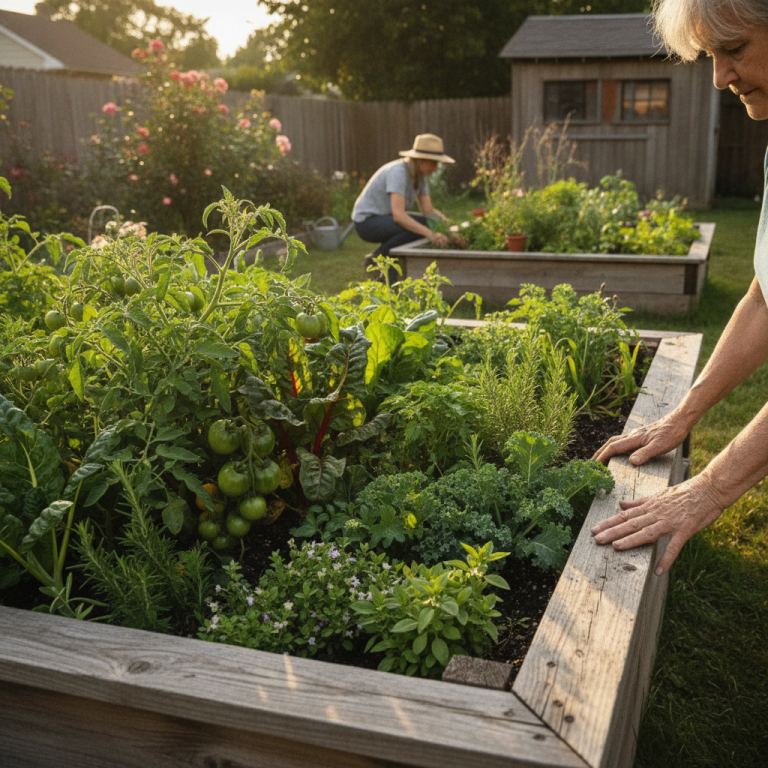
Raised Garden Beds and Accessible Planters: Reclaiming the Joy of Growing
July 16, 2026 · I Want To Mow Your Lawn
The Garden That Becomes Unreachable
There’s a particular kind of loss that happens quietly. An older adult who has spent decades tending a garden wakes up one morning and realizes the bend to reach soil-level beds now sends sharp pain through their knees. A veteran with arthritis looks out at the yard they love and sees an obstacle course instead of a sanctuary. The garden doesn’t change. The person does. And somewhere in that gap, the connection to growing things—to nurturing life, to being useful, to having a quiet place to think—slips away.
For many older adults and neighbors managing chronic pain or mobility challenges, traditional ground-level gardening becomes physically impossible. But it doesn’t have to be. Accessible garden beds and raised planters aren’t just a workaround. They’re a pathway back to independence, purpose, and the measurable health benefits that come with putting hands in soil.
Beyond the statistics, gardening gives something harder to measure: agency. 93% of older adults currently live in their own homes, and most want to stay there as they age. Gardening—tending something, watching it grow, harvesting what you’ve nurtured—is a way to remain active and purposeful within that home. It’s independence in its most tangible form.
The Barrier: Why Traditional Gardening Becomes Unsafe
Accessible planters eliminate these risks while preserving the activity itself.
What Makes a Garden Bed Truly Accessible
Height and reach: Raised beds should be 24–36 inches tall, allowing someone seated or with limited bending capacity to work comfortably. For wheelchair users, beds mounted at 20–24 inches with knee clearance underneath offer full access.
Width: A 3–4 foot width allows someone to reach the center without overextending or leaning dangerously. Narrow, elongated beds are safer than wide squares.
Edges and handholds: Reinforced wooden or composite frames provide stable edges for balance and leverage. Some designs include integrated handles or railings—not decorative, but functional support for standing or shifting weight.
Soil quality: Accessible beds need high-quality, lightweight soil that drains well and isn’t compacted. This reduces the force required to dig or plant.
Adaptive tools: Long-handled tools, ergonomic hand tools with cushioned grips, and seated gardening stools mean someone with limited grip strength or mobility can still work the bed effectively.
Container Gardening for Maximum Flexibility
Raised beds aren’t the only answer. Large containers—30–50 gallon fabric pots or terracotta—can be positioned on tables, plant stands, or tiered shelving at any height that works for the person. Vegetables, herbs, and flowering plants thrive in containers. The individual controls the height, the weight, and the effort required.
Container gardens also solve another problem: they’re portable. An older adult who needs to move closer to a sunny spot or shift position for comfort can do so without reconstructing the whole garden.
The Volunteer Opportunity
Building accessible garden beds is the kind of project that volunteers can accomplish in a single afternoon—and the impact echoes through the growing season. Volunteers with I Want To Mow Your Lawn already help neighbors maintain outdoor spaces. Expanding that work to include garden bed setup, accessible planter installation, or seasonal garden prep is a natural extension of that mission.
A volunteer team can build a raised bed, fill it with soil, set up containers, and demonstrate adaptive tools in a way that restores someone’s ability to garden independently. The older adult, veteran, or neighbor in need gets their agency back. The volunteer gets to see the direct result of their work every time that garden produces a tomato or a handful of herbs.
Next Steps: For Individuals, Families, and Volunteers
For someone who loves gardening but struggles with traditional beds: Raised beds and containers aren’t a consolation prize. They’re a design choice that prioritizes safety and comfort while preserving the joy. Start small—one or two containers—and expand as confidence and capability grow.
For family members or neighbors noticing a garden going unused: Accessible garden setup is a concrete, dignified way to help. It’s not taking over—it’s enabling someone to do what they’ve always done, on their own terms.
For volunteers: Yard care includes the whole outdoor space. If a neighbor or an older adult in your community loves gardening, helping set up an accessible bed or container garden is a project that creates lasting independence. Volunteers can sign up to help or explore the MOW app to find opportunities in their area.
The Larger Picture
Gardening isn’t a luxury for older adults and neighbors in need. It’s a form of physical activity, mental health support, and sense of purpose—all embedded in something as simple as growing food or flowers. Accessible garden beds don’t just solve a practical problem. They restore dignity and independence in a way that most other interventions can’t replicate.
The garden can remain the sanctuary it’s always been. It just needs to be designed with the person it serves in mind.
Accessible Garden Bed Setup Checklist & Volunteer Project Template
A practical, printable checklist for volunteers building or adapting garden spaces. Includes site assessment, material list, accessibility measurements, and a follow-up care guide so the neighbor can garden independently all season.
I Want To Mow Your Lawn
Accessible Garden Bed Setup Checklist & Project Guide
Use this template when planning an accessible garden project for an older adult, veteran, or neighbor in need.
PHASE 1: SITE & NEED ASSESSMENT
☐ Walk the outdoor space with the person being served. Ask: What did you used to grow? What would you like to grow?
☐ Identify the sunniest, most accessible spot (minimum 4–6 hours of direct sun for vegetables).
☐ Check for water access. Is a hose reachable? Is there a faucet nearby?
☐ Note mobility concerns: Can the person walk to the garden easily? Are there steps, uneven ground, or obstacles?
☐ Ask about physical limitations: arthritis? Balance issues? Wheelchair use? Limited grip strength? Back pain?
☐ Measure the space. Document dimensions and any obstacles.
PHASE 2: RAISED BED DESIGN & MATERIALS
☐ Decide on height: 24–36 inches for standing access; 20–24 inches with knee clearance for seated or wheelchair use.
☐ Choose width: 3–4 feet maximum (allows reaching across without leaning dangerously).
☐ Choose length: 4–6 feet is manageable; longer beds should have multiple sections.
☐ Material selection:
☐ Cedar or composite wood (untreated, non-toxic)
☐ Galvanized steel or aluminum (lightweight, durable)
☐ Avoid pressure-treated wood with harmful chemicals
☐ Plan reinforced corners and edges for stability and handholds.
☐ Consider adding an integrated handle or rail if mobility is limited.
PHASE 3: MATERIALS & TOOLS CHECKLIST
For a 4′ × 3′ × 30″ raised bed:
☐ Wood boards or composite panels (qty: ________)
☐ Fasteners: exterior-grade screws, stainless steel or coated (qty: ________)
☐ Wood sealant or stain (non-toxic)
☐ Landscape fabric (to line bottom, prevent weeds)
☐ Soil: high-quality vegetable or garden mix (bags needed: ________)
☐ Compost or aged manure (bags needed: ________)
☐ Mulch (bags needed: ________)
☐ Seedlings or seeds (type: ________)
Tools:
☐ Drill/driver
☐ Saw (hand or power)
☐ Tape measure
☐ Level
☐ Shovel
☐ Work gloves
PHASE 4: ACCESSIBILITY ENHANCEMENTS
☐ Install sturdy handholds or railing if needed.
☐ Ensure pathways to the bed are clear, level, and wide enough (3 feet minimum).
☐ If wheelchair access: create a 24″ knee-clearance space; ensure bed is no taller than 24″.
☐ Position bed close to water source. Provide a sturdy hose with a lightweight nozzle.
☐ Set up an adaptive tool kit:
☐ Long-handled cultivator or hoe
☐ Ergonomic hand tools with cushioned grips
☐ Seated gardening stool or kneeling pad
☐ Gloves with good grip support
PHASE 5: PLANTING & SETUP
☐ Line bed with landscape fabric.
☐ Fill with layered soil: bottom layer compost/aged manure (4″), top layer garden mix (remaining height).
☐ Water the soil to settle it.
☐ Help plant seedlings or seeds. Ask the person what they’d like to grow.
☐ Apply mulch around plants (2–3 inches), keeping it away from stems.
☐ Show proper watering depth and frequency.
PHASE 6: VOLUNTEER FOLLOW-UP & DOCUMENTATION
☐ Take photos of the finished bed for documentation.
☐ Walk through watering, weeding, and harvesting with the person.
☐ Discuss what to expect each week of the growing season.
☐ Leave the adaptive tools in place. Show where to store them.
☐ Note any ongoing maintenance needs (early summer: support cages for tomatoes; late summer: succession planting).
☐ Record the person’s preferred contact method for future check-ins or seasonal help.
CONTAINER GARDENING ALTERNATIVE
If raised beds aren’t feasible, use large containers on tables or stands:
☐ Container size: 25–50 gallons (lighter fabric pots easier to move than ceramic).
☐ Height on table/stand: ________ inches (adjusted to person’s comfortable working height).
☐ Winter: cover bed with mulch; plan next season’s garden layout.
VOLUNTEER NOTES & REFLECTIONS
Person served: ________________________
Address: ________________________
Date of project: ________________________
Bed dimensions: ________ × ________ × ________ (length × width × height in inches)
What was planted: ________________________
Accessibility features added: ________________________
Follow-up needed: ☐ Yes ☐ No | If yes, what: ________________________
Volunteer name(s): ________________________
Hours worked: ________________________
Notes for future volunteers: ________________________________________________
I Want To Mow Your Lawn
iwanttomowyourlawn.com
Support our foundation to unlock this resource
A donation of any amount unlocks all bonus guides, templates, and deep dives for 30 days.
100% goes toward connecting volunteers with neighbors in need.
Choose your donation amount
$
Choose how to donate:
I Want To Mow Your Lawn Inc. is a 501(c)(3) nonprofit and registered charity with PayPal Giving Fund. EIN: 85-3447661. Your donation is tax-deductible.
Have a group?Organize a Community Service Day — we'll match your team with neighbors who need help.
Want to help us reach more neighbors?Our Marketing Toolkit has copy-ready posts, press materials, and flyers you can share in five minutes.