Early Spring Lawn Assessment: A Practical Checklist for April
April is the quiet turning point in yard care—the moment between winter dormancy and the growing season’s full throttle. For many, it’s also the moment when stepping outside reveals just how much work accumulated over the cold months. A wet lawn littered with branches, bare patches emerging as snow melts, drainage issues suddenly visible—it can feel overwhelming.
This is where a structured spring assessment saves time, money, and stress. Rather than guessing what needs attention, a methodical walk-through of the yard identifies real problems before they become expensive ones. And for older adults, veterans, or anyone managing a larger property alone, this kind of inspection is exactly the kind of task where volunteer yard care makes a tangible difference.
Timing Matters: Wait for the Ground to Firm Up
The most common spring mistake is rushing outdoors too early. Wet, compacted soil is fragile. Walking on a soggy lawn—especially heavy clay soil—damages newly emerging roots and compacts dirt in ways that won’t recover for months. The signal to start? When the “squish” disappears underfoot. Once frost is out of the ground and soil feels firm and dry to the touch, it’s safe to assess and work. In most regions, this happens in mid-to-late April, though timing varies by year and snowmelt pace.
Soil temperature also matters for chemical applications. Pre-emergent herbicides work best when soil hits 55°F for 3–5 days consistently. Forsythia blooming is nature’s reliable signal that conditions are right.
Step One: Clear and See
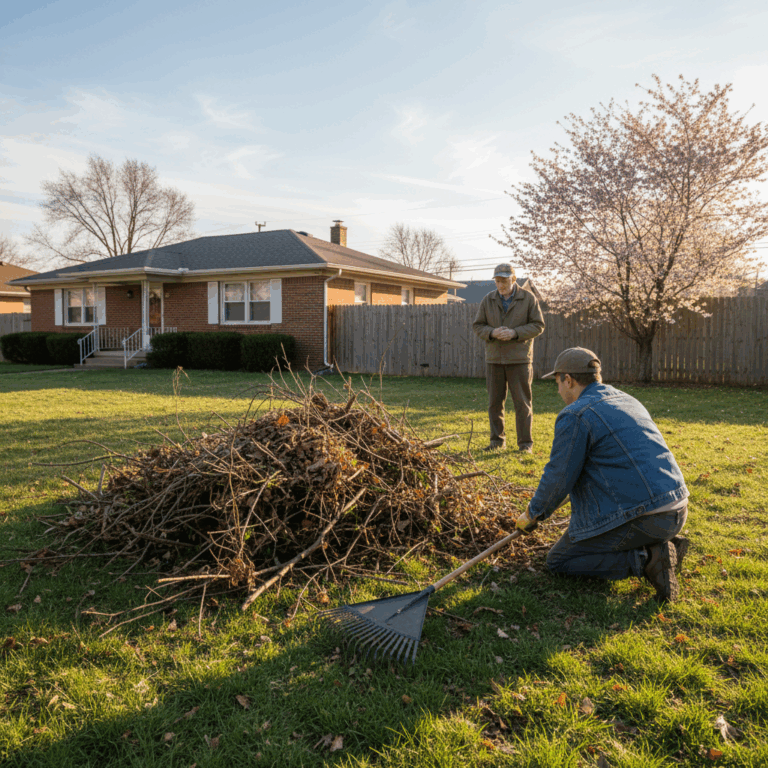
Before analyzing anything, clear the canvas. Remove fallen branches, leaves, and debris from lawn edges, planting beds, drainage ditches, and gutters. Clear unwanted brush and undergrowth. Cut back dead foliage on last year’s perennials and ornamental grasses before new growth obscures them.
This step is deceptively important—it reveals what’s actually happening beneath the mess. It’s also often the most physically demanding, which is why many older adults and veterans find it the hardest part of spring yard prep.
Step Two: Look for Drainage Problems
After the next rain, watch where water collects and pools. Clogged drains, settled low spots, and poor grading become obvious now, before summer foliage hides them. Note problem areas so they can be addressed before the season really heats up. Chronic pooling can rot grass roots and create pest breeding grounds.
Step Three: Inspect Hardscapes and Structures
Walk every paved surface, retaining wall, and stone step. Freeze-thaw cycles cause significant movement between January and March—shifted pavers, cracked caps, and leaning walls are common findings. Catching these early prevents accidents and keeps repairs manageable. This inspection is straightforward but requires mobility and attention to detail.
Step Four: Test the Soil
Before fertilizing anything, run a basic soil test for pH and nutrient content (nitrogen, phosphorus, potassium). A neutral pH around 7 is ideal for most grasses. Many soil deficiencies won’t show up visually until mid-season, and a test saves guesswork and wasted fertilizer. Home test kits are affordable; professional tests offer more detail if problems are suspected.
Step Five: Identify Bare Spots and Damage
Now that debris is cleared and soil is visible, mark areas of dead grass, bare patches, compaction, or visible pest damage. Document these on paper or with photos—they’ll guide later decisions about reseeding, aeration, or pest treatment. Winter damage is often worse than it looks once growth begins, so over-documenting now prevents frustration later.
Why This Matters for Community
Spring assessment takes time, physical effort, and knowledge many people don’t have. For an older adult with limited mobility, a veteran recovering from injury, or a neighbor managing multiple health concerns, this 8-to-10 week window that determines lawn density and health for the entire year can feel impossible to navigate alone.
I Want To Mow Your Lawn connects 1,800+ volunteers across all 50 states with neighbors who need this exact kind of help—not as a permanent service, but as temporary relief during critical moments. Spring assessment and cleanup is often that moment. A volunteer’s fresh pair of hands can clear debris, spot drainage issues, and set a neighbor up for success without the burden falling entirely on one person’s shoulders.
A Practical Approach
Print or write down this checklist. Walk the yard on a dry day. Take notes and photos. If the work feels manageable, tackle it piece by piece. If it feels like too much—or if mobility, time, or resources make it impossible—reach out. That’s what community volunteers are there for.
Spring assessment isn’t glamorous, but it’s the foundation that makes everything else possible. A few hours of attention in April prevent months of avoidable problems.
Get Involved
If you’re interested in volunteering to help neighbors with spring yard assessment and cleanup, sign up to volunteer. Want to see lawn care in action or learn more about the mission? Play the MOW app or download it from the App Store to explore how this grassroots movement works.
Downloadable Template