The Real Weight of Service Hour Requirements
National Honor Society induction letters arrive in early April. The requirements are clear: juniors need 20 hours of community service, seniors need 30, and those applying in the 2025-2026 school year must complete 50 hours since entering high school. For the 2026-27 academic year, the minimum GPA for NHS qualification is 3.8.
But here’s what those numbers don’t convey: the difference between clocking hours and actually mattering. NHS defines service as “volunteer work on behalf of community, society or the planet, for which a student does not receive compensation.” That means paid work, class requirements, and trivial tasks don’t count. The service has to be real.
Spring—particularly April—offers a natural window for outdoor volunteer work that genuinely helps people while meeting those requirements. The season is right, the need is high, and the impact is immediate.
Why Outdoor Service Projects Hit Different
Volunteering itself carries measurable benefits. Teenagers aged 16-17 have the highest volunteer participation rate among all age groups at 28%. Young people who volunteer just one hour or more a week are 50% less likely to engage in destructive behavior. And the long-term effect matters: when youth volunteer, adults tend to volunteer too—building a community where caring becomes a lifelong habit.
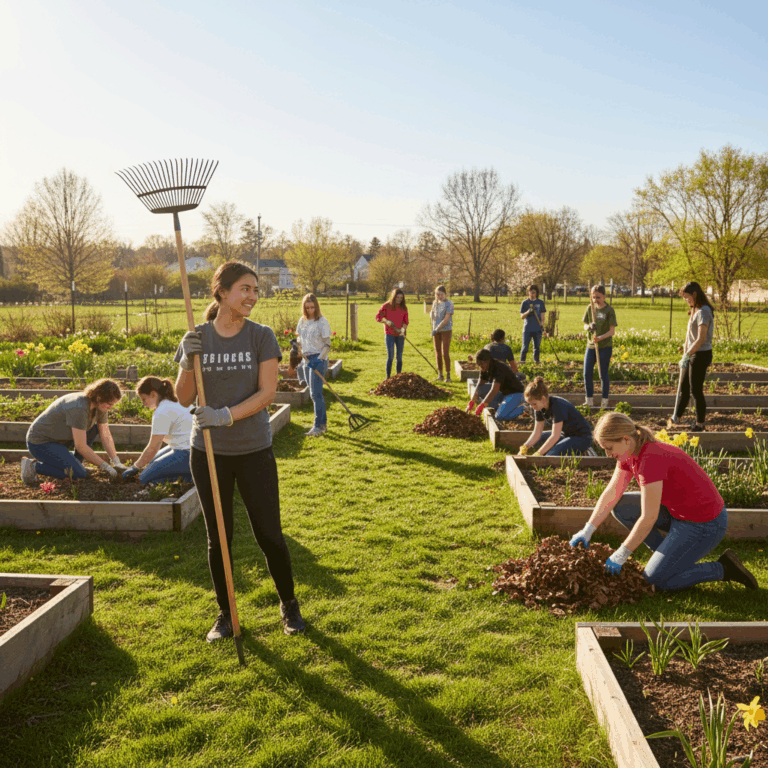
Outdoor projects offer something deeper than statistics suggest. They’re visible. They’re immediately tangible. A spring cleanup removes tons of debris from parks and waterways. A yard care day at a local garden restores a space the entire neighborhood will use. Lawn work for an older adult or veteran isn’t abstract service—it’s a person breathing easier, feeling cared for, staying safer in their own home.
The economic value is staggering too: volunteer time is valued at $34.79 per hour, and teenagers contribute 2.4 billion hours annually to the U.S. economy. But the real value isn’t in the dollar sign. It’s in the work itself.
Spring Outdoor Volunteer Opportunities in April 2026
Community Cleanups: April is Earth Month, and cleanup events happen across the country. In 2025, nearly 4,500 volunteers across Oregon and Southwest Washington participated in spring cleanup projects, removing over 26,000 pounds of trash and clearing more than 22 acres of invasive species in a single month. Beach cleanups, park restoration, trail work, and neighborhood litter removal are everywhere in April.
Garden and Landscaping Projects: Hospitals, community centers, and local nonprofits schedule spring garden restoration days. These typically run 4-6 hours and involve cleanup, mulching, planting, and painting. April 18 events and Earth Month volunteer days specifically seek help prepping gardens for growing season.
Lawn Care for Older Adults and Veterans: I Want To Mow Your Lawn (IWTMYL) connects volunteers across all 50 states with older adults over 65 and disabled veterans who need free yard maintenance. The organization currently serves disabled veterans in Georgia, Massachusetts, Michigan, New York, Pennsylvania, and Texas. A single yard service visit takes 2-4 hours and directly prevents injury, restores dignity, and ensures someone’s home remains safe and accessible. This isn’t busywork—it’s emergency relief for people who need it.
What Makes Service “Real”
According to NHS guidelines, service must not be a family responsibility (mowing the lawn at home doesn’t count) or of trivial impact. This distinction matters. It encourages young people to look beyond easy tasks and identify where their effort genuinely shifts something in their community.
Yard work for a stranger—a veteran adjusting to civilian life, an older adult struggling with physical limitations, a community garden rebuilding after winter—transforms that same task into service. The skill is identical. The impact is completely different.
Career readiness matters too: Fifty-two percent of young people report that service activities positively impacted their career preparation. Outdoor volunteer work teaches project management, physical problem-solving, teamwork, and accountability—skills that matter in every field.
Getting Started This April
Outdoor volunteer projects align perfectly with spring schedules. Hours tend to be flexible and short—30-60 minute shifts, one-off roles, projects without recurring commitment requirements. This makes them accessible for students balancing schoolwork, sports, and other obligations.
The most direct path to meaningful service is connecting with established organizations already doing the work. I Want To Mow Your Lawn recruits volunteers nationwide to serve older adults and veterans with free lawn care. The process is straightforward: sign up, get matched with someone in the community, show up, and make a tangible difference.
Community cleanup events, garden restoration days, and trail work opportunities appear on local nonprofit websites, Parks and Recreation calendars, and Earth Day listings throughout April. Many don’t require experience or advance registration.
Why This Matters Beyond the Requirements
NHS service hour requirements exist for a reason: to push students toward recognizing their power to help. The 1,800+ volunteers with I Want To Mow Your Lawn prove that age doesn’t determine impact. A teenager with a mower, a shovel, or a pair of work gloves can give someone peace of mind, restore their sense of dignity, and show them their community hasn’t forgotten them.
Spring is the season when growth becomes visible. April is the time to build the habit of noticing where help is needed and actually showing up. Those service hours aren’t just a box to check. They’re an invitation to recognize that meaningful work exists in the most ordinary places—and that one person, in a morning, can change something about someone’s life.
Ready to turn service hours into real impact? Volunteer with I Want To Mow Your Lawn to get matched with older adults and veterans in your community. Or explore the MOW app to see opportunities near you—available to play online or download from the App Store to match with neighbors who need help this spring.
Deep Dive