Spring Cleanup: Where to Start When Your Yard Feels Overwhelming
March 30, 2026
That First Look at Spring
There’s a moment in early March when you step outside and really see your yard for the first time in months. The matted grass, the scattered branches, the leaves that somehow multiplied since last fall. If you’re standing there thinking, “Where do I even start?”—you’re not alone.
The paralysis that comes with an overwhelming yard is real. When everything looks like a mess, nothing feels manageable. But here’s the thing: every yard, no matter how chaotic it looks right now, can be brought back with a simple, ordered approach. You don’t need to do it all at once. You just need to know where to begin.
The Five-Stage System That Actually Works
Instead of staring at the whole disaster, break spring cleanup into five clear stages. This isn’t complicated—it’s just taking the yard in logical order, one layer at a time.
Stage 1: Assess and Inspect
Before you touch anything, slow down and read your yard. Walk around. Look under the piles of leaves. Note the dead spots, the branches that didn’t make it through winter, the areas where water pooled. This takes 15 minutes and saves hours of wasted effort later. You’re not fixing anything yet—you’re just seeing clearly what you’re working with.
Stage 2: Clear Debris First
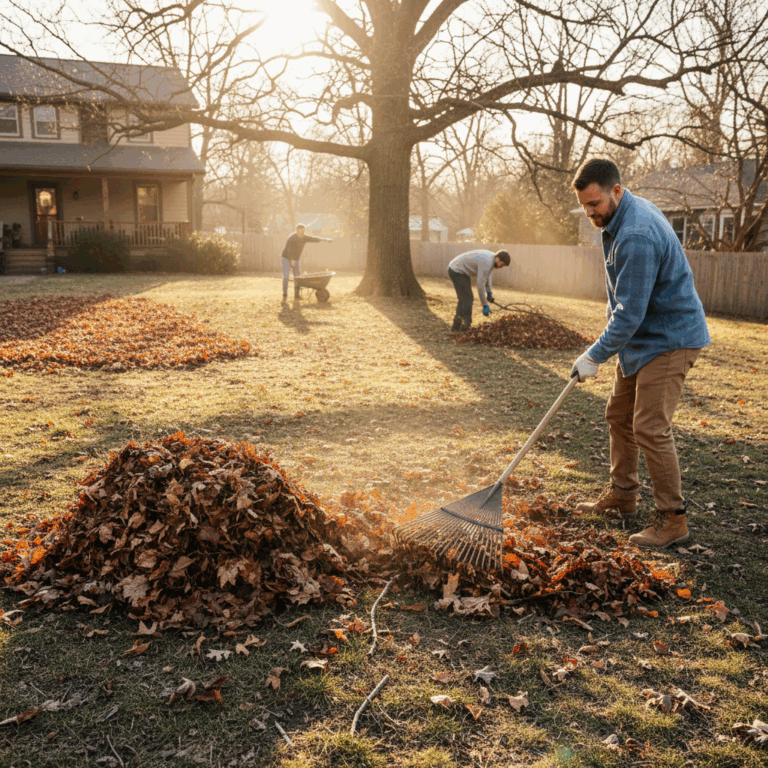
The quickest way to feel like you’re making progress is to strip away the clutter. Rake up the leaves. Remove fallen branches. Pull out anything winter left behind. This single step opens up your yard instantly. Suddenly you can actually see the lawn underneath. It’s psychological relief and practical necessity at once.
Stage 3: Sort and Dispose Properly
Don’t just pile everything in one heap. Separate the healthy stuff—leaves and organic matter that can compost—from the sketchy bits. Moldy stems, diseased wood, stubborn weeds: those go in a separate pile so they don’t sneak back into your yard later. A little sorting now means fewer problems in June.
Stage 4: Prune and Cut Back
Remove dead foliage from perennials and shrubs. This is where your yard starts looking intentional again, not just neglected. You’re not doing a full landscaping job—just removing what’s clearly dead.
Stage 5: Restore and Define
Redefine edges between lawn and beds. Pull back any grass creep. Clean hard surfaces—patios, walkways, stairs. This is the finishing stage where a cleaned-up yard becomes a restored yard.
Make It a Weekend Project, Not a Marathon
You don’t have to do all of this in one afternoon. Break it into weekend sessions. Do the debris clearing one weekend, the pruning the next. This approach keeps you from burning out and gives you small wins to celebrate.
One practical tip: wait until temperatures consistently stay above 50°F before you go all-in. Early March can still surprise you with cold snaps. Give yourself permission to move slowly, especially if you’re working alone or dealing with a really overgrown space.
When a Yard is Too Much
Here’s something we know: not everyone can do this work alone. Some people are dealing with age, injury, illness, or just the sheer weight of a property that’s gotten away from them. If you’re reading this and thinking, “I can’t do this myself,” that’s okay. That’s what community is for.
I Want To Mow Your Lawn connects volunteers across all 50 states with older adults, veterans, and neighbors who need free yard help—not just mowing, but cleanup and exterior care. If you’re overwhelmed, reach out. If you have the capacity to help a neighbor with their spring cleanup, we’d love your help.
Get Started This Week
March 22–28 is National Cleaning Week. That’s not a deadline—just a gentle nudge to pick a weekend and start. Pick one stage. Spend an afternoon. You’ll be amazed how much clearer your yard—and your mind—will feel once the winter clutter is gone.
Want to help a neighbor tackle their spring cleanup?Volunteer with us and connect with someone in your community who could use a hand. You can also play the MOW app to earn rewards while you learn more about our mission, or download it from the App Store.
Want to truly master your spring cleanup? This guide walks you through exact techniques, common mistakes to avoid, and pro tips that turn chaos into order. Perfect for anyone ready to tackle their yard with confidence.
Debris Removal: The Right Technique
Start with a sturdy rake—ideally a leaf rake with flexible tines, not a garden rake. Begin at one end of your yard and work in consistent rows toward a central collection point. Don’t try to power through; short, controlled strokes are more efficient than aggressive scraping. As you rake, you’ll notice areas where debris is matted down. Rake these sections twice, from different angles, to lift everything free.
For leaves and loose debris, a tarp becomes your best friend. Pile everything onto it, then drag it to your compost or disposal area. This saves your back and keeps debris contained. If you’re dealing with large branches, cut them into 3-4 foot lengths first—easier to handle and to dispose of.
Sorting: What Stays, What Goes
Healthy leaves and untreated wood belong in compost. Pine needles, if you have them, can stay in place—they acidify soil naturally. But here’s what you remove completely: any leaves showing mold or mildew (whitish growth), diseased stems, weeds with mature seed heads, and anything that looks rotten. These go into a separate bag for yard waste pickup. Don’t be tempted to compost questionable material—disease spreads fast.
Pruning: The Safety-First Approach
Before cutting anything, identify what’s actually dead versus dormant. Bend a small twig—if it snaps cleanly, it’s dead. If it bends, it’s alive. Dead branches will be brittle and gray; living branches show green under the bark. Remove only what’s clearly dead, and make cuts flush with the branch collar (the swollen area where the branch meets the trunk). Ragged cuts invite disease.
For shrubs, cut back to about 4 inches above the ground. For perennials, cut to just above where new growth is emerging—usually 2-3 inches. This encourages healthy sprouting without wasting the plant’s energy on old growth.
Edge Definition: The Crisp Line That Changes Everything
Use a flat-bladed spade and work slowly. Place the blade vertically along your lawn-bed edge and press down with your foot. Don’t drag or saw—just press and lift. Work in 12-inch sections for clean, consistent lines. If grass has crept into beds, use the spade to undercut the turf, then pull it back. This single task transforms a yard from “neglected” to “cared for” in an afternoon.
Hard Surfaces: Patience Pays Off
For patios and walkways, remove furniture and planters first. Then sweep thoroughly, getting into corners and between pavers. For stubborn debris stuck between stones, a wire brush works better than chemicals. Let everything dry naturally—rushing with power washers can erode mortar and damage stone. If you do use a pressure washer, keep it on low setting and test on an inconspicuous area first.
Common Mistakes to Avoid
Clearing too early: Wait until consistently warm weather (50°F+). Many pollinators shelter under debris and dormant plants through early spring. Clear too soon and you’re displacing beneficial insects.
Over-pruning: If you’re not sure it’s dead, leave it. Spring brings surprises—that apparently dead branch might leaf out in April. You can always prune more later.
Mixing debris types: Diseased material mixed with healthy compost spreads problems. Keep them separate from the start.
Skipping the inspection: Five minutes of looking saves you hours of work in the wrong direction.
Timeline and Pacing
Spread your cleanup across 3-4 weekends if your yard is large. Saturday morning for clearing (2-3 hours), next weekend for pruning, then edges and hard surfaces. This prevents burnout and lets you enjoy the progress at each stage.
Why This Matters for Community
Understanding how to tackle a yard systematically means you can also help someone else do it. Whether you’re assisting an older adult neighbor, a veteran managing their property, or a friend dealing with health challenges, this staged approach makes the work feel manageable for everyone involved. When we break overwhelming tasks into steps, we’re not just cleaning up yards—we’re building community resilience.
Support our foundation to unlock this resource
A donation of any amount unlocks all bonus guides, templates, and deep dives for 30 days.
100% goes toward connecting volunteers with neighbors in need.
Choose your donation amount
$
Choose how to donate:
I Want To Mow Your Lawn Inc. is a 501(c)(3) nonprofit and registered charity with PayPal Giving Fund. EIN: 85-3447661. Your donation is tax-deductible.
Have a group?Organize a Community Service Day — we'll match your team with neighbors who need help.
Want to help us reach more neighbors?Our Marketing Toolkit has copy-ready posts, press materials, and flyers you can share in five minutes.