Why Veterans Make Natural Community Servants: The Case for the Military-to-Volunteer Pipeline
May 1, 2026 · I Want To Mow Your Lawn
Why Veterans Make Natural Community Servants: The Case for the Military-to-Volunteer Pipeline
A veteran comes home after years of service. The transition to civilian life is real and sometimes isolating. But something important happened during those years in uniform: a fundamental shift in how that person thinks about responsibility, teamwork, and duty to others.
For I Want To Mow Your Lawn, that tendency shows up in real ways. Veterans volunteer across all 50 states as part of IWTMYL’s 1,800+ volunteer network, connecting with older adults, other veterans, and neighbors who need free lawn and exterior home care relief. Understanding why veterans gravitate toward this work—and what they bring to it—offers insight into one of the most reliable volunteer pipelines in community service.
This isn’t a small preference. It’s a demonstrated pattern of behavior, woven directly into how veterans see their role in civilian communities.
Transferable Skills: Mission First, Always
Military culture instills a specific ethos from day one: the mission comes before the individual. Service comes before self. That’s not metaphorical—it’s practical. It shapes how a person approaches responsibility, how they handle pressure, and how they show up for others.
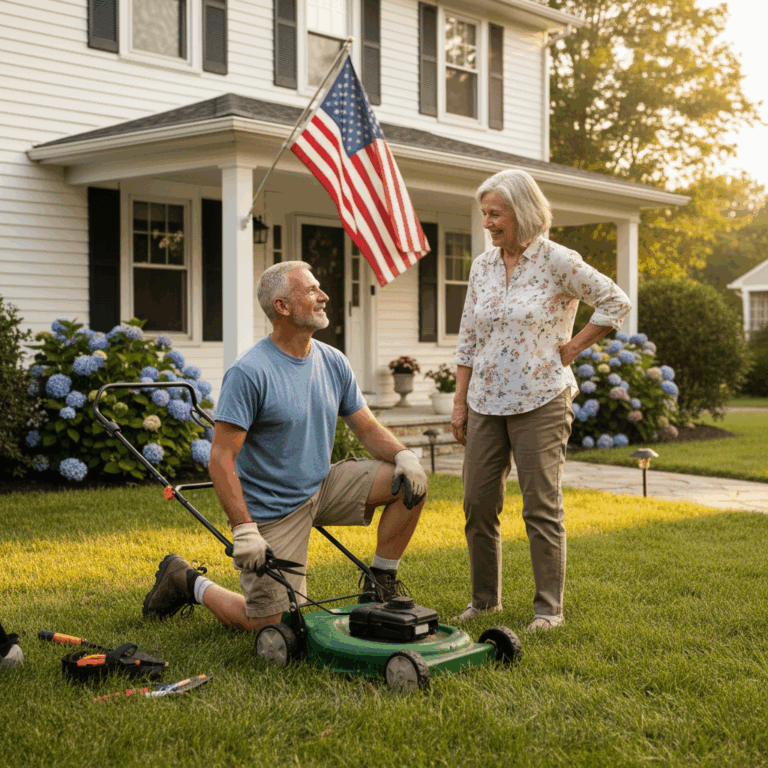
That orientation translates powerfully into volunteer work. A veteran mowing a neighbor’s lawn isn’t just cutting grass. They’re executing a mission: relieving an older adult from a task that’s become physically unsafe or overwhelming. They’re showing up reliably. They’re following through.
The discipline built through military training creates another advantage: consistency. Military life teaches efficiency, self-discipline, and the habit of seeing tasks through to completion. These aren’t traits volunteers are born with—they’re developed. And once developed, they become reflexive. When a volunteer organization needs someone to show up on a Saturday morning, rain or shine, a veteran’s background has already installed that expectation.
Camaraderie and Team Cohesion
Military service also teaches something subtler but equally powerful: how to work alongside others toward a shared goal. The camaraderie that develops in military units is real and lasting. That same capacity for teamwork—and the understanding that a team’s success depends on each member doing their part—shows up in volunteer work.
For IWTMYL, this matters. Volunteers don’t work in isolation. They’re part of a network supporting their communities. Veterans understand team dynamics intuitively. They know how to communicate clearly, how to take direction, and how to work with people from different backgrounds toward a common purpose.
Healing Through Service
There’s another dimension worth noting: for many veterans, volunteering isn’t just about helping others. It’s also about purpose and connection. The transition to civilian life can feel disorienting. Structure, mission, and the sense of being part of something larger than oneself matter deeply to people trained in military service.
Volunteering to maintain a neighbor’s yard, to ensure an older adult can safely navigate their outdoor space, or to support a fellow veteran—that work restores a sense of purpose. It’s healing through contribution.
Building the Pipeline
Approximately 200,000+ service members transition from active duty to civilian life every year. That’s a substantial flow of people with proven reliability, leadership experience, and a cultural commitment to service. The challenge isn’t finding veterans who want to help—the data suggests many do. The challenge is connecting them to opportunities that fit their skills and values.
Organizations like IWTMYL help bridge that gap. By creating straightforward, meaningful volunteer opportunities—lawn care, exterior home relief, community support—the work meets veterans where they are. It’s tangible. It’s immediate. It matters visibly.
What This Means for Communities
When a veteran volunteers to help maintain a neighbor’s yard, a community gains more than yard care. It gains someone trained in reliable execution, someone who understands discipline and follow-through, someone whose values align with serving others. That reliability reduces the burden on overburdened social service systems. It strengthens neighborhood bonds. It creates a culture where neighbors take care of neighbors.
For older adults who can’t safely manage their own yards, for fellow veterans navigating life transitions, for neighbors facing temporary hardship—the availability of volunteer support makes an immediate, dignified difference.
Getting Involved
Veterans interested in volunteering with I Want To Mow Your Lawn can connect directly through the organization’s volunteer network. The process is simple: visit iwanttomowyourlawn.com/volunteer to sign up and find opportunities in your area.
For those curious about how volunteer yard care works—or who want to request help—IWTMYL also offers the MOW app, available at iwanttomowyourlawn.com/play or through the App Store. The app connects volunteers with neighbors who need relief, making coordination straightforward and transparent.
The military-to-volunteer pipeline isn’t a new discovery. It’s simply recognition of what happens when people trained in service, discipline, and mission focus find meaningful ways to contribute to their civilian communities. That’s a dynamic worth supporting.
Veteran Volunteer Onboarding Checklist & Community Service Toolkit
A practical fill-in-the-blank toolkit designed for veterans stepping into community volunteer roles. Includes a readiness checklist, skill inventory, service planning worksheet, and safety reference guide—all customizable for local lawn care, yard support, and neighbor relief programs.
I Want To Mow Your Lawn
Veteran Volunteer Onboarding Checklist & Community Service Toolkit
Part 1: Volunteer Readiness Checklist
Before You Begin: Use this checklist to assess your readiness to volunteer in your community.
☐ I understand this is volunteer (unpaid) community service
☐ I have a valid driver’s license and reliable transportation
☐ I can commit to __________ hours per week/month
☐ I have access to basic tools, or I know where to obtain them
☐ I understand physical demands and am physically able to perform yard/exterior work
☐ I have a way to contact neighbors/coordinators (phone, email, text)
☐ I’m comfortable working in various weather conditions
☐ I’ve reviewed safety guidelines and understand liability basics
Part 2: Skills Inventory & Mission Translation
Military-to-Volunteer Skills Mapping: Translate your service experience into community volunteer work.
Leadership & Coordination:
Military background: ________________________________________
How I’ll use this in volunteer work: ________________________________________
Potential roles: Team lead, project coordinator, mentor for newer volunteers
Technical/Mechanical Skills:
Equipment I’m trained on: ________________________________________
Equipment I can operate for yard care: ________________________________________
Other technical skills: ________________________________________
Safety & Discipline:
Safety protocols I follow consistently: ________________________________________
How I’ll model these for other volunteers: ________________________________________
Teamwork & Communication:**
How I prefer to receive instructions: ☐ Written ☐ Verbal ☐ Demonstration ☐ No preference
My communication style with neighbors: ________________________________________
Languages I speak: ________________________________________
Part 3: Service Planning Worksheet
My Volunteer Role:
Organization: I Want To Mow Your Lawn
Primary service area: ________________________________________
Hours per week I can commit: ________________________________________
Coordination & Contact:
Volunteer coordinator name/contact: ________________________________________
How I’ll check in before each service: ________________________________________
Backup contact if I need to reschedule: ________________________________________
Part 4: Safety Reference Guide
Essential Safety Checks Before Every Service:
☐ Inspect equipment (mower, trimmer, tools) for damage or malfunction
☐ Confirm neighbor is home and aware of service date/time
☐ Check weather: is it safe to work? (Avoid standing water, lightning risk, extreme heat)
☐ Clear the work area of obstacles, toys, hoses, vehicles
☐ Know where the neighbor’s children/pets are during service
☐ Keep a first aid kit accessible
☐ Take a photo of the yard before and after (optional, for records)
Neighbor Interaction Reminders:
Always:
☐ Introduce yourself and confirm the scope of work
☐ Ask if there are specific areas they want prioritized
☐ Explain what you’re doing and why (helps older adults feel informed, not overwhelmed)
☐ Check in when finished and ask if anything else is needed
☐ Thank them and let them know how to reach you or the coordinator
Never:
☐ Accept payment or gifts (this is volunteer service)
☐ Make promises about return visits (frame as temporary relief)
☐ Enter the home without explicit invitation
☐ Leave equipment or materials on the property
☐ Discuss other neighbors or private matters
Part 5: First Service Preparation Checklist
Before Your First Volunteer Day:
☐ I’ve confirmed the neighbor’s address: ________________________________________
☐ I’ve reviewed the yard (via phone call or photo if possible)
☐ I know what equipment I need: ________________________________________
☐ I’ve gassed up / charged tools the night before
☐ I’ve packed water and snacks for myself
☐ I have the coordinator’s phone number saved
☐ I understand the expected time commitment: ________ hours
☐ I’ve reviewed the safety guide above
☐ I have directions or GPS ready
☐ I plan to arrive __________ minutes early
Part 6: Post-Service Reflection
After Your Service (for future reference):
Neighbor name/address: ________________________________________
Date of service: ________________________________________
Work completed: ________________________________________
Time spent: ________________________________________
Any concerns or follow-up needs: ________________________________________
How the neighbor responded: ________________________________________
What went well: ________________________________________
What I’d do differently next time: ________________________________________
Part 7: Resources & Contact Information
I Want To Mow Your Lawn Network:
Volunteer portal: iwanttomowyourlawn.com/volunteer
MOW app: iwanttomowyourlawn.com/play or App Store
Coordinator contact: ________________________________________
Emergency contact (if injury occurs): ________________________________________
Local Resources:
Acidemic medical / urgent care: ________________________________________
First aid training provider: ________________________________________
Equipment sharing or tool library: ________________________________________
I Want To Mow Your Lawn | iwanttomowyourlawn.com
Support our foundation to unlock this resource
A donation of any amount unlocks all bonus guides, templates, and deep dives for 30 days.
100% goes toward connecting volunteers with neighbors in need.
Choose your donation amount
$
Choose how to donate:
I Want To Mow Your Lawn Inc. is a 501(c)(3) nonprofit and registered charity with PayPal Giving Fund. EIN: 85-3447661. Your donation is tax-deductible.
Have a group?Organize a Community Service Day — we'll match your team with neighbors who need help.
Want to help us reach more neighbors?Our Marketing Toolkit has copy-ready posts, press materials, and flyers you can share in five minutes.