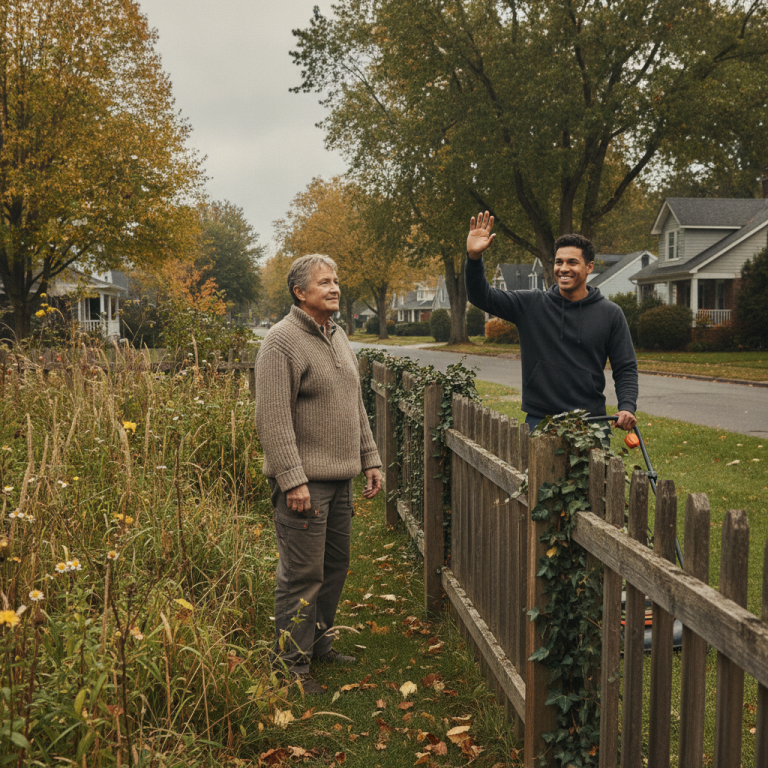
The Quiet Ask for Help
There’s a neighbor down the street—perhaps someone who used to spend Saturday mornings on their lawn, or a veteran who takes pride in their home. Lately, the grass has grown longer than usual. The hedges are unruly. Leaves pile up. It’s easy to assume they’ve lost interest or stopped caring, but the truth is often different: aging joints, medical setbacks, financial strain, or simply being overwhelmed by tasks that once felt manageable.
The challenge is knowing when and how to step in without overstepping. Offering help requires sensitivity—respect for dignity, awareness of the real barriers neighbors face, and concrete knowledge of what free resources actually exist.
Here are six tangible signs that a neighbor might benefit from yard care support, and how to start a conversation that feels natural and kind.
1. Visible Overgrowth or Long-Neglected Lawn
A lawn that’s been unmowed for weeks, edges that haven’t been trimmed, or weeds taking over aren’t always about indifference. Nearly 50% of adults 60 and older have household incomes below the standard needed to afford basic needs, which can make paying for lawn care—or the equipment to do it themselves—genuinely unaffordable.
Overgrowth is also a classic sign of physical limitation. Arthritis, recent surgery, or mobility challenges make pushing a mower or bending to weed painful or risky. For many older adults, the yard becomes a silent source of stress rather than a place of pride.
2. Unsafe Pathways or Trip Hazards
Look for overgrown walkways, debris scattered across the yard, loose branches overhead, or uneven ground. These aren’t cosmetic issues—they’re fall risks. One in four adults ages 65 and older report falling each year, and over the past 10 years, fall-related deaths among older adults have increased by 51%. A well-maintained yard—clear paths, trimmed vegetation, tidy surfaces—directly reduces these risks.
If a neighbor’s yard has become a hazard zone, that’s a practical reason to reach out, framed as genuine concern for their safety.
3. Signs of Recent Illness, Injury, or Mobility Change
Has your neighbor been less visible lately? Did they mention a hospital stay, surgery, or recovery? Are they using a walker or cane, or moving more slowly than before? These are moments when temporary yard help can be transformative.
Physical recovery is real work. Lawn care can wait while healing happens. Offering a one-time or seasonal assist removes guilt and stress during a vulnerable time.
4. Living Alone or Without Family Nearby
About 27% of women ages 65 to 74 and 43% of those age 75 or older live alone. Without a partner or adult child nearby to help, yard work falls entirely on one person’s shoulders. Single homeowners often have no backup, no division of labor, and no safety net when tasks become too much.
Neighbors without nearby family are often too independent to ask for help, but they’re also more likely to need it. A gentle offer—not framed as charity, but as community—can feel like genuine relief.
5. Visible Strain or Exhaustion After Yard Work
Has your neighbor been out working on their lawn and looked visibly tired or in pain afterward? Have they mentioned struggling with specific tasks—”My back is killing me” or “I can’t get down on my knees anymore”? These are direct signals that the physical demands of yard care have become unsustainable.
Some people will push through pain rather than admit they need help. Offering support in response to visible struggle removes the shame of asking.
6. Approaching Code Violations or Notices
If a neighbor mentions receiving a code enforcement notice or warning about yard maintenance, that’s a clear moment to help. What started as a small oversight can become an expensive fine or legal headache. Free yard care—when available—can prevent that cascade.
Mentioning a code notice is often a hint that the person is already stressed and doesn’t know where to turn.
How to Start the Conversation
Once you’ve noticed a neighbor might need support, approach with respect and clarity.
- Be direct but kind: “I noticed your lawn’s been a bit much lately. I’d love to help mow or do some yard work. Would that be helpful?”
- Don’t assume finances or ability: Frame it as neighborly support, not judgment. “Sometimes yard work gets away from us—let me give you a hand.”
- Offer specific help: Instead of “Let me know if you need anything,” say “I can mow this Saturday morning” or “I’d like to trim those hedges for you.”
- Respect the answer: Some neighbors will say yes immediately. Others need time to feel comfortable accepting help. That’s normal.
When You Want to Do More
Personal help is powerful, but it’s also temporary and limited by availability. If a neighbor needs ongoing or specialized yard care—or if you want to connect them with a broader network of support—I Want To Mow Your Lawn (IWTMYL) offers free yard care relief across all 50 states.
IWTMYL is a nationwide nonprofit with 1,800+ volunteers who provide free lawn mowing, trimming, and exterior maintenance to older adults, veterans, and neighbors in need. The service is genuinely free, requires no application fee, and is available to eligible neighbors regardless of income.
Neighbors can request yard care through IWTMYL’s website, or volunteers can nominate someone they know. The organization also offers a free mobile game called MOW, where players can play online and donate lawn care to real neighbors in their community through gameplay.
The Real Impact of Noticing
Spotting a neighbor’s struggle and responding with kindness—whether through a direct offer of help or by connecting them to free resources—matters more than many realize. It protects safety, maintains dignity, and sends the message that community still exists.
A well-kept yard isn’t just about appearance. For older adults, veterans, and neighbors facing physical or financial barriers, it’s about safety, independence, and belonging. The act of noticing, and the willingness to help, can change what happens next.
Printable Guide