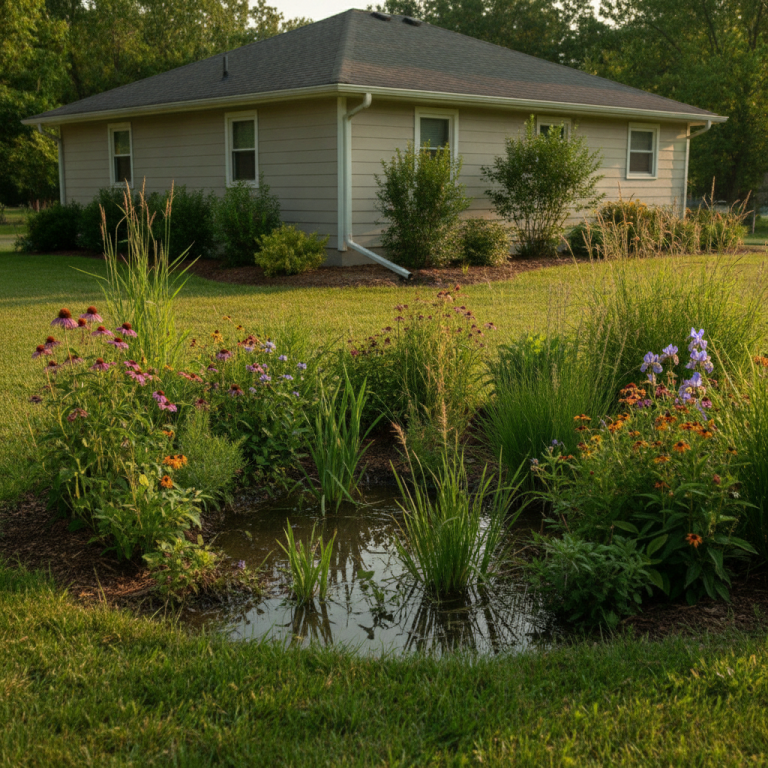
A Yard That Works With Water, Not Against It
Many homeowners spend summers fighting their yards—mowing, watering, treating runoff issues that seem to get worse with each heavy rain. Water pools in the driveway. Gutters overflow. The lawn looks patchy. Maintenance becomes a cycle of reactive fixes rather than intentional design.
There’s a quieter approach gaining traction across neighborhoods: designing yards to absorb and filter water naturally, the way landscapes did before driveways and compacted soil took over. Rain gardens and bioswales are among the simplest examples of this shift.
These aren’t complex engineering projects. They’re intentional dips and channels in the landscape, planted with native species, that slow down stormwater and let it soak into the ground instead of running off into streets and waterways. They’re also remarkably low-maintenance once established—which matters for older adults, veterans, and anyone whose yard has become a source of stress rather than pride.
What Rain Gardens and Bioswales Actually Do
Rain gardens are shallow, sunken areas designed to capture stormwater runoff from roofs, driveways, and adjacent land. They’re typically planted with native perennials and sit dry most of the year—they absorb water within a day or two of rain and don’t create mosquito problems or standing water.
Bioswales are open channels or gentle slopes that do similar work but at a larger scale. Where rain gardens collect water in a single basin, bioswales guide water as it flows, slowing it down and filtering it through layers of soil and native vegetation. They’re particularly useful for managing runoff from driveways, parking areas, or sloped properties.
Both systems work on the same principle: they mimic natural hydrology by infiltrating, evaporating, and transpiring stormwater runoff, which reduces the volume of water flowing into storm drains and local waterways.
Why This Matters Beyond Your Yard
Stormwater runoff is the leading source of water quality problems in U.S. streams, lakes, and rivers, according to the EPA. As rain flows over roofs, roads, and compacted lawns, it picks up motor oil, pesticides, fertilizers, and other pollutants that flow directly into storm drains and waterways.
Homeowners and small property owners account for nearly half of that pollution burden. A single rain garden or well-designed bioswale doesn’t solve water pollution, but neighborhoods where multiple properties adopt these features do measurable work: rain gardens and bioswales reduce 70% of surface water pollution that originates from stormwater runoff and absorb 30% more stormwater into the ground than a conventional lawn.
There’s also a financial angle. Flooding in the United States causes between $179.8 and $496.0 billion in damages annually. Stormwater infrastructure is chronically underfunded. When neighborhoods implement natural solutions, they’re reducing pressure on aging municipal systems while improving local water quality.
The Maintenance Advantage
Here’s what makes rain gardens and bioswales relevant to I Want To Mow Your Lawn’s mission: once established, they require far less hands-on maintenance than traditional lawns.
A well-designed rain garden planted with native perennials needs no mowing, minimal watering after the first year, and no chemical inputs. Weeding is lighter than a traditional garden bed. Bioswales are similarly low-impact—they’re designed to be stable, planted systems rather than constantly maintained landscapes.
For older adults managing larger properties, or for veterans returning home to yards that have become overwhelming, a rain garden or bioswale can transform a high-maintenance headache into a self-sustaining feature. It’s the kind of landscape feature that gets better with time rather than more expensive.
Getting Started: Practical Considerations
A rain garden works best in areas where water naturally collects—downspout outlets, low points in the yard, or areas where runoff tends to pool. Bioswales work well along driveways, parking areas, or along property lines where water flows.
Size matters less than placement. Even a small rain garden (20-30 square feet) makes a meaningful difference. The key is soil preparation: rain gardens and bioswales need well-draining soil with organic matter and sand mixed in so water infiltrates rather than remaining stagnant.
Native plants are essential. They’re adapted to local rainfall patterns, require no fertilizer, support pollinators, and establish quickly. They’re also the most affordable option long-term.
Installation is a one-time effort that neighborhood volunteers could help with—digging the basin, amending soil, and planting. After that, the system does the work.
A Shift in How We Think About Yards
Rain gardens and bioswales represent a shift from fighting nature to working with it. They’re about designing yards that solve problems (stormwater, flooding, maintenance burden) rather than creating them.
For neighborhoods looking to reduce maintenance demands on older adults and veterans, these systems offer real relief. They’re also a way for communities to take collective action on water quality without waiting for municipal solutions.
If the idea resonates—whether as a resident interested in reducing yard burden or as someone wanting to help neighbors with landscape projects that reduce maintenance long-term—there are opportunities to get involved. IWTMYL connects volunteers with neighbors who need lawn and exterior home care relief. That includes helping with landscape transitions, mulching projects, and other work that sets yards up for long-term ease.
Volunteer with IWTMYL to help older adults, veterans, and neighbors with yard care. Or if you’d like to explore how your neighborhood could benefit from these ideas, try the MOW app to connect with local resources and community needs.
Printable Guide