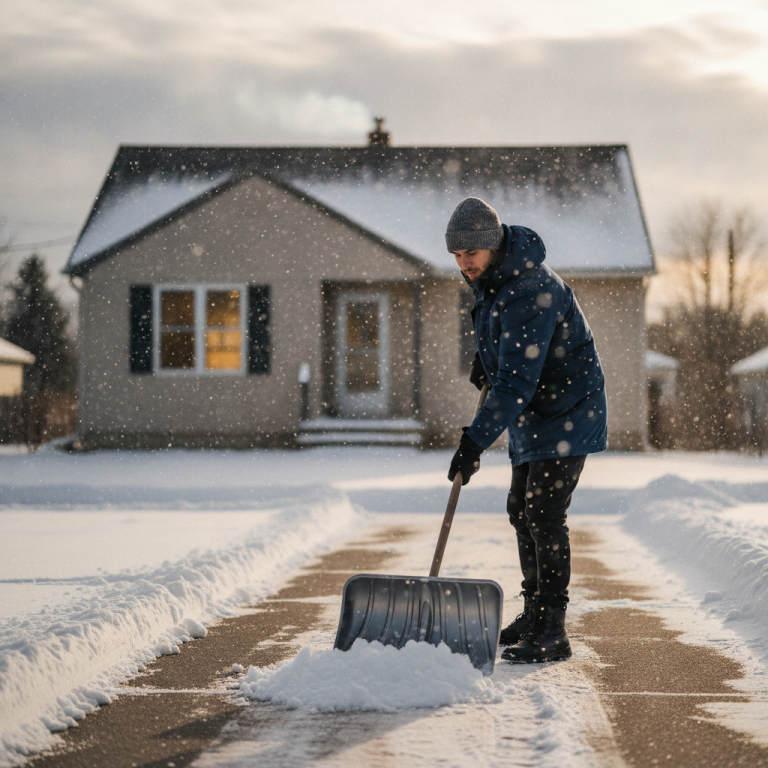
Winter arrives quietly in some regions, dramatically in others. But one thing remains constant: when snow and ice cover driveways and sidewalks, the risk to older adults and veterans living alone climbs sharply. This is when yard care transforms from convenience into safety.
For veterans managing mobility issues, chronic pain, or simply the weight of winter itself, the pressure to keep their property safe can become overwhelming. The same applies to older adults who’ve maintained their homes for decades but now face a simple truth: clearing snow and ice is no longer within their physical reach.
This is where community care shifts from nice-to-have to life-saving. Removing snow and ice from a driveway, walkway, or porch isn’t about aesthetics. It’s about preventing a fall that could mean surgery, hospitalization, loss of independence, or worse.
A neighbor who can’t shovel their driveway might skip essential appointments. An older adult who fears slipping on their front steps might stop going to the mailbox altogether. These small retreats compound into isolation, reduced mobility, and accelerated decline.
This is also where I Want To Mow Your Lawn extends its mission. While the organization is known for lawn care, the same volunteer network that mows grass in summer can clear driveways and pathways in winter. The principle is identical: neighbors helping neighbors with the outdoor work that becomes impossible as bodies age, as health changes, as circumstances shift.
What Winter Relief Actually Looks Like
Winter yard care doesn’t require perfection. It requires presence. A volunteer clearing a front walkway. A neighbor salting icy steps. A community that recognizes a snow-covered driveway not as neglect, but as a sign someone needs help.
Veterans accustomed to self-reliance often won’t ask. Older adults may feel embarrassed to request what younger neighbors handle automatically. That’s where volunteer networks bridge the gap—offering help without stigma, without paperwork, without the person served having to navigate bureaucracy while managing winter and aging simultaneously.
The practical details matter: safe snow removal means staying present during or immediately after storms, not waiting until conditions worsen. It means understanding that one cleared driveway prevents one potential hospitalization, one family crisis, one permanent loss of independence.
How to Help in Winter
Communities interested in supporting older adults and veterans through winter can:
Check on neighbors after snow events, especially those living alone
Volunteer with organizations like I Want To Mow Your Lawn to provide seasonal relief
Connect neighbors who may not know each other, creating informal support networks
Reach out to local veterans’ groups and senior centers to understand winter needs in the community
Winter is temporary, but its consequences can be permanent. The choice to help—to clear a driveway, salt a step, check on a neighbor—isn’t just kind. It’s preventive medicine delivered by community.
Want to make a difference this winter?Volunteer with I Want To Mow Your Lawn to connect with older adults and veterans in your area who need help with snow and ice removal. Or explore how the organization works by playing the MOW app, available online or in your device’s app store.
Winter Safety Walkthrough: A Neighbor Outreach Checklist
A printable checklist to help organize community winter relief efforts. Includes snow/ice removal priorities, neighbor outreach steps, and safety reminders—perfect for volunteer coordinators, neighborhood groups, or anyone planning a winter care initiative.
☐ Heart disease, high blood pressure, or cardiac risk factors
☐ Lives alone with no family nearby
☐ Limited income (may not afford professional snow removal)
☐ Recently hospitalized or recovering from surgery
Communication Template
First Outreach (September–October):
“Hi [Neighbor Name],
As winter approaches, [your neighborhood / our community group] is organizing free snow and ice removal help for neighbors who need it. If clearing your driveway or walkway becomes difficult this winter, we’d like to help. No cost, no paperwork—just neighbors looking out for neighbors.
If you’re interested, please let me know, or I can check in after the first snow. Feel free to call or text ________.”
Before a Snow Event:
“Snow is forecast for [date]. We’ll be out clearing driveways and walkways. Can we help you? We’ll stop by [approximate time] or let me know if another time works better.”
I Want To Mow Your Lawn
Connecting 1,800+ volunteers with neighbors in need. iwanttomowyourlawn.com
Support our foundation to unlock this resource
A donation of any amount unlocks all bonus guides, templates, and deep dives for 30 days.
100% goes toward connecting volunteers with neighbors in need.
Choose your donation amount
$
Choose how to donate:
I Want To Mow Your Lawn Inc. is a 501(c)(3) nonprofit and registered charity with PayPal Giving Fund. EIN: 85-3447661. Your donation is tax-deductible.
Have a group?Organize a Community Service Day — we'll match your team with neighbors who need help.
Want to help us reach more neighbors?Our Marketing Toolkit has copy-ready posts, press materials, and flyers you can share in five minutes.