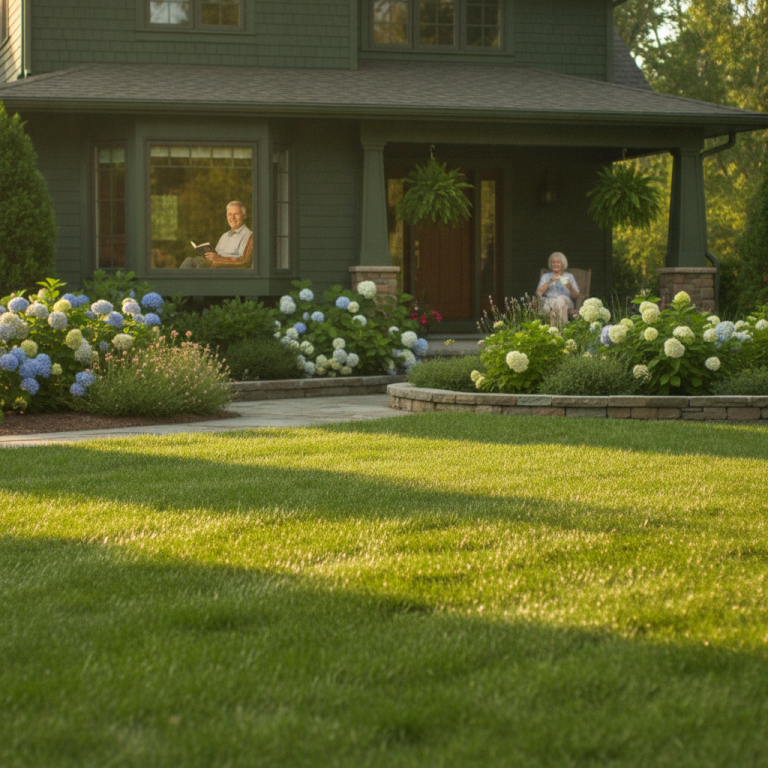
There’s a particular kind of independence that has nothing to do with parades or fireworks. It’s the quiet freedom of staying in the home where someone has lived for decades—of waking up in a familiar bedroom, tending to the things that matter, and inviting neighbors over without shame.
For many older adults and veterans, that freedom hinges on something small and practical: a lawn that’s been mowed.
As America marks its 250th birthday in 2026, independence remains a national value. But for millions of neighbors across the country, true independence—the ability to age in place, to maintain dignity, to stay connected to their community—depends on help that they often can’t afford and are too proud to ask for.
So older adults and veterans make a quiet calculation: they let the yard go. And in doing so, they lose something deeper than aesthetics.
When a Yard Falls Behind, Dignity Follows
A neglected lawn isn’t just an eyesore. Research consistently shows that the condition of a person’s home environment directly affects their mental health and sense of belonging. When a yard becomes overgrown, older adults often stop inviting friends and family over. They feel embarrassment. They avoid spending time outside, which means less sunlight, less movement, less connection to the neighborhood.
For many older adults and veterans, a well-kept lawn is a point of pride—an essential aspect of their independence and well-being. Without it, they don’t just lose yard work. They lose the ability to live as they intended to live.
What Independence Actually Means
On Independence Day, the nation celebrates freedom and self-determination. But not everyone experiences that freedom equally. Some of the people who defended the country, who built the communities where they live, who worked hard their entire lives—they’re now unable to maintain the one piece of property they own.
That’s where community comes in. Not charity. Community. The kind where neighbors help neighbors because the alternative—isolation, shame, forced moves to institutions—isn’t acceptable.
I Want To Mow Your Lawn exists because this problem shouldn’t require a means-tested bureaucracy or a guilt-trip fundraiser. Over 1,800 volunteers across all 50 states have joined a simple idea: that temporary yard relief can be the difference between staying home and losing home. Between independence and dependence. Between belonging and isolation.
It’s not recurring service or a permanent solution. It’s a neighbor showing up on a Saturday morning because the yard became too much, and freedom shouldn’t depend on being able to afford $124 every two weeks.
How to Honor Independence This Summer
If this resonates—if there’s an older adult or veteran in a neighborhood who’s struggling with yard work—there are concrete ways to help:
Check in. A conversation often reveals needs that people won’t advertise. “How are you managing the yard this summer?” can open a door.
Know the resource. IWTMYL connects volunteers with neighbors who need relief. If someone qualifies, the organization handles coordination and scheduling.
Volunteer. Even one mow changes someone’s week. Volunteers don’t need experience—just a willingness to help.
Share the word. Many older adults and veterans don’t know free yard care is available. Spreading awareness matters as much as the labor.
This 250th birthday year is a time to reflect on what independence actually means. For millions, it means the freedom to age in place, to stay connected, to live with dignity in the home they’ve built. That freedom shouldn’t be reserved for people with deep pockets. It should be a community value.
If volunteering appeals, IWTMYL is accepting volunteers year-round. There’s also a MOW app (available on the App Store) that makes connecting with requests simple and flexible. Even a few hours on a Saturday morning contributes to something much larger: the idea that true independence means staying home, staying connected, and staying proud of the place where life has been lived.
Neighborhood Outreach Template: Identifying Neighbors Who Need Yard Care Help
A practical fill-in template to help identify and respectfully reach out to neighbors—older adults, veterans, or disabled residents—who might benefit from free yard care relief. Includes conversation starters, assessment questions, and a simple referral form to connect them with IWTMYL.
I Want To Mow Your Lawn
Neighborhood Outreach Template: Identifying Neighbors Who Need Yard Care Help
Purpose: Use this template to identify neighbors who may need free yard care relief and connect them with I Want To Mow Your Lawn.
Relationship (friend, church member, neighbor, family): ________________________________________
Step 2: Initial Yard Assessment
Observe from a respectful distance. Check any that apply:
☐ Grass is significantly overgrown (over 4–5 inches)
☐ Weeds are prominent in garden beds or lawn
☐ Fallen branches or debris visible
☐ Gutters appear clogged or unmaintained
☐ Lawn has not been mowed in several weeks
☐ Overall appearance suggests owner may be struggling
Step 3: Conversation Starter
When you reach out, use a warm, non-judgmental approach. You might say something like:
“Hi [Name], I was thinking about you the other day. How are you managing the yard work this summer? I know it can get overwhelming.”
Or:
“I’m part of a group called I Want To Mow Your Lawn—we connect volunteers with neighbors who need help with yard care. Do you think that might be useful for you?”
Step 4: Eligibility Screening Questions
Listen for answers that indicate need. Ask gently:
“Have you been managing the yard yourself, or is it becoming harder?”
“Are there physical reasons—like injury, age, or health—that make yard work difficult?”
“Have you had to put off yard care because of cost or time?”
“Are you a veteran?” (IWTMYL specifically serves veterans)
Notes from conversation:
________________________________________
________________________________________
________________________________________
Step 5: Interest Assessment
Based on the conversation, does this neighbor seem interested in help?
☐ Yes—eager for information
☐ Maybe—needs more information before deciding
☐ Not now—but keep in mind for future outreach
☐ No—respects their decision
Step 6: How to Refer to IWTMYL
If the neighbor is interested, share this information:
Organization: I Want To Mow Your Lawn (501(c)(3) nonprofit)
What they do: Connect volunteer neighbors with older adults, veterans, and others who need temporary free lawn and yard care relief.
Website: iwanttomowyourlawn.com
How to request help: Visit iwanttomowyourlawn.com or call [local chapter contact if available]
Cost: Free (volunteer-based)
Commitment: Temporary relief—not recurring service
Step 7: Referral Form (Optional)
If you’re submitting a referral on behalf of the neighbor, fill in below:
Neighbor’s Full Name: ________________________________________
Approach with dignity and kindness—never pity or judgment
Let neighbors choose whether to accept help—don’t pressure
Protect their privacy; don’t discuss their needs with others unnecessarily
Frame help as community support, not charity
Acknowledge their independence while offering relief
———
I Want To Mow Your Lawn
iwanttomowyourlawn.com
Support our foundation to unlock this resource
A donation of any amount unlocks all bonus guides, templates, and deep dives for 30 days.
100% goes toward connecting volunteers with neighbors in need.
Choose your donation amount
$
Choose how to donate:
I Want To Mow Your Lawn Inc. is a 501(c)(3) nonprofit and registered charity with PayPal Giving Fund. EIN: 85-3447661. Your donation is tax-deductible.
Have a group?Organize a Community Service Day — we'll match your team with neighbors who need help.
Want to help us reach more neighbors?Our Marketing Toolkit has copy-ready posts, press materials, and flyers you can share in five minutes.