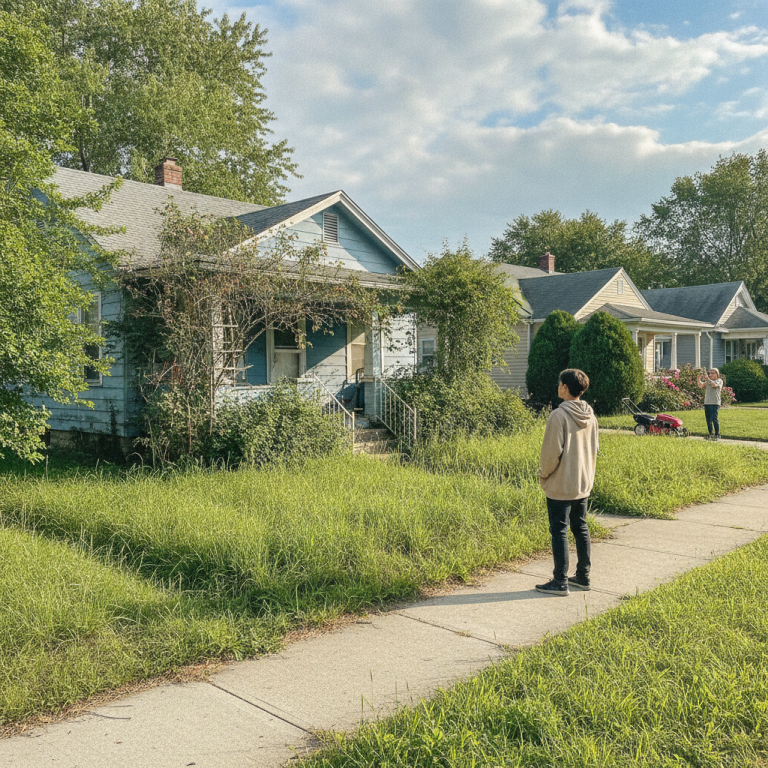
The Quiet Signs: When a Neighbor’s Yard Tells a Bigger Story
There’s a house on most blocks where the lawn hasn’t been mowed in weeks. The grass has grown tall, edges are ragged, and what used to be a tidy space now looks untended. It’s easy to walk past and assume the homeowner simply doesn’t care. But a neglected yard rarely tells that story alone.
Sometimes a yard is a window into what’s happening inside a home. For older adults managing physical decline, veterans returning home with invisible injuries, or neighbors facing sudden hardship, yard work stops being a weekend task—it becomes impossible. The grass grows not out of laziness, but out of circumstance.
I Want To Mow Your Lawn (IWTMYL) has connected 1,800+ volunteers across all 50 states with neighbors who face exactly this situation. Through that work, patterns emerge. There are visible signs—small shifts in what a neighbor can manage—that suggest someone might benefit from a helping hand.
What to Look For: The Yard as a Signal
Changes in a neighbor’s outdoor space often happen gradually, which is why they’re easy to miss. Look for patterns rather than single incidents:
- The lawn goes unmowed for longer stretches. A yard that was once regularly maintained suddenly stays overgrown for weeks. This isn’t about preference—it’s about capacity.
- Bushes and trees become overgrown. Trimming, edging, and seasonal pruning are physically demanding and require planning. When these tasks pile up, it’s often a sign that physical ability or energy has shifted.
- Visible home maintenance is deferred. Gutters clogged with debris, broken shutters, or damaged siding accumulate when someone lacks the ability or resources to address them. These aren’t cosmetic—they’re signs of struggle.
- Leaves, branches, or debris accumulate. The shape of the outdoor space often mirrors what’s happening indoors, though outdoor deterioration can happen faster and be more visible to neighbors.
Who Often Needs Help
Understanding *why* a yard might be neglected helps neighbors approach conversations with compassion rather than judgment.
Older adults aging in place: 93% of older Americans aged 65 and older currently live in their own home or apartment, and most want to remain there. But nearly 50% of adults 60 and older have household incomes below what’s needed to afford basic living costs. Hiring lawn care isn’t an option—physically managing the work themselves becomes harder as mobility, strength, or health changes. Age-related declines in physical capability often compromise older adults’ ability to maintain their homes, directly threatening their ability to age safely where they want to be.
Veterans: Service-related disabilities, PTSD, or injuries can make yard work physically or emotionally overwhelming. Housing instability compounds the challenge—when a veteran is newly housed after instability, the energy required to maintain a home competes with rebuilding financial security and addressing health needs.
Neighbors in unexpected hardship: Job loss, illness, family crisis, or sudden change in household circumstances can make yard maintenance impossible. Unlike casual neglect, this happens suddenly—a yard that was managed just weeks before falls into disrepair because capacity shifted overnight.
How to Reach Out
Spotting a neighbor in need is the first step. Reaching out thoughtfully is the next.
Approach with dignity, not pity. A simple, direct comment works: “Hey, I noticed the lawn could use some mowing. Is everything okay? Would yard help be useful right now?” This respects autonomy while opening the door. Many older adults and veterans don’t ask for help—they’ve been taught to manage independently—but they often accept if someone offers.
Don’t assume—ask. A neglected yard might signal need, but it might also mean your neighbor prefers to let their lawn grow wild, or they’re in a temporary crunch. The conversation matters more than the assumption.
Offer specific help. Vague offers (“Let me know if you need anything”) rarely work. Specific help does: “I’d like to mow your lawn next Saturday. What time works?”
Consider professional support. Sometimes a single mowing isn’t enough—a neighbor needs ongoing relief or coordinated help. I Want To Mow Your Lawn connects volunteers with people facing exactly this need. The network spans all 50 states and works entirely on donation.
The Bigger Picture
A mowed lawn might seem like a small thing. But for an older adult or veteran, it’s relief from a task that has become unsafe or impossible. It’s permission to stay home, to age in place, to avoid the shame and expense of hiring help they can’t afford. For volunteers, it’s a direct way to show up for a neighbor—no expertise required, just willingness.
The next time a lawn catches attention, pause and consider the story it might be telling. Then reach out. It could make a real difference.
Ready to Help?
Volunteers are the backbone of this work. Whether someone has lawn equipment, time, or just a willingness to show up for a neighbor, joining IWTMYL as a volunteer connects that capacity directly to someone who needs it.
Want to get involved without committing to mowing? Try the MOW app—a simple way to explore how volunteering works and connect with neighbors in need. Play the MOW app or download it from the App Store to learn more.
Downloadable Template