Summer Volunteer Programs for Teens: Yard Work That Builds Character
Summer break arrives, and suddenly the question emerges: what will teenagers do with their time? Scrolling, hanging out, the occasional part-time job—these are familiar options. But there’s another path worth considering, one that’s quieter, more tangible, and surprisingly powerful.
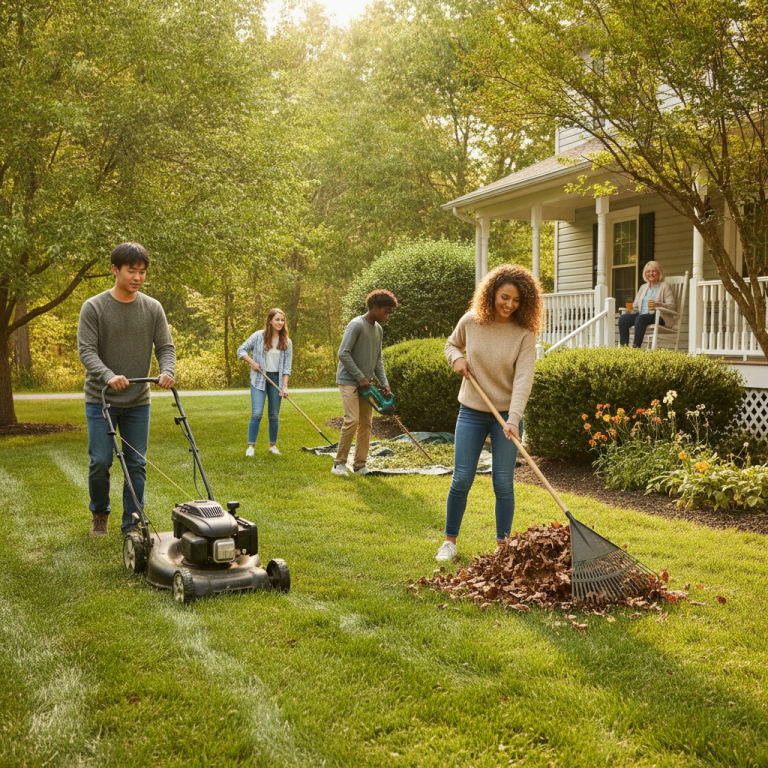
Yard work volunteering might not sound like the stuff of character-building movies. Yet something shifts when a teen shows up to help an older adult reclaim an overgrown yard, or when a veteran sees their lawn maintained by someone young enough to be their grandchild. The work is real. The impact is real. And the growth that happens in those afternoons—pruning, mowing, raking—runs deeper than most expect.
Teens Are Already Volunteering at Historic Rates
The numbers tell an interesting story. Teenagers ages 16–17 have the highest formal volunteering rate of any age group at 28%, outpacing even dedicated adult volunteers. More strikingly, teenagers collectively volunteer 2.4 billion hours annually—worth $34.3 billion to the U.S. economy.
But here’s the catch: many teens don’t yet understand the deeper benefits of showing up consistently for their communities. They volunteer because a school requires it, or because college applications ask for it. Those are fair reasons. But the real magic happens when teens discover something else—that helping someone actually changes how they see themselves and their neighbors.
What Yard Work Actually Teaches
Outdoor volunteer work, especially yard care, develops skills that matter far beyond the lawn. When a teenager helps maintain a neighbor’s yard, they’re learning:
- Respect and empathy. Meeting an older adult or veteran face-to-face builds understanding that no social media feed can replicate.
- Work ethic. Unlike indoor tasks, yard work produces visible results. A mowed lawn, a cleared garden bed, pulled weeds—the evidence of effort is immediate and tangible.
- Problem-solving. Dealing with overgrown areas, tool challenges, or weather changes teaches teens to adapt and think on their feet.
- Responsibility. Showing up at a scheduled time to help someone who is counting on them matters.
Research supports this. According to evidence from community service programs, youth who volunteer show statistically significant gains in academic motivation, attitudes, knowledge, and grades. Beyond school, teenagers who volunteer are more likely to graduate, vote as adults, and maintain a strong work ethic throughout their lives.
The Mental Health and Risk-Reduction Angle
Summer can be a vulnerable time for teens. Less structure, more free time, and the pressures of adolescence create openings for risky behavior. Here’s where consistent volunteer work offers unexpected protection: teens who volunteer just one hour or more per week are 50% less likely to abuse alcohol or cigarettes, become pregnant, or engage in other destructive behavior.
The mechanism is straightforward. Volunteering gives teenagers something purposeful to do, adults who mentor and notice them, and a community that needs them. It replaces empty time with meaningful time.
There’s also the physical and mental health dimension. Teens who spend active time outdoors report feeling happier and more satisfied with their lives overall. Yard work combines physical activity, fresh air, and the satisfaction of tangible service—a powerful combination for mental wellbeing during what can be an isolating age.
Building Civic Identity Early
Perhaps the most lasting benefit is harder to measure but deeply important: teens who volunteer develop an early sense of civic identity. They start to see themselves as people who care for their communities. They understand that neighbors depend on neighbors. They witness how small acts of service ripple outward.
Research from community service studies shows that youth volunteering cultivates commitment to moral principles, civic skills, and a durable disposition to serve their communities. In other words, helping now often means helping later—volunteering as a teen frequently becomes a lifelong habit.
Where Yard Work Fits the Summer Volunteer Picture
I Want To Mow Your Lawn connects 1,800+ volunteers across all 50 states with older adults, veterans, and neighbors who need free yard and exterior home care relief. The organization thrives on episodic, short-burst volunteer moments—which is exactly what summer offers teenagers.
A teen doesn’t need to commit to months of service. A single afternoon mowing a veteran’s lawn, or a few hours helping an older adult clear their yard before a holiday, counts. These bite-sized volunteer experiences fit naturally into summer schedules while delivering real results for neighbors in need.
Getting Started This Summer
If a teen is interested in yard work volunteering, the path forward is clear. Start by looking for local nonprofit connections—community service boards, parks departments, or grassroots organizations like IWTMYL that match volunteers with people who need help. Be honest about what kind of work appeals (mowing, weeding, edging, general cleanup). Show up on time. Ask questions. Let the work teach what it will.
The lawn will be maintained. The neighbor will feel relief. And the teenager will carry something forward—a memory of being useful, of being trusted, of seeing another person’s gratitude. That’s the character-building part. That’s what lasts.
Ready to connect? Explore volunteer opportunities with I Want To Mow Your Lawn, or download the MOW app to discover yard care needs in your neighborhood. Play the MOW game to learn more about the mission while you’re at it.
Printable Guide