The Best Time of Day to Mow: Timing for Grass Health, Heat Safety, and Good Neighbors
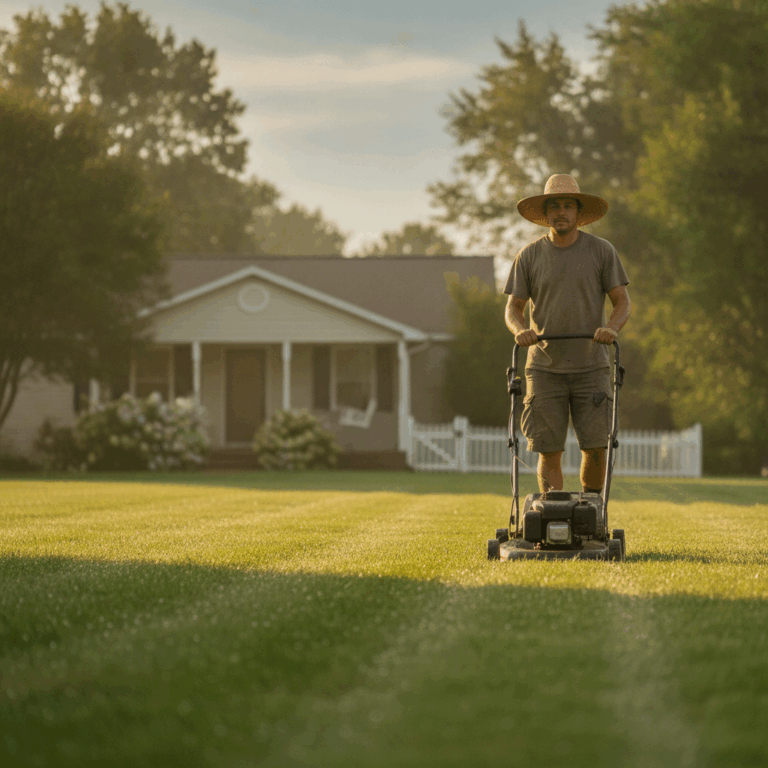
It’s 7 a.m. on a Saturday, mower ready, and the sun is just beginning to warm the day. It feels like the perfect time to knock out yard work before the heat sets in. But if that wet grass clings to the blade, the cut looks ragged, and the soil feels mushy underfoot, the timing was actually working against both the lawn and the person doing the work.
Choosing when to mow matters far more than most people realize. The time of day shapes everything: whether grass gets a clean cut or torn blades, whether soil compacts and ruts form, whether the operator stays safe in the heat, and whether neighbors appreciate the effort or resent the early-morning noise. For volunteers at I Want To Mow Your Lawn, timing is part of showing respect — to the lawn, to the person who depends on it, and to the neighborhood.
The Sweet Spot: Mid-Morning (8–10 AM)
The best time of day to cut grass is mid-morning, between 8 AM and 10 AM — and there are solid reasons why.
By 8 a.m., morning dew has dried enough for a clean cut. The grass blades stand upright and firm, allowing the mower to slice cleanly rather than tear. Soil is dry enough to support the mower’s weight without creating ruts or compaction damage. Temperatures are still cool, so neither the grass nor the person mowing experiences peak heat stress. And the lawn has the entire afternoon and evening to recover before nightfall.
There’s a bonus: mowing during these cooler hours helps reduce stress on grass, as it’s less likely to dry out or become damaged. Pollinators are also less active during early morning, so volunteers aren’t disturbing bees and butterflies at peak foraging time.
The Second-Best Option: Late Afternoon (4–6 PM)
If morning isn’t feasible, late afternoon works too. Between 4 and 6 p.m., the grass is thoroughly dry, the day’s peak heat is subsiding, and the lawn still has a few hours before nightfall to recover. The cut quality remains clean, and the operator avoids the worst of the midday sun.
This window is especially valuable during summer when volunteers are balancing yard visits around work schedules and the hottest parts of the day.
When Not to Mow: The Three Times to Avoid
Early Morning (Before 8 AM)
Wet grass doesn’t cut cleanly — it tears. Torn blades create open wounds that are vulnerable to disease. The mower wheels sink into soggy soil, creating ruts that persist for weeks. And early morning mowing increases the likelihood of spreading lawn diseases: many fungal pathogens thrive in damp environments, and mowing through wet grass can move spores across the lawn.
The Midday Heat (10 AM–4 PM)
This is when safety becomes the primary concern. Avoid mowing during the hottest part of the day, typically between 11 AM and 4 PM; high temperatures increase the risk of heat exhaustion or heat stroke.
The grass is also working hard at this time — actively photosynthesizing and trying to retain moisture. Cutting adds unnecessary stress during peak heat, increasing the risk of browning and wilting. When temperatures climb above 90°F, all grass types enter a danger zone; cutting at this point can scorch blades, worsen drought stress, and even damage the mower engine.
Evening (After 6 PM)
This might seem like a logical option, but it’s actually risky. Grass cut in the evening has less time to heal before moisture returns overnight; this extended moisture exposure can increase the risk of fungal diseases, particularly in humid climates. Mowing after dark also poses safety hazards — it’s harder to see obstacles, achieve an even cut, or operate machinery safely.
Summer Heat: When Mowing Gets Riskier
June is when heat becomes a real factor. Cool-season grasses such as Kentucky bluegrass and fescue begin to struggle once daytime highs reach about 85°F — growth slows, roots are stressed, and mowing can cause scalping or browning.
During these periods, raise the mower blade higher than usual. Raise the mower blade by ½ inch higher than during the rest of the year in summer; this helps retain soil moisture, prevent weeds, and grow deeper roots to withstand summer stress.
The goal in summer isn’t perfection — it’s protecting the lawn and the person caring for it. Sometimes the best choice is to wait for a cooler, cloudier day or to stick to that 8–10 a.m. window when conditions are safest.
Why Timing Matters to Volunteers
For I Want To Mow Your Lawn volunteers, timing is an act of care. Choosing mid-morning instead of early dawn shows respect to neighbors who deserve a Saturday morning without noise at 7 a.m. It means the grass gets the benefit of a clean cut and recovery time. It means the volunteer finishes the job without heat exhaustion. And it sets up the older adult, veteran, or neighbor who receives the service with a lawn that was maintained thoughtfully, not just quickly.
Lawn care isn’t just about cutting grass — it’s about showing up in a way that respects the property, the person, and the community.
Getting Involved
Volunteers across all 50 states are already making a difference by providing free lawn care to older adults, veterans, and neighbors in need. If the idea of helping a neighbor while learning the practical details of good lawn stewardship sounds worthwhile, consider volunteering with I Want To Mow Your Lawn.
Those interested can also try the MOW app — a free, interactive way to learn lawn care skills, track yard conditions, and stay connected to the community. Play the MOW app here, or download it from the App Store to get started.
Downloadable Template