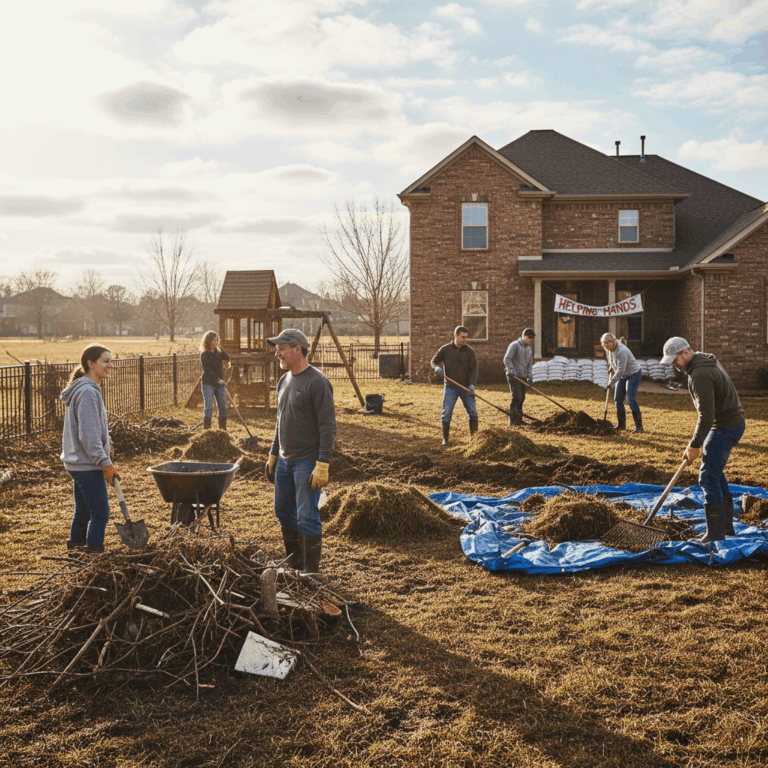
After the Flood: What Homeowners Need to Know About Yard Recovery
June 6, 2026 · I Want To Mow Your Lawn
After the Flood: What Homeowners Need to Know About Yard Recovery
The water recedes. The cleanup begins. But for many homeowners, there’s a part of recovery that gets overlooked until it’s too late: the yard.
Flooding is the most common natural disaster in the United States, and its impact extends far beyond the walls of a home. Saturated soil, debris-covered grass, displaced topsoil, and stressed or dead turf are common aftermath across yards that endured standing water. Recovery takes time, strategy, and often, help from neighbors.
For older adults, veterans, and neighbors already stretched thin by the disaster itself, yard recovery can feel impossible. That’s where understanding the process—and knowing it’s okay to ask for support—makes all the difference.
Check soil compaction and drainage. Waterlogged soil that doesn’t drain is the biggest barrier to recovery.
Wait for soil to dry somewhat before heavy work. Walking on saturated soil causes deeper compaction.
The Recovery Work Ahead
Once the yard has begun to dry, recovery typically involves:
Debris Removal and Cleanup: Fallen branches, mud deposits, and silt need to be cleared. This is labor-intensive and physically demanding work that many homeowners can’t manage alone.
Soil Amendment: Flooded soil often needs aeration and addition of compost or topsoil to restore structure and drainage.
Reseeding or Sodding: Dead grass must be replanted. In warmer months like June, fall reseeding (mid- to late-August) is often the best approach, as cool-season grasses don’t establish well in summer heat. Temporary erosion control may be needed in the meantime.
Drainage Solutions: If flooding was due to poor drainage or grading, permanent fixes may be necessary—gutters, French drains, or regrading. These are longer-term investments but prevent future problems.
When to Ask for Help
Yard recovery after a flood is not something homeowners should feel obligated to tackle alone. Older adults managing a home, veterans returning to stability after disaster, or any neighbor overwhelmed by the scale of work deserves support.
This is where community steps in. I Want To Mow Your Lawn connects over 1,800 volunteers across all 50 states with people who need lawn and exterior home care relief. After a flood, volunteers can help with debris removal, initial cleanup, and the physical labor of yard recovery—freeing homeowners to focus on rebuilding their homes and their lives.
Asking for help isn’t a burden on neighbors. It’s exactly what community is for.
Moving Forward
Flood recovery is a marathon, not a sprint. Yards that endured standing water will take weeks or months to fully bounce back. The soil needs time to drain and restabilize. New grass needs seasons to establish. Homeowners should give themselves—and their yards—grace during this process.
If the work feels overwhelming, or if physical limitations make it impossible to manage alone, reaching out is the right choice. Volunteers are ready to help with the hard labor of recovery. Whether it’s clearing debris in the weeks after a flood or helping prepare the yard for fall reseeding, neighbors are standing by.
Flooded Yard Restoration: A Technical Deep Dive for Homeowners and Volunteers
Ready to get specific? This guide covers soil assessment, aeration techniques, reseeding strategies, and common mistakes that slow recovery. Whether you’re a homeowner rebuilding or a volunteer ready to roll up your sleeves, here’s the playbook.
Assessing Soil Damage and Drainage
The first technical step is understanding what the flood did to the soil beneath the grass. Flooded soil becomes compacted and anaerobic (lacking oxygen), which kills grass roots and beneficial microorganisms. Before any restoration work begins, assess soil structure.
The simple percolation test: Dig a hole about 4 inches deep and 4 inches wide in several spots across the yard. Fill with water and observe how long it takes to drain. If water sits for more than a few hours, drainage is severely compromised. This is the biggest barrier to recovery and often the first thing to address.
If drainage is poor, the yard will need aeration before anything else. Aeration creates channels in the soil, allowing water to move and oxygen to penetrate. Depending on compaction severity, a single pass may not be enough—two passes (perpendicular directions) are often necessary after significant flooding.
Debris Removal: Doing It Right
Silt and mud deposits left by receding floodwater can be several inches thick. While removing this sounds straightforward, it’s physically taxing and requires strategy. Volunteers and homeowners should:
Use rakes and shovels to break up caked silt. Wet silt is heavy—do not use high-pressure washers, which push debris deeper into soil and cause more compaction.
Pile debris separately from topsoil that can be reused or amended. Good topsoil is valuable; silt-only deposits may need to be hauled away.
Work in sections rather than trying to clear the entire yard at once. This keeps volunteers from becoming exhausted and ensures thorough work.
Wear proper footwear and gloves. Floodwater may contain contaminants; protective gear is essential.
Soil Amendment and Preparation
Once debris is cleared and the yard has dried somewhat (typically 1–2 weeks after water recedes), amendment begins. Flooded soil typically lacks organic matter and nutrients, so adding compost is critical.
Recommended amendment rate: Apply 2–4 inches of quality compost across the affected area and work it into the top 4–6 inches of soil using a rototiller or garden fork. This restores soil structure, adds nutrients, and improves drainage.
For severely compacted areas, consider topdressing with fresh topsoil (1–2 inches) after aeration but before seeding. This gives new grass seed a healthier medium in which to establish.
Reseeding: Timing and Technique
This is where patience pays off. In June, after summer flooding, resist the urge to seed immediately. Cool-season grasses (the standard for most of the country) do not establish well in high summer heat. Seeding in June usually results in failure due to disease and heat stress.
Better approach: Use temporary erosion control (hydraulic mulch or erosion control blankets) to protect bare soil through summer. Plan to seed in mid- to late-August when temperatures cool. Fall-seeded lawns have dramatically higher establishment rates than summer-seeded ones.
If immediate coverage is needed for aesthetic or erosion reasons, temporary sod can be laid, with permanent seeding to follow in fall. This is more expensive but gives peace of mind during the visible recovery phase.
When seeding does occur: Use a quality seed blend matched to your region and sun exposure. Overseed at recommended rates (typically 4–6 pounds per 1,000 sq ft). Keep soil consistently moist for 3–4 weeks until germination. Young seedlings are fragile and need protection from foot traffic and additional stress.
Common Mistakes to Avoid
Walking on waterlogged soil: This compacts it further. Wait until soil has dried enough that footprints don’t form easily.
Seeding too early in warm months: Summer heat kills germinating seeds. Fall seeding is almost always better.
Skipping aeration: If drainage is poor, grass won’t grow no matter how much seed you apply. Fix drainage first.
Using high-pressure washers on silt: This pushes sediment deeper into soil and worsens compaction.
Over-fertilizing freshly seeded areas: Young grass is sensitive. Wait until the lawn is established (3–4 mowing cycles) before heavy fertilization.
Connecting Knowledge to Community Help
Flooded yard recovery is a multi-phase project that benefits enormously from organized volunteer effort. Assessment, debris removal, and soil amendment are the most physically demanding phases—exactly where neighbors can make the biggest difference. When volunteers understand the technical side of recovery, they can work smarter, prioritize effectively, and help homeowners make the right decisions about timing and next steps. The goal is not just a quick fix, but a yard that’s set up to truly recover and thrive.
Support our foundation to unlock this resource
A donation of any amount unlocks all bonus guides, templates, and deep dives for 30 days.
100% goes toward connecting volunteers with neighbors in need.
Choose your donation amount
$
Choose how to donate:
I Want To Mow Your Lawn Inc. is a 501(c)(3) nonprofit and registered charity with PayPal Giving Fund. EIN: 85-3447661. Your donation is tax-deductible.
Have a group?Organize a Community Service Day — we'll match your team with neighbors who need help.
Want to help us reach more neighbors?Our Marketing Toolkit has copy-ready posts, press materials, and flyers you can share in five minutes.