Why Yard Care Matters More Than You Think: The Health Connection Beyond the Lawn
May 22, 2026 · I Want To Mow Your Lawn
Why Yard Care Matters More Than You Think: The Health Connection Beyond the Lawn
When an older adult can no longer safely mow their lawn, the problem isn’t really about grass. It’s about what happens next.
The inability to maintain a yard often signals the beginning of a larger shift. Overgrown vegetation becomes a tripping hazard. Walkways crack and remain unrepaired. The outdoor space transforms from an accessible part of home life into a barrier—one that can literally keep someone confined indoors. What looks like a simple landscaping problem is actually a health issue with real consequences.
Many of these injuries happen outside the home. Uneven ground, overgrown shrubbery, debris, and poorly maintained walkways create invisible hazards. A fall can cascade into hospitalization, surgery, lost independence, and financial strain. For someone living alone, the consequences are even steeper—the risk of serious injury increases when environmental hazards go unaddressed.
Preventive yard maintenance directly reduces these risks. A mowed lawn, trimmed edges, cleared walkways, and inspected outdoor surfaces create a safer place to move, sit, and breathe fresh air.
But aging in place requires a home environment that supports independence. That means accessible yards. It means exterior spaces that feel safe and welcoming, not threatening.
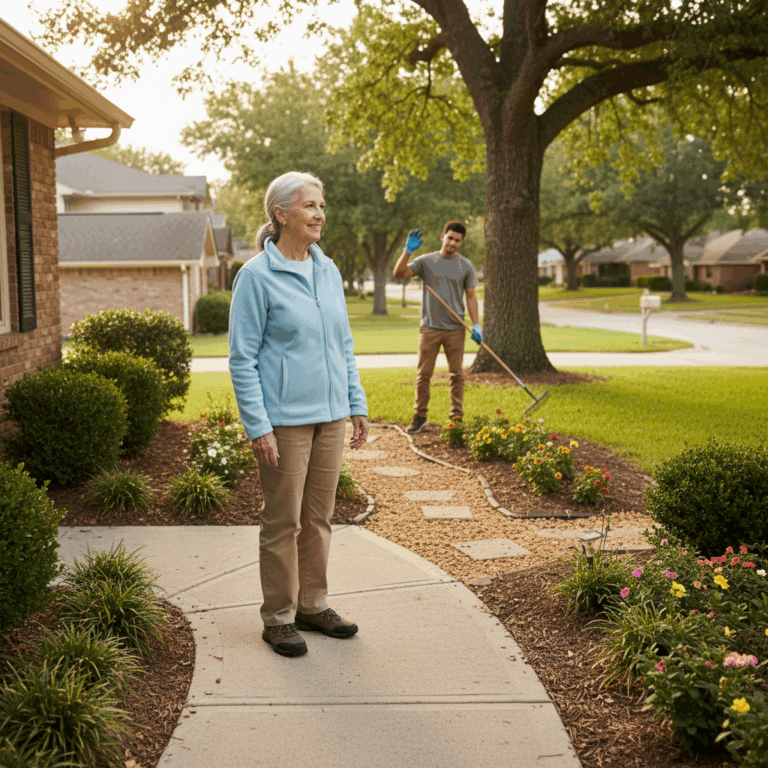
When I Want To Mow Your Lawn volunteers show up to help an older adult or veteran, they’re not just mowing grass. They’re removing a barrier to independence. They’re reducing fall risk. They’re enabling someone to sit on their porch, tend a garden, or simply step outside without fear.
This is preventive health work. It costs a fraction of fall treatment, hospitalization, or forced relocation. And it’s powered by neighbors helping neighbors—1,800+ volunteers across all 50 states who understand that community health starts in yards.
For older adults and veterans managing aging in place without family support nearby, or for those on fixed incomes where yard maintenance feels impossible, free volunteer lawn care isn’t a luxury. It’s a lifeline to staying home, staying safe, and staying connected.
How to Help
Whether someone needs help maintaining their own yard or knows a neighbor who does, support is available. Volunteers can sign up to help neighbors in their communities, and those needing assistance can reach out through local IWTMYL networks or try the MOW app—available to play online or downloadable from the App Store to connect with volunteer support.
A well-maintained yard is more than curb appeal. It’s health care, safety, and the foundation of independence for the neighbors who matter most.
Creating Fall-Safe Outdoor Spaces: A Guide to Accessible Yard Assessment and Maintenance
Preventive yard maintenance is one of the most overlooked fall-prevention strategies for older adults aging in place. Learn how to spot hazards, assess accessibility, and maintain yards that support independence and safety.
Why Yard Safety Assessments Matter
Before any yard work begins, a thorough assessment identifies hidden hazards. Environmental factors account for 31% of fall incidents among older adults. Systematic inspection catches problems before they become injuries.
The Five-Point Yard Hazard Checklist
Walkways and Pathways: Check for uneven surfaces, cracked concrete, tree roots, or sunken areas. Measure height differences—anything over 0.5 inches becomes a tripping hazard. Clear debris, algae, or moss that creates slipping risks.
Vegetation and Sightlines: Trim bushes and trees at eye level (typically 6-8 feet high) to maintain clear sight lines. Remove low-hanging branches that could cause head injuries. Ensure lawn grass is mowed to 2-3 inches—short enough to spot hazards, not so short it damages root systems.
Stairs, Ramps, and Transitions: Inspect outdoor steps for loose treads, missing handrails, or uneven risers. Ramps should have a 1:12 slope ratio (1 inch rise per 12 inches of length). Handrails should be 34-38 inches high and extend beyond the first and last step.
Drainage and Standing Water: Identify areas where water pools after rain. These create slip hazards and mosquito breeding grounds. Grade soil away from the home foundation at a minimum 5% slope.
Surface Materials and Texture: Smooth, slippery surfaces (polished concrete, sealed wood) are riskier than textured ones. Add non-slip coatings or mats to high-traffic outdoor areas. Replace loose gravel with mulch that stays in place.
Maintenance Tasks That Reduce Fall Risk
Regular Mowing: Keep grass 2-3 inches tall. This height allows you to spot hazards (uneven ground, debris) while maintaining healthy turf. Mow at least biweekly during growing season.
Edging and Mulching: Clear edges prevent grass creep onto walkways. Mulch beds (2-3 inches deep) reduce weeds and create defined boundaries that signal safe walking paths.
Debris Removal: Weekly sweeping of walkways, patios, and porches prevents leaves, branches, and dirt from accumulating. Use a leaf blower on low setting to avoid scattering materials into landscaping.
Seasonal Adjustments: Spring: rake thatch, dethatch if necessary, inspect winter damage. Summer: increase mowing frequency, monitor for insect activity. Fall: remove leaves promptly, prune dead branches. Winter: in freeze-thaw climates, avoid salt-based de-icers (use kitty litter or sand instead).
Simple Accessibility Upgrades
Volunteers can implement low-cost improvements: install garden edging to define walkways, add weatherproof step tape to outdoor stairs, create mulched pathways through planting beds, or trim lower tree branches to eliminate head hazards. None of these require special equipment or expertise.
The Connection to Community Care
Accessible yards aren’t luxury features—they’re the foundation of aging in place. When volunteers assess yards through a safety lens and maintain them preventively, they’re reducing emergency room visits, hospitalizations, and the forced relocations that follow serious falls. It’s health care delivered at ground level, in the neighborhoods where people live.
Support our foundation to unlock this resource
A donation of any amount unlocks all bonus guides, templates, and deep dives for 30 days.
100% goes toward connecting volunteers with neighbors in need.
Choose your donation amount
$
Choose how to donate:
I Want To Mow Your Lawn Inc. is a 501(c)(3) nonprofit and registered charity with PayPal Giving Fund. EIN: 85-3447661. Your donation is tax-deductible.
Have a group?Organize a Community Service Day — we'll match your team with neighbors who need help.
Want to help us reach more neighbors?Our Marketing Toolkit has copy-ready posts, press materials, and flyers you can share in five minutes.