Summer Volunteer Programs for Teens: Yard Work That Builds Character
April 15, 2026 · I Want To Mow Your Lawn
Summer Volunteer Programs for Teens: Yard Work That Builds Character
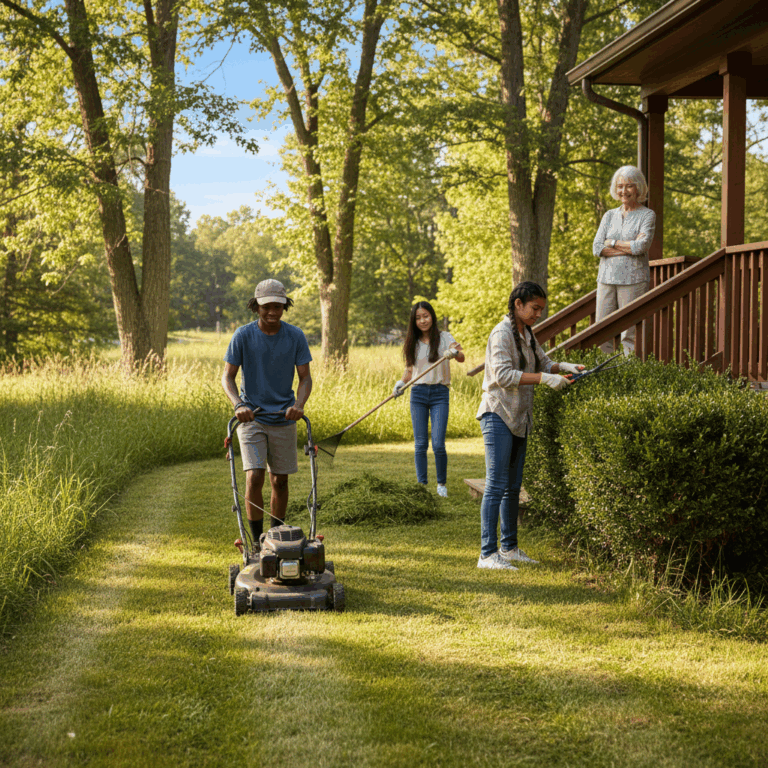
There’s something about a summer afternoon—a teenager with clippers in hand, an older adult watching from the porch, a yard that’s suddenly manageable again. In that moment, something shifts. The teen isn’t just mowing or trimming. They’re learning what it feels like to matter, to be capable, to make a tangible difference in someone else’s life.
That’s not sentiment. That’s what the research actually shows.
Lawn and exterior care volunteer work sits at a sweet spot. It’s:
Immediately visible. A teen can see the before and after of their work in real time. That’s powerful for confidence building.
Physically manageable. Unlike construction or complex repairs, yard work teaches responsibility and independence without requiring specialized certifications.
Community-centered. Volunteers get to interact directly with the person they’re helping—an older adult, a veteran, a neighbor in transition. That human connection builds empathy in ways abstract service can’t.
Low-barrier entry. Minimal prior experience needed. A teen can show up, learn, and contribute on day one.
Transferable skills. Time management, problem-solving, physical perseverance, communication—all things employers notice.
The Ripple Effect
When a teen volunteers to care for a neighbor’s yard, the impact travels further than the mowed lawn. The older adult or veteran regains independence and dignity—they’re not charity cases, but members of a community where help flows both ways. The teen gains confidence, work experience, and a sense of purpose. And the broader community learns that neighbors take care of neighbors, not because it’s obligatory, but because it matters.
Getting Started
Organizations like I Want To Mow Your Lawn connect teen volunteers with neighbors who need help. The process is straightforward: sign up, learn the basics of safe yard care, get matched with someone nearby, and show up ready to work. Many programs offer flexible scheduling—perfect for summer breaks—and emphasize learning over perfection.
For teens seeking volunteer hours for school, college applications, or simply wanting to spend a summer building something real, yard care sits at the intersection of practical help and personal growth.
Ready to Volunteer?
Teens interested in joining the movement can sign up to volunteer with I Want To Mow Your Lawn, which connects volunteers across all 50 states with older adults, veterans, and neighbors who need free lawn care relief. First-time volunteers can also try the MOW app (available on the App Store) to explore local opportunities and connect with community members nearby. This summer could be the one where a teen discovers they’re more capable—and more needed—than they knew.
The Teen Volunteer’s Guide to Yard Care: Techniques, Safety, and Pro Tips
Want to actually be good at yard work volunteering? This guide covers the fundamentals—proper mowing technique, hedge trimming best practices, safety essentials, and common mistakes to avoid. Learn the skills that turn a summer project into something you can be proud of.
Getting the Basics Right: Lawn Mowing Technique
Many first-time volunteers approach a mower like it’s a vehicle—point and go. But intentional mowing makes a difference in the quality of work and personal safety. Start by understanding the mower you’re using. Walk-behind push mowers require steady, even pressure; riding mowers demand focus and awareness of your surroundings. Before starting, check the blade height—most yards look best at 2.5 to 3.5 inches. Cutting too short stresses the grass and makes it vulnerable to weeds.
Mow in straight, overlapping lines. The overlap (about 6 inches) prevents missed strips and creates a professional appearance. Vary your mowing pattern week to week—if you always mow north-south, the grass can develop ruts. Mow when the grass is dry; wet grass clumps and clogs the blade. If clippings are collected in a bag, dispose of them thoughtfully. Many neighbors appreciate mulched clippings left on the lawn (they return nutrients), but always ask first.
Trimming and Edging: Precision Matters
Hand clippers and hedge trimmers intimidate new volunteers, but they’re manageable with focus. For hand clippers, use a cutting motion (not crushing), and angle the blades to prevent tearing. For power hedge trimmers, keep both hands on the handle, maintain a relaxed grip (tension causes fatigue), and trim in smooth, sweeping motions. Never reach overhead or trim above shoulder height—control and safety suffer.
Edging along sidewalks and driveways separates a “mowed” yard from a “maintained” yard. Use an edger to cut a clean line, or carefully use hand clippers for precision. Remove debris after trimming; a neat yard feels cared for.
Safety First: Non-Negotiables
Wear closed-toe shoes with good traction—sneakers or work boots. Avoid loose clothing that can get caught. Long pants protect legs from flying debris. Never reach under a running mower or trimmer, and always turn off equipment before adjusting blades or clearing clogs. Keep bystanders (especially children and pets) at least 10 feet away from active equipment. If the property is unfamiliar, walk it first to identify obstacles, holes, or hazards.
Check the weather. Mowing in high heat requires water breaks; avoid working during peak sun if possible. If you feel unwell or uncomfortable with a task, speak up. A volunteer’s safety matters more than completing every task.
Common Mistakes to Avoid
Mowing wet grass: Clogs the blade, creates clumps, and damages turf. Wait for dry conditions.
Cutting too short: Stresses the plant and invites weeds. Stick to the 2.5–3.5 inch range.
Leaving debris: Always rake or blow clippings off walkways and driveways. A neat finish is part of the job.
Skipping the edging: It takes 10 minutes and transforms the entire look.
Over-trimming hedges: Cut too much and you’ve ruined the plant’s shape. Small, gradual cuts are safer than aggressive pruning.
Pro Tips for Real Impact
Before you leave, take a photo of the finished work—not for social media, but for you. It’s proof of what you’ve done. Ask the person you served if there’s anything else small you could address (removing a fallen branch, clearing gutters of leaves, sweeping the porch). These touches show genuine care.
Maintain your tools. Clean blades after use to prevent rust and disease transfer between properties. If a tool breaks, let your volunteer coordinator know rather than working around it—safety compromises aren’t worth it.
Finally, listen to feedback. If a neighbor says, “Could you trim the hedge a bit lower next time?” that’s not criticism—it’s information. Volunteers aren’t contractors, but taking pride in improvement is always appropriate.
Why This Matters for Your Neighbor
An older adult who can no longer safely manage yard work isn’t just getting a free service—they’re regaining independence and dignity. A veteran struggling with the physical demands of home maintenance is reconnecting with their space and their community. When a teen volunteer shows up with real skill and genuine care, the difference isn’t just cosmetic. It’s profound.
Support our foundation to unlock this resource
A donation of any amount unlocks all bonus guides, templates, and deep dives for 30 days.
100% goes toward connecting volunteers with neighbors in need.
Choose your donation amount
$
Choose how to donate:
I Want To Mow Your Lawn Inc. is a 501(c)(3) nonprofit and registered charity with PayPal Giving Fund. EIN: 85-3447661. Your donation is tax-deductible.
Have a group?Organize a Community Service Day — we'll match your team with neighbors who need help.
Want to help us reach more neighbors?Our Marketing Toolkit has copy-ready posts, press materials, and flyers you can share in five minutes.