The Flagship Idea
A Wireless America

The Problem
The United States has an estimated ~180 million utility poles. They carry power lines, telephone lines, and cable infrastructure. They also clutter neighborhoods, break during storms, and represent outdated infrastructure.
The Idea
Over time — not overnight — transition toward satellite internet, wireless mesh networks, and selective underground utilities.
A country with no overhead wires. Cleaner skylines. More resilient infrastructure. A wireless country.
The Hidden Opportunities
If poles are phased out gradually… what do we do with them? Repurpose them.
🏗️Structural materials for housing
🛝Playground & park builds
🎨Public art installations
🌿Habitat restoration
🏠Emergency shelters
🛏️Transitional housing
Yesterday's infrastructure becomes tomorrow's foundation.
The Crisis
On a single night in 2024, an estimated ~770,000 people experienced homelessness in the United States — a record high. Shelters are at capacity. Waitlists stretch for months. Meanwhile, raw materials sit in plain sight.
The Hidden Opportunity
A single utility pole yields enough treated lumber for framing, roofing supports, and structural walls of small shelters. With ~180 million poles across the country, even repurposing a fraction could produce materials for hundreds of thousands of emergency shelters and transitional housing units — at a fraction of the cost of new construction.
~770,000 unhoused Americans
There are roughly 180 million utility poles in the U.S. If just 1% were repurposed, that's 1.8 million poles — enough raw material for significant shelter construction nationwide.
Reality Check (On Purpose)
This is not a "rip them out tomorrow" plan. It's a multi-decade modernization conversation: start in dense urban zones, launch pilot programs, incentivize upgrades, and let innovation lead.
~20–25 poles per small home
If even a fraction of ~180 million poles were repurposed, the potential for millions of small housing units emerges over time — not as a single solution, but as part of a broader mix of ideas.
🛰️
Ready to Start the Transition?
Starlink high-speed satellite internet is great for streaming, video calls, and gaming — even in the most remote locations on Earth. No poles required.
Get a free month of service 30 days after activation when you sign up through this link.
Get Starlink — Free Month Included
Affiliate referral link. We may receive a small referral benefit at no extra cost to you. All proceeds support our 501(c)(3) mission.
The Family Stability Plan
Making Childcare More Affordable Through Local Tax Relief
Helping parents work, helping families breathe.
The Problem
For many working families, childcare costs feel as heavy as a second mortgage. At the same time, local communities already collect property taxes to support essential quality-of-life services — while childcare providers often operate on tight margins and families are left scrambling.
The Idea
Give states and local communities a new option: allow a modest, defined portion of local tax revenue — paired with state and federal support — to help fund childcare assistance for working families.
This would not replace the existing childcare system. It would strengthen it.
👨👩👧Help working families stay afloat
🏢Support childcare providers & stabilize supply
💙Reduce household stress & improve family stability
📈Strengthen local economies by keeping parents in the workforce
Why It Works
This is not about creating a giant new federal bureaucracy. It's about making it easier for communities to use existing public funding tools more flexibly — with guardrails, local control, and a path to national adoption.
A Realistic National Rollout
Phase 1 — Local Pilot Option
Cities, counties, or school districts could opt into a voter-approved or legislatively approved childcare support fund tied to local revenue.
Phase 2 — State Matching Support
States could match local contributions to expand childcare vouchers or direct provider support.
Phase 3 — Federal Incentive
The federal government would not nationalize property taxes. Instead, it could create incentives, grants, or matching funds for states that adopt family-stability childcare models.
Phase 4 — Standardized Playbook
Create a national framework so families in different states can understand eligibility, providers can participate more easily, and local governments can replicate what works.
This is not a federal takeover.
It's a flexible, locally driven model with a national path to scale. It doesn't reinvent the wheel — it makes the system work better for families.
Strong families. Stable childcare. Smarter local support.
Pet Care Flex Option
Childcare comes first — but for many households, pet care is also part of keeping work and life manageable. A connected local option could explore limited support or partnerships for dog daycare and daytime pet care, helping reduce stress for working families while supporting local providers.
The Lawn Care Security Program
Subsidized Landscaping Services
The Problem
Many seniors, veterans, and low-income homeowners struggle with property upkeep. Meanwhile, local landscapers need steady work.
The Idea
Allow portions of existing assistance programs to subsidize landscaping services.
🏠Helps people stay home longer
🏘️Safer neighborhoods
🛠️Supports small businesses
🤝Preserves dignity
Sometimes independence comes down to something simple — like a maintained yard.
🚀
TO THE MOON!
Fund the "Why Not?" Campaign — We accept DOGE & more
Every dollar — or Dogecoin — goes directly toward our completely volunteer-driven 501(c)(3). No paid salaried employees. Just real people helping real people.
Text DOGECOIN to 707070
See how funds are allocated: volunteer insurance, battery-powered equipment, smart matching technology, outreach to seniors & veterans, and logistics.

Scan to donate instantly
Donate at pledge.to/to-the-moon →
See All Ways to Give →
TO THE MOON! 🚀
EIN: 85-3447661 · Gold Seal on Candid (GuideStar) · 100% Volunteer-Driven
National Pollinator Month
May: A Reset for Nature
The Idea
Create a voluntary national program: for the month of May, eligible landscaping businesses receive a ~$20,000 incentive if they avoid gas-powered equipment, reduce mowing frequency, and allow natural growth cycles.
Why May? It's critical for pollinators, early blooms, and ecosystem recovery.
🌬️Cleaner air
🐝Healthier bee populations
💵Paid recovery for landscapers
📢Public awareness
A small national pause — for something bigger.
✍ Sign the Petition
Help us make No Mow May a reality. We need verified signatures to show lawmakers this matters. Every name counts.
Sign on Change.org →
Front Yard Fellowship Program
Monthly Neighborhood Gatherings
The Idea
Encourage monthly neighborhood gatherings supported by small grants. Shared meals, volunteer days, yard projects, tool sharing.
Stronger neighborhoods lead to safer communities, less isolation, and more local support systems.
National Skill Swap Network
Exchange Skills, Not Just Money
The Problem
Millions of people have useful skills — but no simple way to share them locally.
The Idea
A nationwide platform where people can exchange skills: lawn care help, tutoring, repairs, lessons.
Less reliance on money. More reliance on community.
One Hour for Your Block
One Hour Per Month
Every American gives 1 hour per month
To improve their immediate surroundings.
Pick up litter. Help a neighbor. Fix something small. Plant something.
No bureaucracy. No red tape. Just participation.
A Note from the Founder
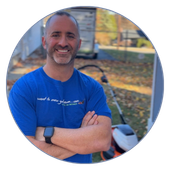
I started I Want To Mow Your Lawn with a simple goal: help neighbors who needed it.
No big plan. No roadmap. Just action.
This page is built on the same idea. Start small. Think bigger. Stay grounded.
Today: Thousands of volunteers · Nationwide reach · Real people helping real people